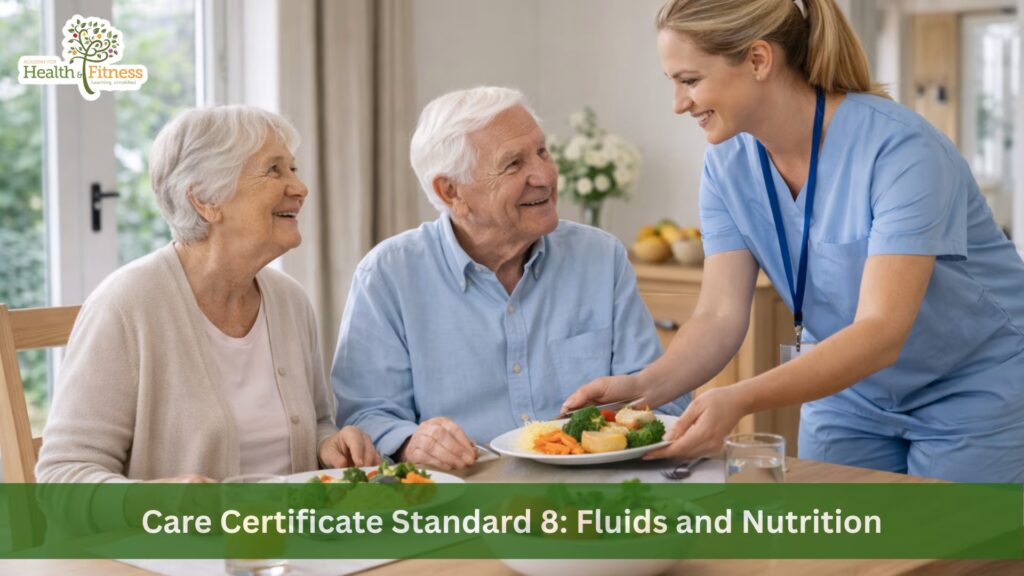


Good hydration and nutrition sit at the heart of dignity, well-being and quality of life.
When you support someone to eat and drink properly, you aren’t just ticking a box – you’re helping them stay healthy and independent. Care Certificate Standard 8: Fluids and Nutrition reminds us that keeping people nourished and hydrated is a vital part of person‑centred care.
In simple terms, Care Certificate Standard 8 requires you to help people eat and drink safely, recognise their nutritional needs and follow care plans, laws and organisational policies. You’ll learn how to spot the signs of dehydration and malnutrition, support people’s preferences and keep accurate records.
This article will cover:
- What Standard 8 asks of care workers
- Why hydration and nutrition are essential in care
- Recognising poor nutrition and dehydration
- Supporting safe eating and drinking
- Record keeping and documentation
- Real‑world examples and best practice
What Is Care Certificate Standard 8?

Care Certificate Standard 8 is about making sure the people you support stay nourished and hydrated.
It emphasises the importance of hydration and nutrition, personal preferences and safety. You must ensure that food and fluids meet each individual’s needs and that you follow the care plan at all times. Skills for Care and Health Education England developed the standard to ensure that every new care worker understands why good fluid and nutrition support is essential and how to deliver it.
Standard 8 exists because not everyone can manage to eat or drink without help. Some people may have swallowing difficulties, medical conditions or cultural requirements that need extra attention. The standard also links with broader legislation on food safety and nutritional care, ensuring that meals are prepared and provided safely for vulnerable individuals.
Why Fluids and Nutrition Matter in Health and Social Care
Eating and drinking are more than routine tasks – they keep our bodies and minds functioning. A balanced diet provides carbohydrates, proteins, vitamins, minerals and fibre to maintain energy, repair tissues and support immune function. Fluids keep digestion moving, regulate body temperature and help the brain function. Without enough water, our bodies cannot perform these basic tasks.
For people in care settings, poor hydration or nutrition can quickly lead to illness. Dehydration causes thirst, dark‑coloured urine, headaches, tiredness and confusion. Ongoing dehydration can result in constipation, urinary tract infections and poor wound healing. A lack of nutrients weakens the immune system, reduces energy and can cause weight loss or gain. Keeping people nourished and hydrated helps prevent these problems and supports dignity and independence. Meeting Standard 8 also helps providers meet Care Quality Commission (CQC) expectations for safe, person‑centred care.
Key Responsibilities Under Standard 8
As a care worker, you have specific responsibilities under Standard 8:
- Support individuals to eat and drink safely. Always follow the care plan and any instructions from dietitians, speech and language therapists or other professionals. Ensure people have access to drinks throughout the day and help them drink if needed.
- Observe dietary needs and restrictions. Pay attention to allergies, intolerances, cultural or religious diets, and any medical conditions such as diabetes or dysphagia. Follow modified diets (e.g. pureed, soft or thickened fluids) and use adapted cutlery or crockery to promote independence.
- Follow care plans and professional advice. Care plans contain specific instructions about the types of foods and fluids a person can have and how to assist them. You must always adhere to these plans, especially when someone is nil‑by‑mouth for surgery.
- Encourage healthy choices where appropriate. Offer balanced options, encourage small portions and frequent drinks and respect the person’s preferences and cultural practices.
- Monitor and report concerns. Watch for early signs of dehydration or malnutrition such as dry mouth, dark urine, tiredness, confusion, weight changes or poor skin condition. Report any concerns to a supervisor or nurse immediately.
- Maintain hygiene and safety during meals. Wash hands, prepare food hygienically and ensure that equipment and surfaces are clean to prevent contamination and foodborne illness.
Understanding Individual Dietary Needs

Every person has unique dietary needs and preferences. A person‑centred approach means:
- Cultural, religious and personal preferences. Understand how culture or faith affects food choices – for example, halal or kosher diets, vegetarianism, or fasting periods. Ask individuals what foods they enjoy and respect their wishes.
- Allergies and intolerances. Allergic reactions can be life‑threatening; always check for known allergens and store allergen‑free foods separately. Intolerances like lactose intolerance or coeliac disease require strict avoidance of certain ingredients.
- Modified diets. Some people need soft, pureed or thickened foods and fluids due to swallowing difficulties. The care plan will specify the right textures and consistencies. Use adaptive equipment, such as two‑handled mugs, non‑slip mats or high‑sided plates, to support independence.
- Medical conditions. Conditions like diabetes, dysphagia, dementia or high blood pressure influence dietary needs. Follow professional guidance from dietitians, speech and language therapists (SALTs) and GPs.
For example, a person with dementia may forget to eat or drink. You might need to offer finger foods, provide reminders or use visual cues. A person with Parkinson’s may have difficulty using cutlery, so using shaped handles or non‑slip mats can help maintain independence.
Recognising Signs of Malnutrition and Dehydration
Spotting the early signs of poor nutrition or hydration is vital:
- Thirst and dark‑coloured urine. These are often the first signs of dehydration.
- Headaches, tiredness, dizziness or confusion. A dehydrated person may seem fatigued, irritable or find it difficult to concentrate.
- Dry mouth, cracked lips or poor skin condition. Lack of fluid can affect the skin and mouth.
- Weight loss or gain. Losing weight can signal malnutrition, while sudden weight gain may indicate fluid retention.
- Reduced appetite and low fluid intake. People may refuse food or drink for many reasons (e.g., depression, pain, medication). Listen and observe carefully.
If you notice any of these signs, record them and inform your supervisor immediately. Early intervention can prevent serious complications.
Supporting Safe Eating and Drinking
Practical techniques for safe eating and drinking include:
- Positioning individuals safely. Sit at eye level, ensure the person is upright and comfortable. Good posture reduces the risk of choking.
- Preparing the environment. Wash your hands, clean the eating area and ensure food and drink are at the right temperature. Remove distractions and create a calm atmosphere.
- Offering choices and assisting without rushing. Ask the person what they would like and offer small bites or sips. Allow them to set the pace. Encourage independence by using adaptive equipment such as non‑spill cups or plate guards.
- Encouraging independence. Support people to do as much as they can for themselves. Offer assistance only when needed and respect when someone asks for help.
- Using adaptive equipment. Grip cutlery, non‑spill cups, two‑handled mugs and high‑sided plates can make eating and drinking easier for people with limited mobility.
Always follow the care plan when assisting with meals. If someone is nil‑by‑mouth or requires thickened fluids, never offer foods or drinks outside of the plan.
Mealtime Environment and Dignity

The way meals are served has a big impact on dignity and enjoyment. To create a positive mealtime environment:
- Create a calm, pleasant atmosphere. Reduce noise, avoid rushing and provide comfortable seating. Eating with others can improve appetite and social interaction.
- Provide privacy where appropriate. Some people prefer to eat alone; others enjoy company. Always respect personal preferences.
- Respect preferences on where, when and what to eat. Offer flexibility around meal times and locations when possible.
- Allow plenty of time for meals. People may need longer to eat due to health conditions – avoid hurrying them.
- Avoid distractions and reduce anxiety. Ensure the environment is free of stress and that individuals feel relaxed.
Monitoring, Recording and Reporting
Accurate monitoring and record keeping are key to meeting Standard 8:
- Use food and fluid charts. Recording what someone eats and drinks helps identify patterns and issues. Note the amounts offered and consumed and any assistance given.
- Record intake accurately. Write down information clearly and objectively. Avoid assumptions and stick to facts.
- Follow organisational policies. Your workplace will have guidelines on record keeping, confidentiality and reporting. Always adhere to them.
- Communicate concerns. If you notice changes in appetite, weight or hydration, tell your supervisor or nurse without delay. They can arrange further assessment and adjust care plans.
- Review care plans regularly. Care plans should be updated when conditions change or new dietary advice is given. Be proactive in checking for updates.
Practical Tips for Meeting Standard 8

Here are some simple ways to embed Standard 8 into daily practice:
- Offer fluids regularly. Encourage sips throughout the day, especially in hot weather or when the heating is on.
- Use visual prompts. For people with cognitive impairment, keep drinks in sight and use coloured cups to attract attention.
- Encourage small, frequent meals. Instead of three large meals, smaller snacks can be easier for people with low appetite or medical conditions.
- Involve individuals in meal choices. Ask what they’d like and involve them in preparing food when possible. This can increase appetite and satisfaction.
- Check for swallowing difficulties. Watch for coughing, throat clearing or pocketing food in the cheeks. If in doubt, seek advice from a speech and language therapist.
- Reflect after shifts. Think about what went well and what could be improved. Recognise patterns of fluid or food intake and discuss them with the team.
Common Misunderstandings About Fluids and Nutrition
- “If someone refuses food or drink once, it’s not a concern.” One refusal may be harmless, but repeated refusals could indicate a problem. Monitor patterns and discuss them with your supervisor.
- “Supporting with meals is just feeding people.” It’s about empowering individuals to eat and drink independently, offering choices and respecting dignity. Assistance should be collaborative, not controlling.
- “Only nurses need to monitor hydration.” Everyone involved in care has a responsibility to observe and report changes in food and fluid intake.
- “All elderly people need soft diets.” Many older adults can enjoy a varied diet. Modified textures are needed only when specified by a professional (e.g. for dysphagia).
Conclusion
Good hydration and nutrition are essential for health, dignity and independence. Care Certificate Standard 8 reminds us that supporting someone to eat and drink is a core part of compassionate care and must never be overlooked.
By understanding individual needs, recognising signs of malnutrition or dehydration and following care plans, you can help people stay healthy and feel valued. Keep records, report concerns promptly and remember that meals are moments of dignity and enjoyment.
For structured, flexible learning that supports your growth, explore our Care Certificate Online Training Course.