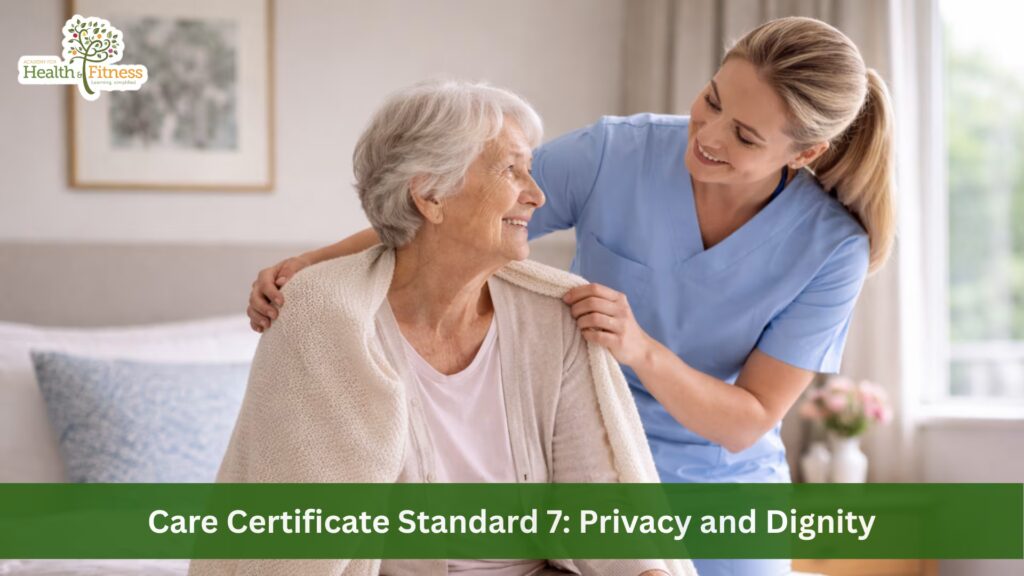


Starting a career in health and social care means more than carrying out tasks; it means honouring people’s private moments and protecting their sense of self. Care Certificate Standard 7: Privacy and Dignity reminds us that every person deserves space, respect and autonomy in their care. Whether supporting someone to wash, dress or discuss their concerns, our actions must always preserve their worth and independence.
In simple terms, Care Certificate Standard 7 requires care workers to safeguard personal space and information, involve people in choices and ensure that dignity runs through every interaction. Protecting privacy and dignity is not only compassionate – it is essential for safe, person‑centred care.
This article will explore:
- What privacy and dignity mean in health and social care
- What Standard 7 requires and why it exists
- How to protect personal space and autonomy in daily tasks
- Practical ways to uphold dignity and respect
- Real examples, common challenges and best practice
What Is Care Certificate Standard 7?

Standard 7 of the Care Certificate focuses on protecting individuals’ privacy and dignity in every aspect of care. It means giving people space when they need it, keeping personal information confidential and valuing the worth of each person. The standard reinforces that everyone has a right to be treated with respect, that their views and choices should be heard and that assumptions about how they want to be treated must be avoided. This isn’t just good practice – it reflects the fundamental human rights and equality laws that underpin health and social care.
The standard exists to ensure all support workers understand their legal and ethical responsibilities. It links to person‑centred care by emphasising autonomy, choice and partnership, and it mirrors the Care Quality Commission (CQC) requirement that providers promote dignity and respect. Organisations such as Skills for Care and Health Education England highlight Standard 7 as part of induction training.
What Do Privacy and Dignity Mean in Health and Social Care?
- Privacy means giving people space where and when they need it. It includes ensuring that personal information is kept confidential and that individuals can have time alone or talk privately with a professional. Examples include knocking before entering a room, closing curtains or doors during personal care and not discussing an individual’s care where others can overhear.
- Dignity is about valuing a person’s worth and identity. It involves respecting their views and choices, not making assumptions and providing care with compassion. This could mean addressing someone by their preferred name, listening to what they say and ensuring clothing or hospital gowns are positioned correctly.
- Respect ties these concepts together by treating people as equals, recognising cultural or personal differences and always involving them in decisions about their own care. An example might be asking someone how they wish their family to be involved or whether they prefer a male or female care worker for personal tasks.
Key Responsibilities Under Standard 7
Care workers have several responsibilities to meet this standard:
- Protect confidentiality and personal information. Never discuss personal details where others can overhear or without the individual’s permission.
- Maintain privacy during personal care. Always knock before entering, close doors or curtains and ensure clothing and drapes protect the individual.
- Respect preferences, wishes and routines. Ask how people want to be addressed and listen to their wishes about when and how care is provided.
- Use appropriate language and behaviour. Speak at an appropriate volume, avoid patronising terms and be mindful of body language.
- Support independence and choice. Encourage individuals to do as much as they can for themselves and provide information so they can make informed choices.
- Maintain dignity at all times. Provide care in a way that preserves modesty, avoids embarrassment and honours the person’s cultural or personal identity.
Why Privacy and Dignity Matter in Quality Care
Promoting privacy and dignity is fundamental to compassionate care. When individuals feel respected, they are more likely to trust those supporting them, communicate openly and engage in their care plans. Maintaining confidentiality and personal space reduces distress and anxiety, while recognising dignity builds confidence and self‑esteem. Protecting privacy and dignity also helps prevent neglect and abuse, meets legal obligations and supports regulatory standards such as those set by the CQC.
Maintaining Privacy in Everyday Practice
Respecting privacy requires practical steps in daily care:
- Knock before entering a room and wait for a response.
- Close curtains, screens or doors during personal care or when assisting with dressing.
- Ask before touching or moving someone and explain what you are going to do.
- Use appropriate coverings to keep individuals comfortable and avoid unnecessary exposure.
- Discuss care needs discreetly, ensuring that conversations can’t be overheard.
- Store and share information securely, following policies on confidentiality and data protection.
These actions show respect, protect personal space and help individuals feel safe during care.
Upholding Dignity in Daily Care
Dignity is upheld when care workers involve people in decisions, respect preferences and support independence. To do this:
- Involve people in decisions about what they eat, wear or how they receive care. Encourage them to express their choices and provide information they need to make informed decisions.
- Offer choices rather than instructions. For example, “Would you like to get up now or in half an hour?” rather than “It’s time to get up.”
- Encourage independence by supporting individuals to do what they can themselves, such as brushing their hair or choosing their clothes.
- Be mindful of tone, body language and assumptions. Avoid speaking to adults as if they are children, use language appropriate to their culture and ask about their preferences.
- Support personal identity by respecting cultural practices, religious beliefs and gender preferences. For instance, ensuring a care worker of the same gender assists with intimate care if requested.
Scenario: A care worker is supporting Mrs. Khan, who prefers female carers for personal care and likes to wear her traditional clothes. The worker listens to Mrs. Khan’s wishes, arranges for a female colleague to assist and waits outside the bathroom with the door closed until Mrs. Khan indicates she is ready. Respecting her preferences and privacy maintains Mrs. Khan’s dignity and sense of self.
Supporting Choice and Control
Autonomy underpins privacy and dignity. People should be able to decide who is involved in their care and how their information is shared. Balancing choice with safety is sometimes challenging:
- Positive risk-taking allows individuals to try new activities or maintain routines while managing risks through assessment. Risk assessments are part of the care plan and help keep people safe.
- When to involve supervisors or families: If a decision could harm an individual or others, seek guidance from a manager or involve family members. Always explain why information might need to be shared.
- Using risk assessments: Assess the hazards and decide how to reduce them. This ensures individuals can make informed choices while staying safe.
Practical Techniques for Promoting Privacy and Dignity

Small actions make a big difference:
- Ask permission before providing any care, even if it seems routine.
- Give time, don’t rush. Let people finish what they are doing rather than interrupting.
- Check comfort levels frequently – ask if they would like extra blankets or to adjust their position.
- Encourage people to express preferences by asking open questions and listening actively.
- Use active listening to show that you value what individuals say. Paraphrase their words and ensure you understand their wishes.
- Make small adjustments – adjust lighting, temperature or seating to enhance comfort.
Common Challenges and How to Handle Them
Care settings often face challenges that can compromise privacy and dignity:
- Limited time or pressure: When tasks must be completed quickly, privacy and dignity can be overlooked. Prioritise essential actions like closing curtains and ask a colleague for help if needed.
- Cognitive impairments: Individuals with dementia or learning disabilities might find it difficult to express their needs. Use clear language, visual aids and involve family or advocates.
- Conflicting choices vs safety: If someone wants to do something that could cause harm, discuss risks openly and seek advice from supervisors. Offer safe alternatives and involve them in the decision.
- Environmental constraints: Small spaces or shared rooms can make privacy harder to maintain. Use portable screens, speak quietly and schedule private time when possible.
How Standard 7 Links to Other Care Certificate Standards

Privacy and dignity underpin several other Care Certificate standards:
- Standard 1: Understanding Your Role – knowing that protecting privacy and dignity is a core responsibility.
- Standard 3: Duty of Care – ensuring safety and preventing harm includes preserving dignity and respecting confidentiality.
- Standard 5: Work in a Person‑Centred Way – placing the individual at the centre of their care requires listening to their views and protecting their rights.
- Standard 6: Communication – effective communication helps you understand preferences and maintain dignity.
- Standard 10: Safeguarding Adults – respecting privacy and dignity contributes to safeguarding individuals from abuse or neglect.
Conclusion
Privacy and dignity are non‑negotiable foundations of respectful, person‑centred care. Care Certificate Standard 7 ensures that every interaction honours the individual’s right to space, choice and self‑worth. Upholding this standard builds trust, prevents harm and supports safer, more compassionate care.
By closing a door, asking permission or involving someone in decisions, you reinforce their dignity and autonomy. Make privacy and dignity part of every action, and you will help create a care environment where everyone feels seen, heard and respected.