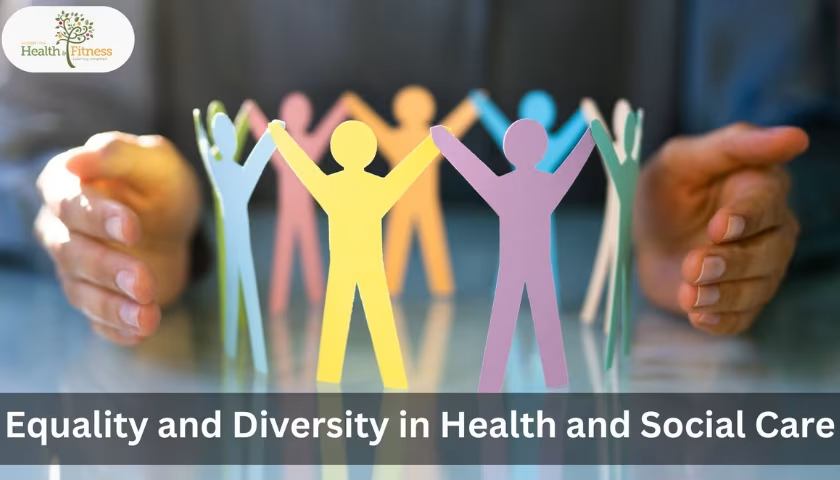


Everyone deserves to be treated fairly and with respect. When you work in health and social care, equality, diversity and inclusion aren’t just buzzwords – they are principles that underpin everything you do. Care Certificate Standard 4 sets out what those principles mean in practice and helps you make sure that everyone you support feels valued and included.
Care Certificate Standard 4 focuses on equality and diversity, ensuring care workers know how to treat people fairly, recognise and celebrate differences, and create inclusive environments. It matters because respectful, person‑centred care depends on seeing each individual as unique and supporting them in ways that promote dignity, choice and independence.
In this article you’ll learn:
- What equality, diversity and inclusion mean in care
- What Care Certificate Standard 4 requires of you
- The legal responsibilities and anti‑discrimination frameworks that apply
- How to promote inclusion in everyday practice
Real examples and common challenges you might encounter
What Is Care Certificate Standard 4?

Standard 4 is one of the 16 Care Certificate standards designed to ensure non‑regulated health and social care workers have the same baseline skills and behaviours to deliver safe, compassionate support. This standard concentrates on equality, diversity, inclusion, fairness and respect. It requires care workers to recognise that each person is unique, with their own background, beliefs and preferences, and to provide support that meets their individual needs.
The standard exists to reinforce person‑centred care and human rights. It builds on the idea that everyone has equal worth and should be treated with dignity and respect, regardless of age, gender, ethnicity, disability, religion, sexual orientation or any other characteristic. You’ll also see links to other standards, such as working in a person‑centred way (Standard 5) and communication (Standard 6). The Care Certificate was created by Skills for Care, Skills for Health and NHS England to ensure consistency across the sector, and the equality and diversity standard reflects the principles of the Equality Act 2010 and the Human Rights Act 1998.
What Do Equality, Diversity and Inclusion Mean in Care?
Equality
Equality means treating everyone fairly and ensuring that everyone has access to the same opportunities. In health and social care, this means making sure that services are available to all who need them, without discrimination. For example, equality includes providing wheelchair access or adapting communication for people with sensory impairments so they can participate fully in their care.
Diversity
Diversity refers to recognising and valuing the differences between people. These differences might be cultural, religious, ethnic, gender‑related, or linked to sexuality, disability or age. In practice, it means being aware of and sensitive to people’s backgrounds and ensuring that support is tailored to their unique needs. For instance, understanding dietary requirements linked to someone’s faith is part of embracing diversity.
Inclusion
Inclusion ensures that everyone feels respected and able to take part, regardless of their background or circumstances. In a care setting, inclusion means involving individuals in decisions about their support, offering choices and making adjustments so that no one is excluded. For example, providing information in easy‑read format or using an interpreter if English isn’t someone’s first language helps ensure they can engage fully in their care.
Key Responsibilities Under Care Certificate Standard 4
Care workers have several responsibilities to meet Standard 4:
- Treat people fairly and without bias – Provide the same level of care and respect to everyone, regardless of their characteristics.
- Respect cultural, religious and personal differences – Listen to individuals’ preferences, beliefs and traditions and accommodate them where possible.
- Challenge discrimination – Speak up if you witness discriminatory language or behaviour and follow your organisation’s procedures to address it.
- Follow organisational policies – Know and adhere to policies on equality and diversity, anti‑discrimination and safeguarding.
- Support individuals’ rights and preferences – Ask about people’s preferences and choices, and involve them in decisions about their care.
- Use inclusive language and behaviour – Choose words and actions that reflect respect and inclusion, and avoid assumptions based on stereotypes.
These responsibilities align with the Equality Act 2010, which makes it unlawful to discriminate against people based on protected characteristics, and the Human Rights Act 1998, which guarantees fundamental rights and freedoms.
How Equality and Diversity Improve Care Quality
Promoting equality and diversity isn’t just morally right; it also improves the quality of care. When you respect and accommodate individual differences:
- You build trust – People feel more comfortable sharing their needs and concerns when they know they’ll be respected.
- Communication improves – By listening and adapting your communication, you can better understand and meet people’s needs.
- You prevent discrimination, harm and isolation – Recognising differences means you can avoid actions that might exclude or offend, reducing the risk of neglect or abuse.
- You support regulatory standards – The CQC’s fundamental standards emphasise dignity and respect. Meeting Standard 4 helps ensure you comply with regulatory expectations.
Recognising and Challenging Discrimination

Discrimination can take several forms:
- Direct discrimination – Treating someone less favourably because of a protected characteristic. For example, not allowing a service user to take part in an activity because of their disability.
- Indirect discrimination – Putting policies or rules in place that disadvantage certain groups, even unintentionally.
- Harassment – Unwanted conduct linked to a protected characteristic that violates a person’s dignity.
- Victimisation – Treating someone badly because they raised a complaint or supported someone else’s complaint.
How to challenge discrimination
- Report concerns – Follow your organisation’s reporting procedures to ensure discriminatory behaviour is addressed.
- Follow procedures – Use your employer’s policies on equality, diversity and whistleblowing when raising issues.
- Use whistleblowing routes – If discrimination isn’t addressed internally, external whistleblowing procedures may be necessary.
- Offer support to individuals – Let the person know you take their concerns seriously and will help them find solutions.
- Work with your supervisor – Discuss incidents and steps to address them to prevent future occurrences.
If a colleague repeatedly uses offensive language about someone’s ethnicity, you should challenge their behaviour by explaining why it’s inappropriate and reporting it to your manager. Your duty is to support a culture of respect and equality. NHS Employers provides guidance on equality, diversity and inclusion to help organisations uphold these standards.
Promoting Inclusion in Everyday Practice
Inclusive care involves small, meaningful actions. Here are some examples:
- Ask about personal preferences and cultural needs – When you first meet someone, find out how they like to be addressed, their dietary needs or prayer times.
- Provide choices – Offer options for meals, activities and daily routines. This gives people a sense of control over their care.
- Use interpreters if necessary – If someone has limited English, involve an interpreter or use pictorial resources to aid communication.
- Respect dietary, religious or communication needs – Provide halal or kosher meals when needed; find quiet space for prayer; use sign language interpreters.
- Avoid assumptions – Don’t assume someone’s preferences based on your own experiences. Ask them directly.
- Encourage participation – Invite individuals to take part in activities and provide support where needed. For example, adapt a gardening activity so that people with limited mobility can still get involved.
How Standard 4 Links to the Law and Professional Standards

Standard 4 aligns with several legal and professional frameworks:
- Act 2010 – Makes discrimination unlawful and sets out protected characteristics such as age, disability, gender reassignment, marriage and civil partnership, pregnancy and maternity, race, religion or belief, sex and sexual orientation.
- Human Rights Act 1998 – Protects fundamental rights including the right to life, freedom from inhumane treatment and respect for private and family life.
- CQC fundamental standards – Require care providers to respect dignity, compassion and human rights.
- Skills for Care expectations – Promote equality and diversity training and policies as part of induction and ongoing professional development.
Practical Tips for Meeting Care Certificate Standard 4
To meet Standard 4 in your daily work:
- Reflect on your own beliefs and biases – Acknowledge your own attitudes and how they might affect your practice. Challenge your assumptions.
- Ask questions to understand a person’s background – Find out about cultural or personal preferences rather than guessing.
- Attend equality and diversity training – Keep up to date with training opportunities offered by your employer or professional bodies.
- Use inclusive communication – Adapt the way you communicate to meet people’s needs; use clear language and different formats.
- Make adjustments where needed – Offer reasonable adjustments, such as ramps, accessible toilets or easy‑read documents, to support people to access services on equal terms.
Common Misunderstandings About Equality and Diversity
“Treating everyone the same = equality.” Treating everyone exactly the same can actually create unfairness if people have different needs. Equality means giving everyone the support they need to have the same opportunities.
“People don’t want to talk about differences.” Discussing differences helps you understand people’s needs and preferences. It’s respectful to ask and adapt your practice.
“Inclusion is only management’s responsibility.” Every care worker plays a part in creating an inclusive environment. Managers set the culture, but individuals must follow through.
“Bias doesn’t affect care.” Unconscious bias can lead to assumptions and unfair treatment. Acknowledging bias helps you avoid discriminatory behaviour and improve your practice.
Conclusion
Equality and diversity sit at the heart of compassionate, person-centred care. Care Certificate Standard 4 reminds every care worker that fairness, respect and inclusion are not optional — they are essential to safe, high-quality support.
By promoting dignity, challenging discrimination and valuing each person’s unique needs, you help create a care environment where everyone feels seen, heard and included. This standard strengthens your practice and the lives of the people you support.