

Keeping people safe is a feeling. Care Certificate Standard 13: Health and Safety makes sure we all share that commitment. In day‑to‑day care, you might spot a trailing cable or a slippery floor. Knowing what to do and doing it quickly protects you and the person you support. It’s about working together so everyone goes home at the end of the day.
Care Certificate Standard 13 teaches care workers how to recognise hazards, follow safe working practices and make sure care settings are as safe as possible. It exists to protect both workers and those receiving care, because safety is everyone’s responsibility.
In this blog you’ll learn:
- What health and safety means in care
- Identifying hazards and risks
- Safe working practices
- Your responsibilities under Standard 13
- Practical safety tips
- Relevant laws and frameworks
Why Care Certificate Standard 13 Matters in Everyday Care
Health and safety is s a way of working. Standard 13 sets out the duties and expectations for care workers and employers. Workers must take reasonable care of themselves and others, follow agreed procedures and report anything that could cause harm. Employers must provide a safe place to work, suitable training and equipment, and enough resources to make health and safety possible.
Why does this matter? Because accidents can happen fast. Imagine you’re walking down a hallway and see a puddle near the kitchen. If you stop, mop it up or put up a sign, you prevent someone from slipping. It’s these little actions that keep both staff and residents safe. Health and safety protects everyone – the person receiving care, the care worker, and even visitors.
Understanding Health and Safety in Care Settings
Safe working practice means doing your job in a way that reduces risk. In care, this covers many areas: infection control, fire safety, manual handling, medication storage, using equipment safely, and more. Policies and procedures explain how to carry out tasks safely – from storing medicines to lifting loads or evacuating in a fire. They’re not there to tie your hands; they’re there to guide you.
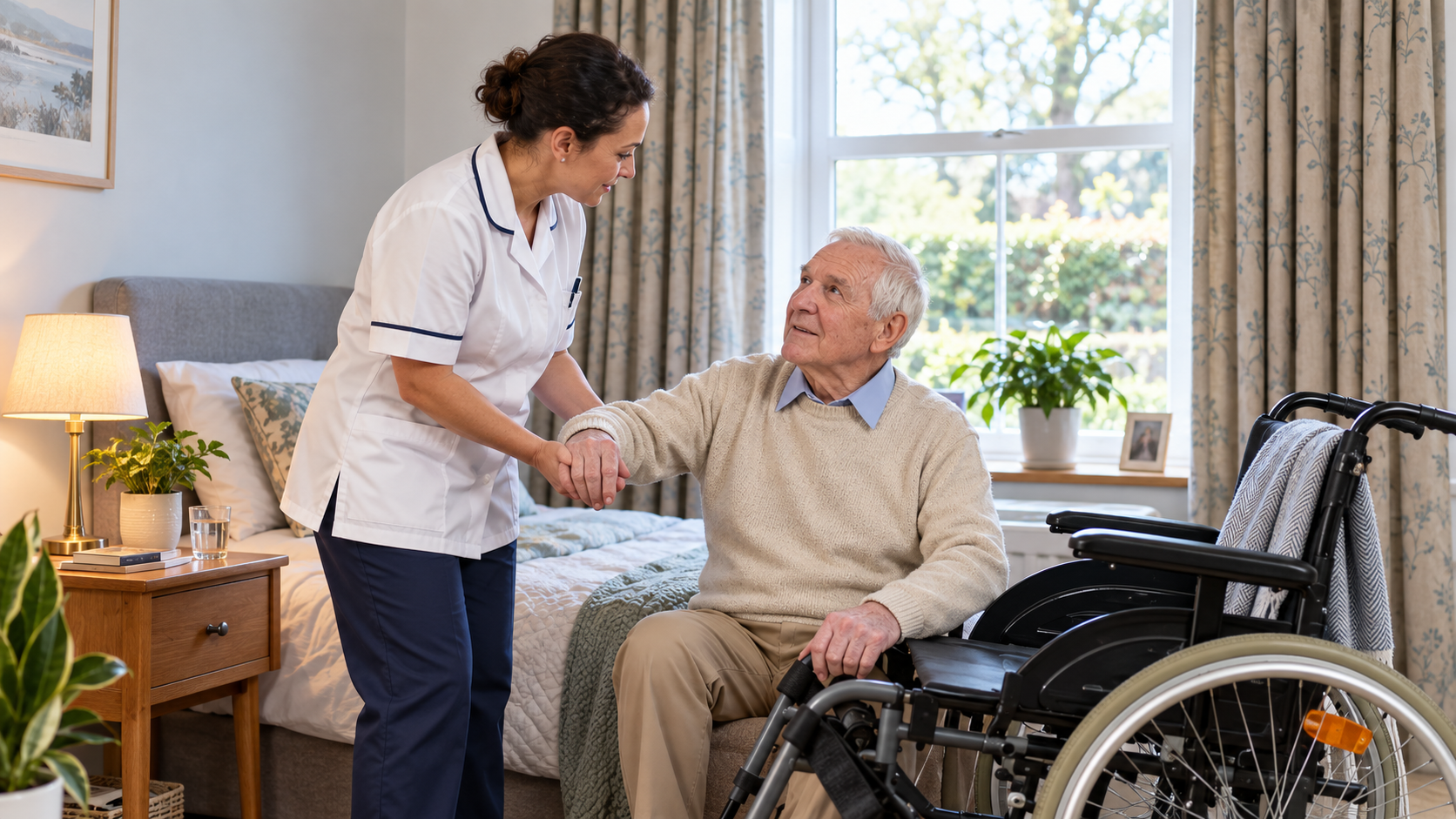
Person‑centred safety is important too. We want to protect people without taking away their independence. That might mean offering a walking aid rather than insisting someone stays seated. It’s a balance between reducing risk and promoting autonomy – something you learn with experience.

A hazard is anything that can cause harm; a risk is the chance that it will. Hazards in care settings can be environmental (wet floors, clutter), biological (flu viruses, soiled linens), chemical (cleaning products, medications), physical (sharps, heavy lifting) or organisational (short staffing, poor communication). Risk assessments help identify these hazards and decide how likely they are to cause harm.
For example, trip hazards might include loose carpets or trailing wires. A faulty hoist could injure someone during a transfer. Sharps in a waste bag might cause a needle injury. When you see a hazard, you should report it immediately and follow your organisation’s reporting procedures. Risk assessments are a legal requirement – they help you identify who might be harmed and how to reduce the risk.
Your Safety Responsibilities Under Standard 13
Care workers have a legal and ethical duty to follow health and safety procedures. You must:
- Take reasonable care of your own safety and others.
- Follow policies and procedures, including the use of personal protective equipment (PPE), safe handling and hygiene practices.
- Report hazards or defective equipment straight away; don’t assume someone else will.
- Work only within your training and competence. Certain tasks – using hoists, handling medication, moving and assisting people, first aid, emergency procedures and food handling – require special training.
- Maintain clear and accurate records of accidents and incidents.
If you’re asked to do something unsafe, you have the right to say no. For instance, if a colleague wants to lift a heavy person without a hoist, you can refuse and suggest waiting for proper equipment. It’s not about being awkward; it’s about keeping everyone safe.

Small habits can make a big difference. Here are practical tips:
- Safe moving and handling – follow your training on posture and lifting; use hoists and slides when needed.
- Infection prevention – wash your hands before and after each contact, use gloves and aprons appropriately, and dispose of waste safely.
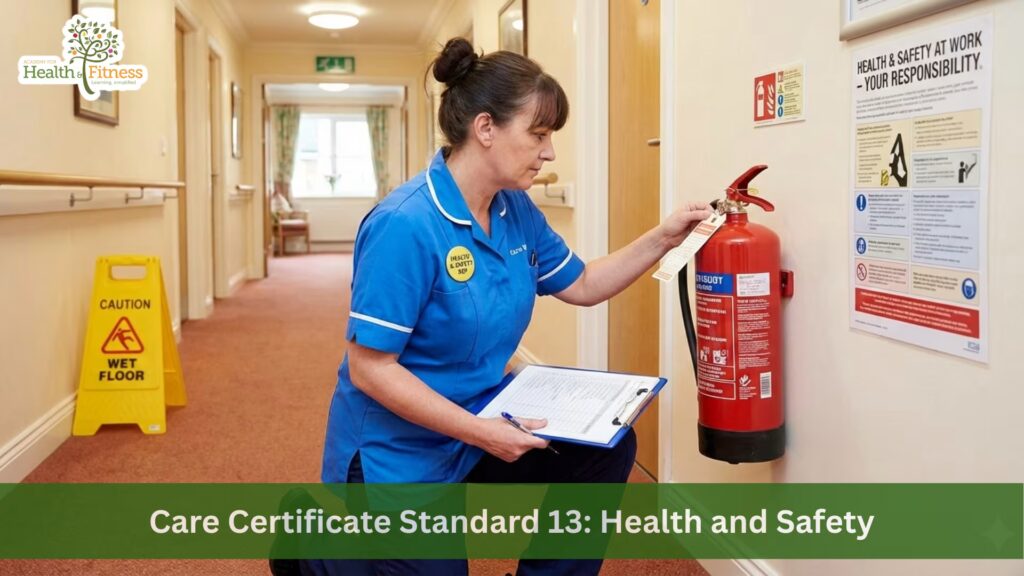
- Fire safety awareness – know where fire exits and extinguishers are, keep escape routes clear, and never block alarms or doors.
- Personal safety and lone working – let colleagues know where you are, carry a phone or alarm if you’re visiting people’s homes alone, and trust your instincts.
- Use equipment properly – check hoists, beds and wheelchairs before use; don’t use faulty equipment – report and tag it.
- Keep the environment tidy – wipe up spills immediately, dispose of sharps in appropriate bins, and ensure there is enough lighting.
Stay informed – read care plans and risk assessments to understand individual needs.
When Health and Safety Challenges Arise
Sometimes safety decisions aren’t straightforward. You might be torn between maintaining someone’s dignity and preventing a fall. In a busy shift, you might feel pressure to cut corners. Or perhaps you notice a colleague ignoring PPE – how do you speak up? These situations require empathy and courage.
For instance, if a resident refuses to use a walking aid and insists on walking unaided, you could gently remind them of previous slips and offer to walk beside them for support. Or if a colleague leaves a fire door propped open because it’s hot, you might share your concerns privately and remind them of the policy.
Time pressure can also tempt shortcuts. Remember, a few extra minutes to fetch a hoist or wipe a spill are worth it if they prevent an injury. And if you’re unsure, ask your supervisor – it’s better to ask than guess.
Laws and Guidance That Protect Everyone

Health and safety legislation creates a framework to protect people at work and those affected by work activities. Key laws include:
- Health and Safety at Work etc. Act 1974 – the foundation of UK health and safety law, requiring employers to provide safe workplaces and employees to follow safety instructions.
- Management of Health and Safety at Work Regulations 1999 – require risk assessments and suitable control measures.
- Manual Handling Operations Regulations 1992 – govern safe lifting and moving techniques.
- COSHH 2002 (Control of Substances Hazardous to Health) – regulates safe use of chemicals.
- RIDDOR 2013 (Reporting of Injuries, Diseases and Dangerous Occurrences Regulations) – details how to report workplace incidents.
- Fire Safety Order 2005 – outlines responsibilities for fire prevention and evacuation.
- PUWER 1998 and LOLER 1998 – ensure work equipment and lifting equipment are safe.
- Care Quality Commission (CQC) Fundamental Standards – set minimum safety standards for registered care providers.
How Standard 13 Connects With the Wider Care Certificate
Health and safety interweaves with other Care Certificate standards. Infection prevention (Standard 15), duty of care (Standard 3), safeguarding (Standards 10 and 11), nutrition and hydration (Standard 8) and person‑centred care (Standard 5) all contribute to a safe environment. When you move someone safely, you respect their dignity. When you store medication correctly, you protect them from harm. When you know how to respond in an emergency, you provide reassurance and practical support. Seeing these standards as interconnected helps create a holistic, safe practice.
Conclusion
Health and safety is the bedrock of caring work. By spotting hazards, following procedures and respecting the laws that protect us all, you make care environments safer and more supportive. Your vigilance – even in small actions – prevents accidents and keeps people well.
For structured, flexible learning that supports your growth, explore our Care Certificate Online Training Course.