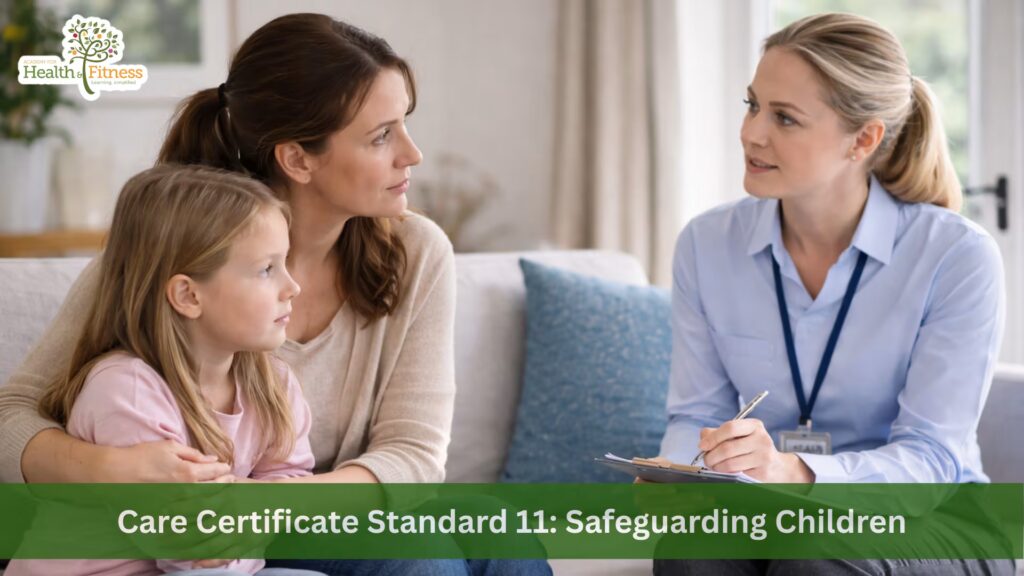


Keeping children safe is everyone’s responsibility. Care Certificate Standard 11: Safeguarding Children helps care workers protect some of the most vulnerable people in society. When you understand this standard, you become a guardian of childhood, recognising risks early and ensuring children feel heard and safe.
Care Certificate Standard 11 teaches staff how to promote children’s welfare, spot signs of abuse or neglect and act quickly when concerns arise. It is part of the 15‑standard Care Certificate framework that sets out the knowledge and skills expected of care workers.
In this blog you’ll learn:
- What safeguarding children means
- Different types of abuse and how to spot them
- How to recognise and respond to concerns
- Your reporting and recording responsibilities
- Practical ways to keep children safe every day
- Key laws and guidance that underpin safeguarding
What Care Certificate Standard 11 Means for Your Practice

Safeguarding children is the action we take to promote their welfare and protect them from harm. According to the Working Together to Safeguard Children guidance, it includes:
- Protecting children from maltreatment.
- Preventing impairment of their health or development.
- Ensuring children grow up in safe and effective care.
- Taking action to enable all children to have the best outcomes.
Standard 11 matters because early help can stop harm before it escalates. It reminds us that children can’t always speak up for themselves. Imagine noticing a four‑year‑old who flinches when someone raises their voice or hides food in their pockets. These small signs might indicate fear or neglect. Knowing how to respond confidently can make all the difference to that child’s future.
Safeguarding Through a Child’s Eyes
A child‑centred approach means putting children’s needs and voices at the heart of everything we do. The latest Working Together guidance emphasises strengthening multi‑agency working while keeping a child‑centred, whole‑family focusgov.uk. Listening to a child, using their preferred language or play to help them express feelings, and involving parents or carers positively all support this approach.
Be curious about what life is like for the child. Ask open questions, validate their feelings and build trust so they know you will act in their best interests. A child might say “I don’t want to go home” or draw pictures of frightening scenes. These are opportunities to gently explore what’s happening and ensure the right support is put in place.
Abuse can take many forms. Recognising patterns helps protect children before harm deepens. Key types of abuse include:
- Physical abuse – hitting, shaking, throwing, poisoning, burning, drowning or suffocating. Indicators include unexplained injuries or frequent “accidents.”
- Sexual abuse – forcing or enticing a child to take part in sexual activities, which may involve physical contact or non‑contact acts such as exposure to sexual images. Abuse can occur online as well as in person.
- Neglect – persistent failure to meet a child’s basic physical or psychological needs, leading to serious impairment of health or development. Neglect can be medical, nutritional, emotional, educational, physical or lack of supervision.
- Emotional abuse – persistent emotional maltreatment that conveys to a child they are worthless or unloved, silences them or imposes inappropriate expectations. Emotional abuse is present in all forms of maltreatment.
- Exploitation – the manipulation of children into criminal or sexual activities for someone else’s gain. Signs can include sudden wealth, secretive behaviour or staying out late.
Watch for behavioural changes: a normally outgoing child becoming withdrawn, sudden aggression, poor hygiene, or changes in school attendance. When you see patterns, raise your concern.
Responding When a Concern Arises

Safeguarding is everyone’s duty. If a child confides in you or you suspect harm:
- Ensure their immediate safety – if there is an urgent risk, call emergency services.
- Listen and reassure – stay calm, believe the child, and let them speak without pressing for details.
- Report appropriately – follow your organisation’s safeguarding procedure. Speak to your designated safeguarding lead. Section 11 of the Children Act 2004 requires specified agencies (local authorities, NHS bodies, police and others) to make arrangements to ensure their functions are discharged with regard to safeguarding and promoting the welfare of children.
- Record facts – document what the child said, your observations and the actions taken, using the child’s own words. Do not make assumptions.
- Do not confront the alleged abuser – this could put the child or you at risk.
For example, if a teenager tells you they are being messaged by an adult online, thank them for telling you, note the details, and immediately inform your safeguarding lead.
Everyday Actions That Keep Children Safe
Safeguarding is built into daily interactions. Here’s how to protect children proactively:
- Communicate respectfully – get down to the child’s level, use clear language and let them know they can talk to you about anything.
- Build trust – be reliable and keep appropriate professional boundaries. Never promise to keep secrets; promise to help keep them safe instead.
- Create a safe environment – ensure physical spaces are free from hazards and that supervision levels are appropriate.
- Model positive behaviour – show kindness, fairness and respect in your interactions.
- Promote resilience – encourage children to express their feelings, practise problem‑solving and develop self‑esteem.
- Know your policies – attend regular safeguarding training and stay updated with local protocols so you know how to act quickly when needed.
These actions help children feel secure and may prevent harm by creating an open culture.
When Safeguarding Children Gets Complicated
Safeguarding is rarely straightforward. You may encounter:
- Parental conflict or disguised compliance – parents might appear cooperative without making meaningful changes. Stay focussed on the child’s experience and work with other professionals to assess risk.
- Fear of speaking up – children may worry about breaking up their family or not being believed. Build rapport and reassure them that their safety is the priority.
- Complex family dynamics – poverty, mental health issues or substance misuse can complicate cases. Multi‑agency working allows different professionals to share information and coordinate support.
Balancing respect for families with the duty to protect children can be challenging. Seek supervision and team support to navigate dilemmas and always act in the child’s best interests.
The Laws That Protect Children

Several laws and frameworks underpin safeguarding:
- Children Act 1989 – emphasises that a child’s welfare is paramount and that children are generally best looked after by their family unless intervention is necessary. Local authorities must provide services for children in need.
- Children Act 2004, Section 11 – requires specified agencies (such as local authorities, NHS bodies and police) to make arrangements to safeguard and promote the welfare of children in everything they do and in services they commission.
- Working Together to Safeguard Children (2023) – statutory guidance that strengthens multi‑agency working and maintains a child‑centred approach while emphasising whole‑family support. It sets national standards and expectations for all organisations working with children.
- Keeping Children Safe in Education (KCSIE) – sets out safeguarding responsibilities for schools and colleges.
- Local safeguarding partners – health services, local authorities and police must work together as statutory partners to coordinate safeguarding arrangements.
These laws and frameworks ensure that safeguarding is not optional but a statutory duty across all services.
How Standard 11 Connects Across the Care Certificate

Safeguarding children links closely with other Care Certificate standards. Effective communication helps build trust with children and families (Standard 6). Duty of care (Standard 3) reinforces the legal obligation to act when someone is at risk. Equality and diversity (Standard 4) remind us that abuse can happen to any child, regardless of background. Working in a person‑centred way (Standard 5) emphasises respecting each child’s uniqueness. Learning about mental health, dementia and learning disability (Standard 9) helps us recognise additional vulnerabilities. By seeing the standards as interconnected, you create a holistic, safe practice.
Conclusion
Children depend on adults to protect and nurture them. Care Certificate Standard 11 equips you with the knowledge and confidence to spot harm early, respond sensitively and work with others to keep children safe. Your vigilance and compassion can change a child’s life.
For structured, flexible learning that supports your growth, explore our Care Certificate Online Training Course.