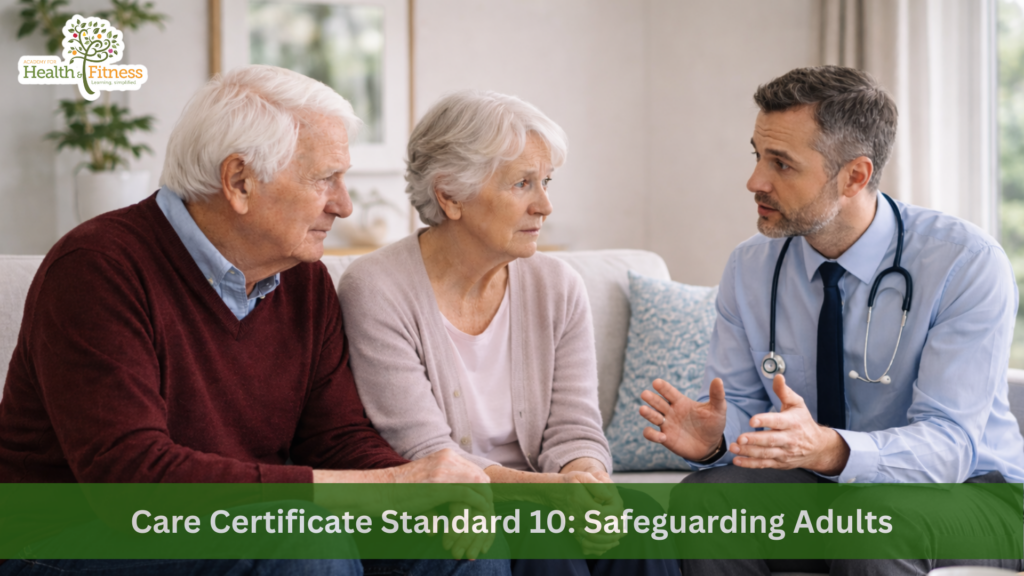


Feeling safe is a basic human right. Care Certificate Standard 10: Safeguarding Adults helps care workers ensure the people they support can live free from abuse or neglect. When you understand this standard, you become a trusted protector and advocate for vulnerable adults.
Care Certificate Standard 10 teaches care workers how to recognise and prevent abuse, respond to concerns and promote choice and dignity.
In this blog you’ll learn:
- What safeguarding adults involves
- The types of abuse and harm
- Warning signs to look for
- Your duties when you suspect abuse
- Practical ways to safeguard people
- The key laws and frameworks that guide safeguarding
Understanding Care Certificate Standard 10 and Why It Matters

Care Certificate Standard 10 is all about protecting an adult’s right to live in safety. Under the Care Act 2014, adult safeguarding means preventing or stopping abuse and neglect while respecting a person’s ability to make informed choices. This balance – safety and autonomy – sits at the heart of compassionate care.
Safeguarding is a responsibility shared by every worker. The Skills for Care code of conduct states that you must never abuse, neglect, harm or exploit those using care services. For example, if you notice a normally cheerful resident becoming withdrawn and anxious, you might gently ask them how they’re feeling and report any concerns. Early observations like this can prevent serious harm.
What Safeguarding Really Means in Everyday Care
Safeguarding is guided by six principles: empowerment, prevention, proportionality, protection, partnership and accountability. Empowerment means encouraging people to make their own decisions; prevention focuses on stopping abuse before it happens; proportionality ensures responses are the least intrusive; protection offers support for those in greatest need; partnership promotes multi‑agency working; and accountability ensures transparency.
In practice, this might involve supporting someone to understand options (empowerment), offering regular training to staff to spot early warning signs (prevention), involving family and professionals appropriately (partnership) and keeping clear records (accountability). It’s about building trusting relationships so people feel safe to speak up.
Recognising When Something Isn’t Right
The Care Act identifies ten types of abuse and neglect:
- Physical – injuries from hitting, slapping or misuse of restraint. Unexplained bruises or broken bones may be a sign.
- Domestic violence – abusive behaviour between intimate partners or family members.
- Sexual abuse – unwanted sexual acts or exposure.
- Psychological or emotional abuse – threats, humiliation or isolation.
- Financial abuse – theft, fraud or misuse of someone’s money.
- Modern slavery – trafficking, forced labour or servitude.
- Discriminatory abuse – harassment based on race, disability, gender or sexuality.
- Organisational abuse – poor care in a service setting.
- Neglect – failing to meet basic needs.
- Self‑neglect – extreme personal neglect.
Patterns can be subtle. Changes in mood, unexplained injuries, sudden financial difficulties or reluctance to be alone with certain people can all be indicators. The more you know the person, the easier it is to notice when something isn’t right.
Your Duties When You Suspect Harm

If you suspect abuse, your first duty is to act promptly and responsibly. The Code of Conduct requires you to make sure your actions or omissions do not harm individuals. Practical steps include:
- Ensure immediate safety – if someone is in danger, alert emergency services.
- Report concerns – follow your workplace policy and inform your manager or safeguarding lead. Under Section 42 of the Care Act, local authorities must investigate when an adult with care and support needs is at risk of abuse or neglect.
- Record facts – note what you saw or heard, dates, times and conversations. Stick to factual observations rather than assumptions.
- Maintain confidentiality – share information only with those who need to know.
Imagine a colleague reports that a resident has bruises. You discreetly ask the resident how it happened, document their answer and contact your manager. You do not confront a suspected abuser yourself, and you avoid spreading rumours.
Practical Ways to Safeguard Adults Daily
Safeguarding is woven into everyday interactions. These strategies help:
- Communicate openly – listen actively, use clear language and ensure information is accessible. Encourage people to express concerns.
- Build trust – respect individuals’ wishes, involve them in decisions and honour confidentiality. Person‑centred care means working together with the individual to meet their unique needs.
- Create a safe environment – ensure rooms are well‑lit, hazards are removed and privacy is protected.
- Support choice and control – risk enablement lets individuals take positive risks with support, enhancing confidence and reducing abuse.
- Promote awareness – share leaflets or posters showing signs of abuse and how to report them.
Active participation and enabling independence reduce vulnerability. For instance, providing mobility aids allows someone to move safely on their own, boosting self‑esteem and encouraging them to speak up if something feels wrong.
When Safeguarding Becomes Challenging
Safeguarding can be complex. A person might refuse help, give conflicting information or fear retaliation. Capacity issues add further dilemmas. The Mental Capacity Act states that every adult should be assumed capable of making decisions unless proven otherwise. You must support people to decide for themselves, using accessible information or communication aids. Only when a decision is too big or complicated should you act in their best interests, choosing the least restrictive option.
Balancing safety with autonomy is delicate. If someone declines help despite risks, explore why and offer alternatives. If there are conflicting accounts, gather information from multiple sources and consult your safeguarding lead. When families are involved, assure the person that you will act respectfully and confidentially.
Key Laws and Professional Guidance

Several laws and frameworks underpin safeguarding:
- Care Act 2014 – defines adult safeguarding and requires local authorities to make enquiries when an adult with care needs is at risk of abuse or neglect.
- Mental Capacity Act 2005 – outlines how to support people who may lack capacity to make decisions. It emphasises assuming capacity, supporting decision‑making, acting in best interests and choosing the least restrictive option.
- Code of Conduct for Healthcare Support Workers and Adult Social Care Workers – instructs workers to ensure their actions or omissions do not harm individuals.
- Care Quality Commission (CQC) Fundamental Standards – set basic requirements for safe, high‑quality care.
How Standard 10 Connects With Your Wider Training
Safeguarding is not isolated; it links to other Care Certificate standards such as communication, duty of care, equality and diversity, privacy and dignity, and awareness of mental health and dementia. Person‑centred communication helps build trust. Understanding duty of care emphasises responsibility to act. Knowledge of equality and diversity combats discriminatory abuse. Privacy and dignity uphold respect. Awareness of mental health, dementia and learning disability improves recognition of capacity and vulnerability. Viewing these standards as a whole creates consistent, joined‑up practice.
Conclusion
Safeguarding adults is at the core of compassionate care. By recognising signs of abuse, acting responsibly and empowering people to make their own choices, you protect both their safety and independence. Your role is vital in creating a culture where concerns are heard and people feel safe.
For structured, flexible learning that supports your growth, explore our Care Certificate Online Training Course.