

Starting your career in health and social care is about more than just a job — it’s about making a positive impact on people’s lives. The Care Certificate is the essential first step, providing you with the skills and knowledge needed to deliver safe, compassionate care.
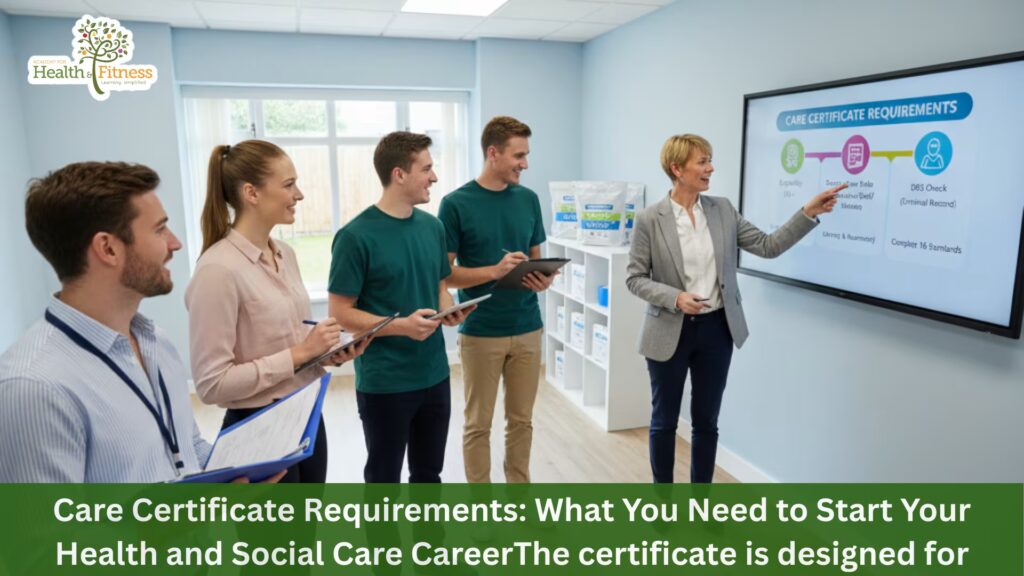
To start your career in health and social care, the Care Certificate requirements include completing 16 core standards that cover essential topics such as duty of care, communication, safeguarding, and health and safety. These standards ensure you have both the theoretical knowledge and practical skills to deliver high-quality care. While you can complete the training online, your employer will assess your competence in the workplace to make sure you’re ready to apply what you’ve learned.
This guide will help you:
- Understand what the Care Certificate is and why it’s required
- Identify the key requirements for getting started in your care career
- Learn how to complete the certificate through training, assessment, and reflection
- See how it can support your professional journey in health and social care
What Is the Care Certificate?

The Care Certificate is a set of national standards created for the non‑regulated health and social care workforce – those working in roles that don’t require professional registration, such as healthcare assistants, support workers and care assistants. These standards were introduced following the 2013 Cavendish Review to ensure everyone entering care has the same introductory level of knowledge, skills and behaviours. They act as a benchmark for induction training, giving new workers a clear understanding of what good care looks like.
Who needs it? The certificate applies to all new health and social care workers across England, regardless of setting. Regulated professionals – nurses, doctors and other registered clinicians – already achieve equivalent competencies through their qualifications, so they do not need to complete the Care Certificate. However, anyone working in a support role should complete it as part of their induction.
Originally launched in 2015, the Care Certificate was refreshed in March 2025 with a 16th standard covering awareness of learning disability and autism. The standards now cover topics ranging from person‑centred working to infection control and communication, providing a holistic view of what good practice looks like. They were developed jointly by Skills for Care, Skills for Health and NHS England, meaning they reflect national guidance and sector‑wide agreement on best practice.
Why Is the Care Certificate Required?
Health and social care are people‑focussed industries. A single mistake can compromise someone’s safety or dignity. The Care Certificate exists to make sure every new worker has a common foundation of knowledge and behaviours before they begin independent practice. It gives employers confidence that new staff understand key concepts such as safeguarding, communication and equality, and it helps workers build the confidence they need to provide safe, person‑centred care.
The certificate also promotes consistency. With dozens of providers and thousands of care settings across England, the standards ensure a shared language and baseline, regardless of where someone is trained. This consistency helps protect service users, supports compliance with the Care Quality Commission’s (CQC) regulations and aligns induction programmes with recognised good practice. The CQC expects employers to provide appropriate training, supervision and professional development for their staff, and the Care Certificate is one way to demonstrate that commitment.
Key Requirements for Starting Your Health and Social Care Career
1. Who Needs to Complete the Care Certificate?
To start your career in health and social care, the Care Certificate is a mandatory requirement for all new care workers. This includes:
- Health care support workers
- Care assistants
- Support workers
- Healthcare assistants
If you’re new to care, returning to the sector, or starting a new role in adult social care, you must complete the Care Certificate to ensure you meet the necessary standards for safe and effective practice.
This ensures that every care worker has the baseline knowledge and skills needed to provide safe, high-quality care in various settings — whether in care homes, hospitals, community care, or domiciliary services.
2. Time and Resources Required
Completing the Care Certificate typically takes 12 weeks for new staff. Here’s what’s required:
- Training: You will go through e-learning modules, face-to-face training, and workbooks.
- Practice: You’ll need to apply what you’ve learned in a real care setting, gathering evidence of your practice to show you can meet the standards.
- Assessment: Your employer or a designated assessor will evaluate your competence in applying your knowledge to everyday care situations.
The 12-week period allows time for you to complete the theory-based learning and the on-the-job assessments needed to demonstrate your competence in practice. Employers typically allocate supervised time for study, so you can focus on completing the certificate.
3. Employer Responsibilities
Employers have a critical role in supporting your completion of the Care Certificate. Here’s what they need to provide:
- Induction programme: Employers must provide a comprehensive induction that includes training materials and mentoring.
- Qualified assessor: A qualified assessor will be assigned to ensure you meet the practical competency standards required.
- Workplace support: Employers must give you the time and resources needed to complete the training and assessments — this includes on-the-job practice and supervision.
- Mandatory training: Employers must ensure you receive any statutory and mandatory training (e.g., fire safety, manual handling) alongside the Care Certificate training.
Employers must also ensure that all 16 Care Certificate standards are assessed in practice, as the Care Certificate cannot be completed without workplace assessment. The process ensures that workers are ready to deliver competent, compassionate care from day one.
To sum up, the key requirements for starting your career in health and social care through the Care Certificate include:
- Completing the 16 Care Certificate standards – a necessary step for all new care workers in England.
- Training and assessment – covering both theory (via e-learning) and practical assessment by your employer.
- Employer support – ensuring the right resources, supervision, and assessments are provided to help you succeed.
How to Complete the Care Certificate

Step‑by‑Step Guide
- Register with an accredited training provider. Many colleges and online platforms offer resources aligned with Skills for Care’s requirements. Look for providers that are recognised by your employer and provide up‑to‑date materials.
- Study the 16 standards. Complete the theoretical learning using e‑learning modules, videos, reading materials or classroom sessions. Reflective journals can help you connect theory to practice.
- Undertake workplace assessments. You will need to gather evidence that you can perform tasks such as effective communication, supporting nutrition or following infection control procedures. Evidence can include witness testimonies, reflective accounts, observational records or feedback from colleagues.
- Submit your portfolio. Your evidence portfolio should demonstrate that you have met each learning outcome. Include copies of completed workbooks, notes from supervision and examples of how you applied learning on the job.
- Get employer sign‑off. Once your assessor and manager are confident that you meet all 16 standards, they will sign off your Care Certificate. Only employers can award the certificate; training providers cannot do this on their own.
Online Learning vs. Classroom Learning
E‑learning allows flexibility, enabling you to study around shifts and personal commitments. However, online modules cannot replace the practical assessment component. Your competence must be demonstrated through real work activity – something that only a workplace assessor can judge. Classroom sessions, on the other hand, offer the chance to discuss concepts with tutors and peers, but they still rely on the same workplace assessment for sign‑off.
Tips for Staying on Track
- Set realistic goals. Break down each standard into manageable tasks and schedule time for learning and evidence gathering.
- Reflect regularly. Use a learning diary to jot down examples of how you apply each standard. Reflection helps show your understanding and demonstrates learning over time.
- Ask for support. Stay in contact with your supervisor or mentor and seek feedback. They can help you identify areas for improvement and offer practical advice.
Maintain your portfolio. Keep your evidence organised and up to date. An orderly portfolio makes it easier for assessors to review your competence.
How the Care Certificate Supports Your Career
Completing the Care Certificate isn’t just a box‑ticking exercise – it’s a foundation for your professional journey. By meeting these standards, you’ll gain core skills such as communication, risk assessment and person‑centred planning. These competencies are transferable across health and social care and make you more employable.
The certificate can also open doors to further qualifications. After completing it, many carers progress to Level 2 or Level 3 Diplomas in Health and Social Care, apprenticeships or specialist training (such as dementia care). Employers often view the Care Certificate as evidence of commitment and a willingness to learn, which can support career development and promotion.

What’s New in the 2025 Care Certificate Update?
In March 2025, the Care Certificate was updated to include Standard 16: Awareness of Learning Disability and Autism. This new standard acknowledges that understanding neurodiversity is essential for all workers, not just specialists. It covers communication strategies, appropriate language and adapting support to individuals’ needs. The update also places greater emphasis on digital skills and inclusive practice, reflecting the increased use of technology in care and the need to ensure everyone can access services equitably. Employers are encouraged to ensure their induction programmes address data security, online communication and assistive technology.
Common Misunderstandings About the Care Certificate
“It’s just for new staff.”
While the Care Certificate was designed for those new to care, it remains a valuable refresher for experienced staff. Standards evolve over time, and revisiting them helps ensure your practice remains up to date and aligned with current best practice.
“It’s a tick‑box exercise.”
The certificate is about competence, not just completing a checklist. You must demonstrate knowledge, behaviours and practical skills; evidence can include observations, reflective accounts and feedback from those you support. Assessors look for genuine understanding, not just written answers.
“You can complete it online only.”
E‑learning and digital workbooks provide the knowledge element, but you cannot complete the Care Certificate through theory alone. An assessor must observe your practice and sign off each standard in the workplace. This ensures you can apply what you’ve learned and provide safe, person‑centred care.
Conclusion
Completing the Care Certificate is a vital first step for anyone entering health and social care. These 16 standards provide a common foundation of knowledge, skills and behaviours that safeguard service
users and support professional growth. When combined with supervision and assessment, the certificate ensures that new workers are competent, confident and ready to deliver compassionate care.
If you’re ready to start your journey, invest time in learning each standard and gathering evidence of your practice. For structured, flexible learning, explore our Care Certificate Online Training Course. With the right support and dedication, the certificate will lay the groundwork for a fulfilling career in health and social care.