



Why the Care Certificate is Essential for Employers

The Care Certificate is essential for employers because it ensures consistency in training, compliance with regulations, and a higher standard of care, ultimately leading to better outcomes for both service users and staff.
Ensures Consistency in Training
One of the most important reasons for employers to implement the Care Certificate is that it standardises training across the sector. By setting clear expectations for essential skills and knowledge, the Care Certificate ensures that all care staff, regardless of their role or location, meet the same high standards.
This consistency is critical for providing dependable, quality care that meets the needs of service users. Whether it’s a care home, hospital, or community service, standardised training creates a common language and approach to care, reducing the risk of errors and improving teamwork.
Compliance with Regulations
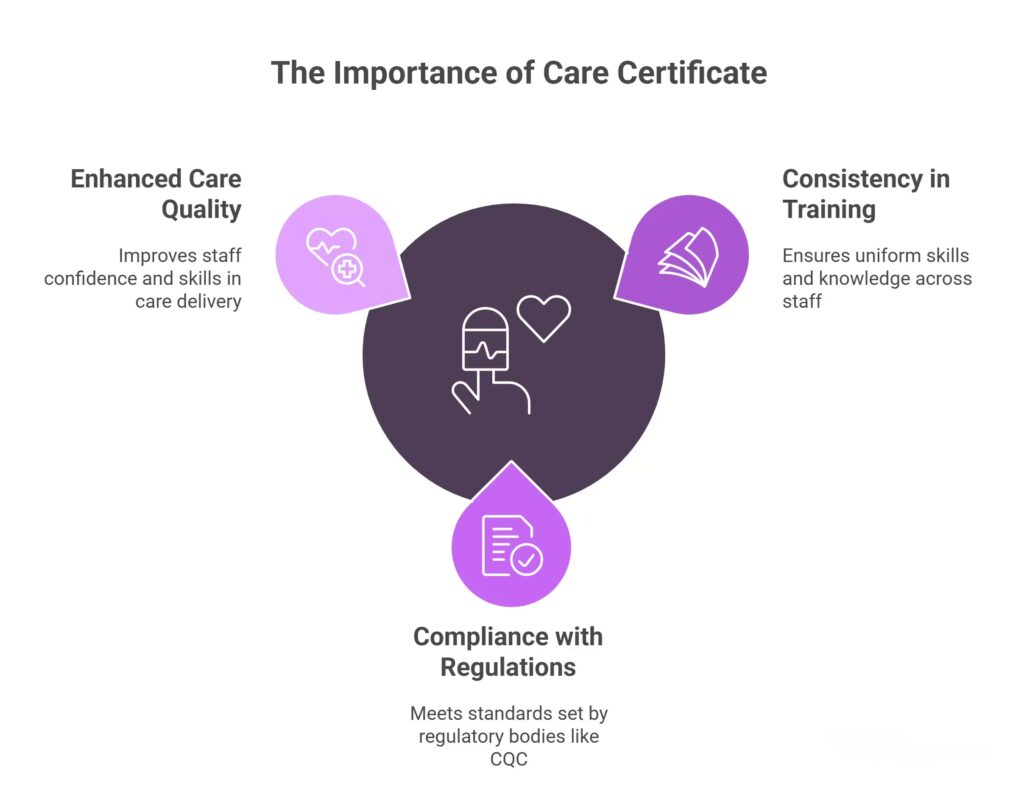
Employers in the health and social care sector are required to meet specific regulatory standards, especially from bodies like the Care Quality Commission (CQC). The Care Certificate plays a vital role in helping employers meet these regulations, as it is officially recognised by the CQC.
By ensuring that all new care staff complete this qualification, employers can confidently demonstrate that their team has the foundational knowledge and skills needed to provide safe, compassionate care. This is crucial not only for regulatory compliance but also for passing CQC inspections, which assess the quality and safety of care services.
Improves Care Quality
Proper training directly impacts the quality of care provided. When staff are well-trained, they are more confident in their roles and better equipped to handle challenges. The Care Certificate focuses on essential skills such as communication, safeguarding, infection control, and person-centred care.

This comprehensive training helps care workers make informed decisions, ensure safety, and provide more compassionate support. As a result, service users experience better care outcomes, fewer mistakes, and improved overall satisfaction. The more knowledgeable and competent your team is, the more likely they are to provide care that meets or exceeds expectations, which ultimately enhances the reputation of your organisation.
The Benefits of the Care Certificate for Employers
The Care Certificate offers employers far more than basic training — it strengthens the entire foundation of their care service. By investing in this qualification, organisations gain safer practices, greater workforce confidence, and long-term operational benefits.
Reduced Risk and Increased Safety
A well-trained workforce is a safer workforce. With the Care Certificate, staff learn essential skills like safe moving and handling, infection control, and safeguarding. This training helps prevent accidents, reduces workplace hazards, and ensures that employees can manage risks effectively. When your staff is properly trained, the risk of harm to both service users and staff decreases significantly, creating a safer environment for everyone involved.
Staff Retention
Staff turnover can be costly, both financially and in terms of team morale. Offering structured training like the Care Certificate shows that you’re invested in your employees’ development. This not only helps them feel valued but also increases job satisfaction, leading to higher retention rates. By providing clear pathways for growth and learning, you help create a more committed and satisfied workforce who are likely to stay longer and provide consistent care.
Improved Recruitment
Employers who offer professional training opportunities, such as the Care Certificate, tend to attract quality candidates who are serious about a career in care. Prospective employees see that you value their development, which can set your organisation apart from others. This can help you attract passionate and motivated care workers, which is crucial for building a skilled and effective team. Additionally, new recruits who have already completed the Care Certificate are often better prepared, reducing the need for extensive training once they join your team.
How the Care Certificate Helps with Recruitment and Staff Development

The Care Certificate doesn’t just prepare staff for their roles — it also plays a powerful part in attracting and developing talent. By offering structured training and clear progression routes, employers can build a motivated, skilled workforce that grows with their organisation.
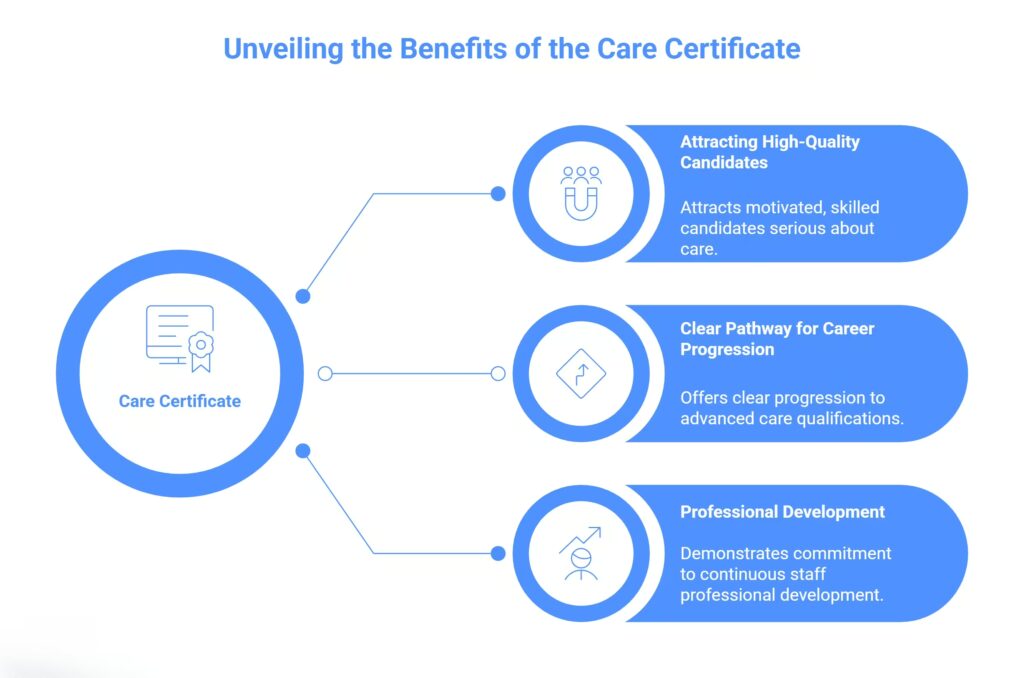
Attracting High-Quality Candidates
Employers who offer training opportunities like the Care Certificate are more likely to attract motivated, skilled candidates who are serious about a career in care. The Care Certificate provides a foundation of knowledge and skills that job seekers value, showing that they will receive the necessary training to succeed in the role. Offering this training upfront sets employers apart, helping them to stand out in a competitive job market and attract individuals who are dedicated to providing quality care.
Clear Pathway for Career Progression
The Care Certificate is often the first step in a care worker’s journey and offers a clear pathway for further qualifications and career advancement. For example, after completing the Care Certificate, staff can progress to more advanced qualifications, such as the Level 3 or Level 5 Diplomas in Health and Social Care. This clear progression route helps employees see a future within your organisation, keeping them engaged and motivated to pursue further training and development.
Professional Development
By implementing the Care Certificate, employers demonstrate a commitment to the continuous professional development of their staff. This not only helps staff grow their skills but also enhances their job satisfaction and loyalty to the company. When employees feel supported in their development and can see a clear path for career growth, they are more likely to remain with your organisation long term, leading to better retention and a more experienced, dedicated workforce.
Common Care Certificate Challenges for Employers
While the Care Certificate brings significant value, employers can face several practical challenges when implementing it. From managing time and resources to ensuring consistency across staff, these obstacles require careful planning to overcome.
Time and Resources
One of the biggest challenges employers face is finding the time and resources to ensure that staff complete the Care Certificate without compromising care quality. The training requires dedicated time for learning, reflection, and assessment, which can impact daily operations. Balancing this with the need to maintain high standards of care for service users can be tricky, especially in fast-paced environments. Employers need to manage shift patterns carefully and possibly bring in additional support to ensure both training and care quality remain top priorities.
Ensuring Consistency
Another challenge is ensuring that all staff members complete the Care Certificate and meet the required standards. In larger organisations, it can be difficult to track individual progress and ensure that every staff member receives the same level of support and training. Inconsistent application of the certificate can lead to gaps in knowledge and skills, which affects care quality. Employers must develop clear systems to monitor completion, provide guidance, and ensure that each member of the team adheres to the required standards.
Cost
Training costs can add up, especially for smaller care providers or those operating on tight budgets. While the Care Certificate is a valuable investment in staff development and care quality, the financial cost of training can be significant. Employers must balance the expense of online courses, in-person training, assessments, and resources against their overall budget. Some organisations may need to look for funding, partnerships, or government schemes to support training costs and ensure they’re meeting their legal and regulatory responsibilities without putting too much strain on their finances.
Conclusion
The Care Certificate is an essential tool for employers, ensuring consistency, high-quality care, and a well-trained workforce. While there are challenges like time, resources, and cost, the benefits far outweigh them in creating a skilled, confident team that can deliver top-notch care.
By investing in the Care Certificate, you’re not only supporting your staff’s professional growth but also improving patient outcomes and boosting satisfaction. It’s a step towards a more competent, compliant, and committed workforce in the health and social care sector.