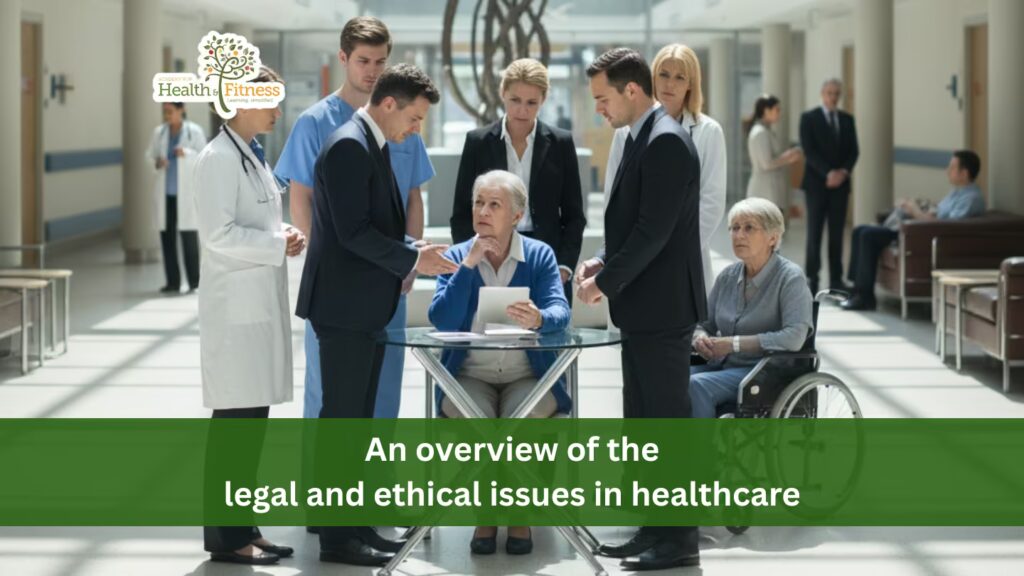


In 2023, a UK NHS Trust faced legal action after a patient’s private medical records were unlawfully accessed and leaked online by a staff member. The incident raised urgent questions about patient confidentiality, data protection, and institutional responsibility.
Legal and ethical issues in healthcare are not abstract—they impact real people, decisions, and outcomes. From patient privacy to life-saving interventions, these challenges affect how care is delivered and how trust is maintained within the healthcare system.
This blog breaks down the key legal and ethical concerns in modern healthcare, including data privacy, medical negligence, consent, and the ethical use of new technologies. You’ll gain a clear understanding of the rules, responsibilities, and grey areas shaping today’s care.
Legal Foundations in Healthcare
Healthcare isn’t just about medicine—it’s also about rules, rights, and responsibilities. Whether you’re a patient or a provider, the legal system helps guide safe, fair, and respectful care. Let’s break it down.

Key Healthcare Laws in the UK. These are some of the core laws that shape healthcare in the UK:
The Data Protection Act (2018)
- Protects your personal health information
- Sets rules on how the NHS and private providers collect, store, and share your data
- Based on GDPR (General Data Protection Regulation)
The Human Rights Act (1998)
- Guarantees your right to dignity, privacy, and safe treatment
- Used in cases involving discrimination or poor standards of care
The Mental Capacity Act (2005)
- Applies when a person can’t make decisions for themselves
- Helps staff decide what’s in that person’s best interest
- Used in dementia, learning disability, and unconscious patient cases
The Equality Act (2010)
- Makes it illegal to discriminate based on race, sex, disability, age, or religion
- Ensures equal access to treatment and services
The NHS Act (2006)
- Outlines how the NHS should operate
- Sets duties for providers, funding rules, and patient rights
These laws are the backbone of ethical, legal care in the UK.
Core Ethical Principles in Healthcare

Healthcare ethics are a moral compass for professionals. These principles ensure care is effective, respectful, and safe, guiding decisions and actions.
1. Autonomy – Respecting the Patient’s Right to Choose
Autonomy means you have the right to make decisions about your own health.
Whether it’s saying yes to treatment—or saying no—your voice matters.
Doctors must respect your choice, even if they disagree.
That includes choices about end-of-life care, surgery, or refusing medication.
Even when someone is vulnerable, like the elderly or disabled, their autonomy still stands—unless they legally lack capacity.
2. Beneficence – Acting in the Patient’s Best Interest
This principle is simple: Do good.
Healthcare providers must always aim to help, heal, and support your wellbeing.
That could mean giving treatment, offering comfort, or preventing harm.
Sometimes, doing what’s “best” isn’t obvious. But the goal stays the same—put the patient first.
3. Non-Maleficence – Do No Harm
This one is just as important: Don’t cause harm.
Even with good intentions, an action that leads to avoidable harm is unethical.
For example:
- Giving a risky treatment without proper explanation
- Ignoring side effects that could’ve been prevented
- Pushing ahead with a procedure when safer options exist
Non-maleficence keeps care cautious, careful, and respectful.
4. Justice – Fairness in Care
Justice means treating people fairly.
That includes how care is given, who gets access, and how resources are shared.
It’s not always easy. There are limits—beds, budgets, staff.
But justice asks us to make decisions that are balanced and free from bias.
This matters even more during crises—like a pandemic—when resources are stretched.
5. Putting It All Together in Real Life
These principles don’t work in isolation.
In real-life situations, they often overlap or even clash.
For example:
- A patient refuses treatment (autonomy), but the doctor thinks it’s vital (beneficence).
- Giving limited ICU beds to the sickest patients (justice) might risk others getting less attention (non-maleficence).
There’s rarely one perfect answer. That’s why ethics is a process, not a checklist.
Major Legal Issues in Modern Healthcare

Modern healthcare moves fast. New treatments, technologies, and systems are changing how we deliver care. But with progress comes pressure—and a growing list of legal risks. Let’s walk through the major legal issues today’s healthcare systems are dealing with.
1. Medical Negligence and Malpractice
Mistakes can happen. But when they do, and someone is harmed, it may lead to a malpractice claim.
This is one of the most common legal issues in healthcare.
It could involve:
- Wrong diagnosis
- Surgical errors
- Delayed treatment
- Not following clinical guidelines
Doctors and hospitals can face lawsuits. Patients may seek compensation for harm caused.
2. Informed Consent
You have the right to understand what’s being done to your body.
Before any treatment, healthcare providers must explain the risks, benefits, and choices.
If they don’t—and you didn’t agree fully—it can be a legal problem.
Even if the treatment worked, lack of consent makes it unlawful.
3. Confidentiality and Data Protection
Your health records are private. Under the Data Protection Act (2018), they must be kept secure.
If your information is leaked, shared without consent, or misused—it’s a legal breach.
This is even more important with digital records, emails, and online appointments.
Data breaches don’t just break trust—they can lead to fines or legal action.
4. Discrimination and Equality
Everyone deserves fair treatment in healthcare.
But sometimes, people face bias based on race, gender, disability, religion, or age.
The Equality Act (2010) makes this illegal.
If a patient is treated unfairly, they have the right to file a complaint or legal claim.
5. End-of-Life Legal Decisions
End-of-life care often raises serious legal questions.
Patients may refuse treatment, ask for a DNR order, or appoint someone to decide for them.
Doctors must follow these wishes—but only within legal limits.
In the UK, assisted dying is still illegal, and this can create difficult situations.
Knowing what’s allowed—and what isn’t—helps avoid legal risk and emotional harm.
6. Professional Misconduct
Healthcare workers must follow codes of conduct.
If they don’t, it could lead to disciplinary action—or even being struck off the register.
Common examples include:
- Fraud or dishonesty
- Abuse or neglect
- Breaking confidentiality
- Working outside your qualifications
Regulatory bodies like the GMC (General Medical Council) or NMC (Nursing and Midwifery Council) handle these cases.
Navigating these complex legal issues requires a strong foundation in both legal principles and ethical practice, knowledge often developed through structured courses such as a Health and Social Care Level 3 Diploma.
Areas of Overlap: Where Law and Ethics Intersect
Law tells us what we must do.
Ethics asks what we should do.
In healthcare, these two often walk side by side—but not always in the same direction.
Let’s look at the key areas where law and ethics meet—or clash—in real-world care.
1. End-of-Life Care
End-of-life decisions are deeply emotional.
They involve patient wishes, family beliefs, and medical judgment.
In the UK, patients have the legal right to refuse treatment—even if it could save their life.
That’s their autonomy, and the law protects it.
But doctors still have to weigh non-maleficence—the duty to do no harm.
Stopping treatment can feel wrong, even if it’s legal.
Also:
- DNR (Do Not Resuscitate) orders must be handled carefully
- Advance directives are legal but must be clear and current
- Assisted dying is illegal, but ethically debated
So, providers often face moral stress—between following the law and respecting the patient.
2. Reproductive Rights
This is another area where emotions run high.
Abortion laws vary across the UK, and they come with strict rules.
A woman may legally qualify for an abortion, but some healthcare providers may feel it goes against their ethical views.
This creates tension between legal access and personal belief.
At the same time, denying a patient care—based on belief—can violate ethical duty and the Equality Act.
Fertility treatments, IVF, and surrogacy also raise legal and ethical questions.
Who has the right to parenthood? What happens to unused embryos? The law doesn’t always offer clear answers.
3. Mental Health and Consent
Treating mental health patients involves tricky legal-ethical overlap.
Under the Mental Health Act, someone can be treated without consent if they’re a risk to themselves or others.
That may be legal—but is it always ethical?
It challenges autonomy, especially when patients refuse help.
Doctors must balance personal freedom with public safety.
It’s not easy, and it’s never black and white.
4. Public Health vs. Personal Freedom
During events like a pandemic, public safety becomes the top priority.
Laws may require vaccines, quarantine, or mask-wearing.
But what if someone refuses? That’s where ethics steps in.
You have rights—but so do others.
Ethics supports the idea of protecting the vulnerable, even if it means limiting some freedoms.
This is where law and ethics usually align, but not without debate.
Practical Guidance and Frameworks

Knowing the rules is one thing—applying them in real life is the real challenge.
Healthcare decisions are often fast, emotional, and complex. That’s why we need practical tools and support systems.
1. Use Simple Frameworks
When you face a tough choice, use the Four-Box Method:
- Medical facts
- Patient wishes
- Quality of life
- Context (legal, social, family)
This helps break things down and avoid rushed decisions.
2. Get Support
Most NHS trusts have Clinical Ethics Committees.
They guide you through tricky situations like end-of-life care or consent problems.
You’re not expected to do it all alone.
3. Know Where to Get Legal Help
If you’re unsure, speak to your legal or risk team.
They can help with consent issues, documentation, or confidentiality.
And always document everything clearly—it protects you and the patient.
4. Keep Learning
Laws and policies change.
Stay updated through:
- CPD courses
- Trust training
- Professional guidance (GMC, NMC, etc.)
Conclusion
Legal and ethical issues in healthcare are not just policies on paper—they shape real decisions, real lives, and real consequences. Whether you’re a patient or a provider, understanding these foundations helps build safer, more respectful care.
As healthcare continues to evolve, so will the challenges. But with the right tools, support, and awareness, we can make decisions that are not only lawful—but also fair and humane.
For those seeking a deeper understanding of these responsibilities, the Health and Social Care Level 3 Diploma is an excellent pathway. It equips you with the knowledge to navigate complex situations confidently while advancing your career in care and healthcare services.