


What Is the Care Certificate Assessment?

The Care Certificate assessment is your opportunity to prove you’ve got what it takes to provide safe, compassionate care. It’s not just a test—it’s an evaluation of your knowledge, skills, and ability to apply what you’ve learned in real-world situations. Whether it’s completing a quiz or demonstrating your skills on the job, the assessment ensures you’re ready for the responsibility of caring for others.
There are 16 standards that you’ll be assessed on. These standards cover everything from understanding your role and duty of care to dealing with infection control and communicating effectively. The Care Certificate standards set a clear benchmark for safe, high-quality care. Here’s what you’ll be assessed on:
- Understand Your Role
- Your Personal Development
- Duty of Care
- Equality and Diversity
- Work in a Person-Centred Way
- Communication
- Privacy and Dignity
- Fluids and Nutrition
- Awareness of Mental Health, Dementia, and Learning Disability
- Safeguarding Adults
- Safeguarding Children
- Basic Life Support
- Health and Safety
- Handling Information
- Infection Prevention and Control
- Emergency Procedures
Each of these standards has two parts: knowledge and practice. First, you’ll demonstrate your understanding of the theory behind these standards. Then, you’ll prove you can apply that knowledge in a real care setting. For example, you might be tested on how to handle confidential information or show how to help someone with their nutrition. It’s not just about knowing the facts—it’s about showing you can use them in a way that makes a real difference to people’s lives.
Preparing for the Care Certificate Assessment
Preparing for the Care Certificate Assessment starts with understanding what you’ll be asked to show in practice and how your knowledge will be checked. When you know what to expect, it’s much easier to plan your learning and walk into the assessment feeling steady and prepared.
Understand the Standards
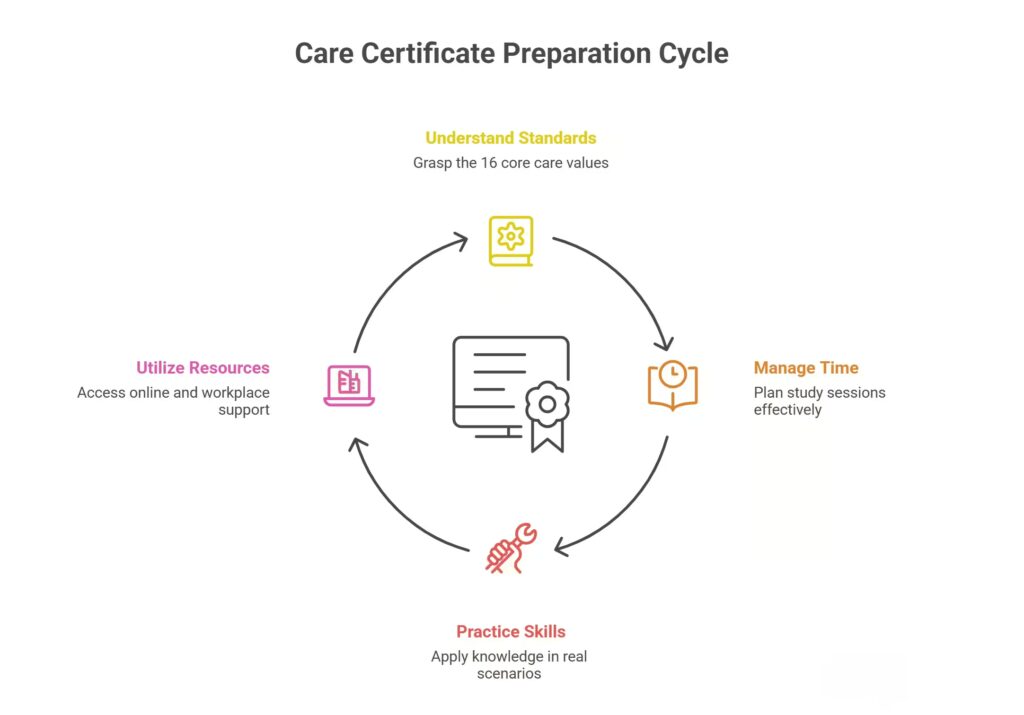
The first step to preparing for the Care Certificate assessment is getting to know the 16 standards inside and out. These standards are the foundation of the certificate, and understanding each one is crucial for both the theoretical and practical parts of the assessment.
Don’t just skim through them—take time to really digest what they mean. Each standard reflects core values of care that you’ll need to demonstrate every day in your role. The more familiar you are with them, the more confident you’ll feel when it’s time to show you can apply them.
You might also find support through workplace training or mentorship from more experienced colleagues. Online platforms can help you break down the theory behind each standard, while interactive tools can guide you through real-world scenarios. Make sure you have access to quality materials—these resources will make the learning process much smoother.
Time Management
Time management is key when preparing for the Care Certificate assessment. While most people take 8 to 12 weeks to complete the certification, it depends on your work hours and how quickly you can absorb the material.
A good approach is to break down the study into manageable chunks, focusing on a few standards each week. Prioritise the areas you’re less familiar with, but make sure to revise regularly. Creating a study plan that aligns with your shift schedule can help keep you on track without overwhelming you.
Practice Makes Perfect
It’s not all about reading or watching videos—it’s about doing. The Care Certificate assessment is about applying what you’ve learned in real situations. While you can study the theory all day long, it’s hands-on practice that will help solidify your understanding.
Take every opportunity to apply the standards in your daily tasks. Shadow more experienced staff, ask for feedback, and reflect on your experiences. The more you practice, the easier it will be to demonstrate your competence when the time comes.
Study Resources
There’s a wealth of resources available to help you prepare for the Care Certificate assessment. Online courses, training materials, and even guides from trusted organisations like Skills for Care are invaluable.
You might also find support through workplace training or mentorship from more experienced colleagues. Online platforms can help you break down the theory behind each standard, while interactive tools can guide you through real-world scenarios. Make sure you have access to quality materials—these resources will make the learning process much smoother.
Time Management

Time management is key when preparing for the Care Certificate assessment. While most people take 8 to 12 weeks to complete the certification, it depends on your work hours and how quickly you can absorb the material.
A good approach is to break down the study into manageable chunks, focusing on a few standards each week. Prioritise the areas you’re less familiar with, but make sure to revise regularly. Creating a study plan that aligns with your shift schedule can help keep you on track without overwhelming you.
Practice Makes Perfect
It’s not all about reading or watching videos—it’s about doing. The Care Certificate assessment is about applying what you’ve learned in real situations. While you can study the theory all day long, it’s hands-on practice that will help solidify your understanding.
Take every opportunity to apply the standards in your daily tasks. Shadow more experienced staff, ask for feedback, and reflect on your experiences. The more you practice, the easier it will be to demonstrate your competence when the time comes.
Tips for Completing the Care Certificate Assessment with Confidence
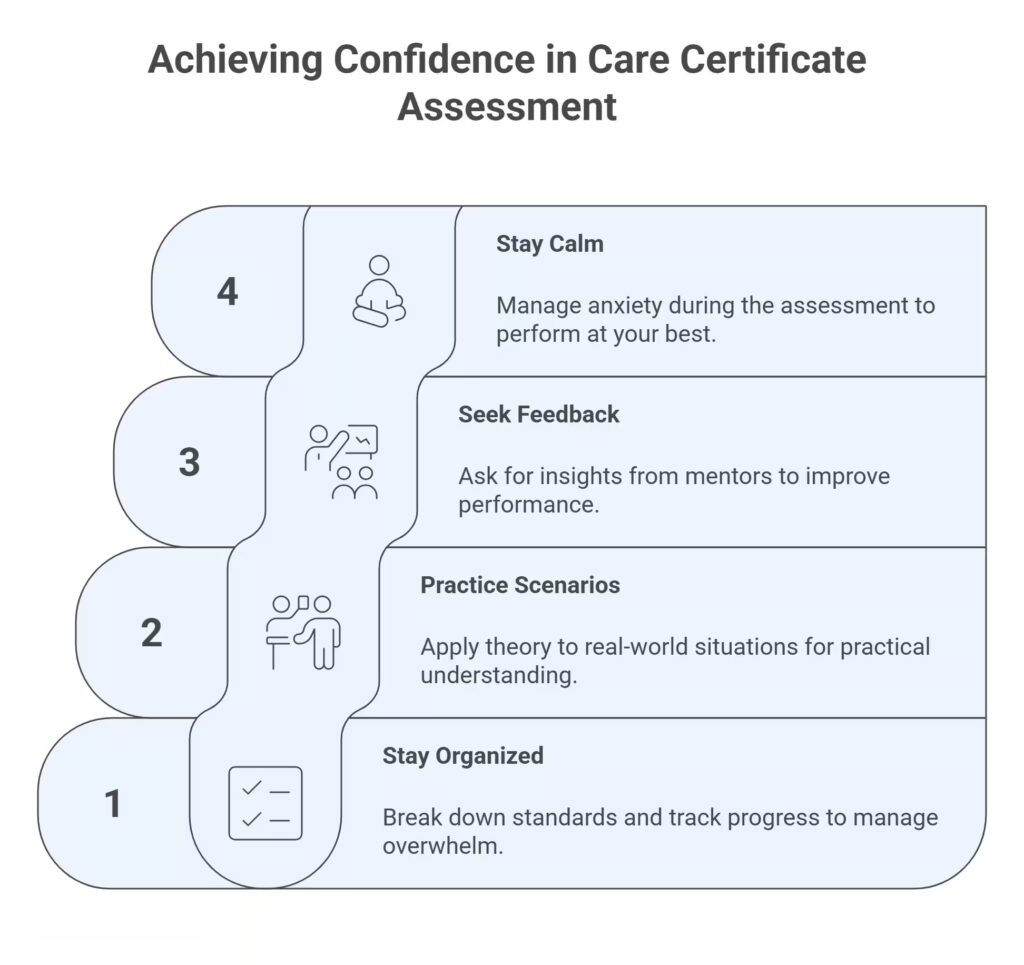
Small habits can make a big difference when you’re working through your assessment. With the right approach, you can stay calm, stay organised, and show your skills with confidence.
Stay Organised
One of the best ways to approach the Care Certificate assessment is to stay organised. Keeping track of your progress will help you avoid feeling overwhelmed. Break the 16 standards down into smaller sections and mark off each one as you complete it. Use a study planner or checklist to note what you’ve learned and what still needs attention. Being able to visually track your progress will not only keep you motivated but also make the process feel more manageable.
Practice With Real-World Scenarios
It’s easy to read through the standards and think you’ve got it, but applying them to real situations is what truly matters. Use examples from your job role to practice demonstrating knowledge. For instance, think about how you would handle a safeguarding situation or ensure proper infection control during a shift. Reflect on moments when you’ve already used these skills, and imagine how you could apply them more effectively. The more you connect theory to practice, the more confident you’ll feel during the assessment.
Ask for Feedback
Don’t be afraid to ask for feedback from your manager or mentor as you go through the training. They’re there to support you, and their insights can make a huge difference. Asking questions, seeking clarification, or requesting feedback on how you’re applying the standards in your daily work will give you valuable pointers and boost your confidence. It’s also a great way to ensure you’re on track and meeting the required standards before the official assessment.
Stay Calm During the Assessment
When the day of the assessment arrives, staying calm is crucial. It’s natural to feel a bit nervous, but managing that anxiety will help you perform at your best. Take a few deep breaths before starting, and remember—this is your chance to show what you’ve learned, not to be judged. Focus on one task at a time, and don’t rush. If you need to pause and reflect, do so. Assessors understand it’s a learning process, so staying calm and composed will help you present your best self.
Care Certificate Assessment: Common Challenges and How to Overcome Them

Most learners face a few sticking points during the Care Certificate Assessment, and that’s completely normal. Knowing where people often struggle helps you prepare for those moments and handle them with confidence.
Time Pressure
One of the most common challenges when completing the Care Certificate assessment is time pressure. With your everyday duties and the need to complete the standards, it can feel like there’s never enough time. It’s easy to get overwhelmed by deadlines, especially when you’re balancing shifts and studying.
How to Overcome It:
To manage time effectively, break the assessment down into smaller tasks. Instead of trying to tackle everything at once, focus on one standard or topic at a time. Set aside specific blocks of time during your shift or between breaks for study, and use your spare moments to reflect on what you’ve learned. Staying organised with a study planner can help you track your progress and prevent procrastination. Prioritise the most difficult or unfamiliar topics first, so you don’t run out of time to address them.
Difficulty in Demonstrating Practical Skills
Another common challenge is feeling unsure about demonstrating practical skills in the assessment. Whether it’s moving and handling or dealing with safeguarding concerns, showing that you can apply what you’ve learned in real-world scenarios can be nerve-wracking.
How to Overcome It:
Don’t just rely on theory—practice makes perfect. Take every opportunity to practice the skills during your shifts. Ask your manager or mentor to observe and provide feedback. The more you practice, the more natural it will feel when it’s time for the assessment. If you feel unsure about any particular skill, ask for extra training or shadow someone who excels in that area. Remember, it’s about demonstrating competence, not perfection.
Nervousness During the Assessment
Feeling nervous is completely natural when it’s time for the official assessment. Whether it’s the knowledge test or practical demonstration, nerves can affect your performance. But the truth is, everyone gets nervous—even experienced professionals.
How to Overcome It:
Stay calm and focused. Take a few deep breaths before the assessment starts to calm your mind. Remind yourself that this is your chance to show how far you’ve come. The assessors are there to help you succeed, not to judge you. If you feel nervous about a particular standard, take your time, and don’t hesitate to ask for clarification if you’re unsure about what’s expected. Break everything down into smaller steps, and tackle each one with confidence.
Lack of Confidence in Applying Knowledge
Some care workers struggle with applying theoretical knowledge in real-world situations. It’s one thing to know the theory, but it’s another to act on it confidently when it matters most.
How to Overcome It:
The key is practice and reflection. The more you put the standards into action, the more comfortable you’ll become. After each shift, take a moment to reflect on what went well and where you can improve. This reflection will help you connect the theory with real-life scenarios. Also, don’t be afraid to ask for feedback from colleagues and supervisors. Their insights will help you grow and boost your confidence in applying what you’ve learned.
Conclusion
Passing the Care Certificate assessment is an important step in your health and social care career. It equips you with the foundational skills and knowledge that make you a valuable asset to any care team. Once you’ve completed it, you’ll be ready to take on more responsibilities, gain further qualifications, and explore a range of career opportunities.
The Care Certificate is more than just a qualification—it’s the start of your professional growth. Employers recognise and appreciate it, and it sets you on a path to progress in this rewarding sector.