

Choosing between phlebotomy and nursing can feel like deciding between two very different roads into healthcare. Phlebotomy and nursing each offer rewarding ways to help patients, but the day‑to‑day experience and training requirements differ.
If you’re trying to decide whether to start your career as a phlebotomist or pursue a nursing qualification, start by looking at your interests, the time you can invest and the type of work environment you prefer. Phlebotomists focus on drawing blood and handling specimens, while nurses deliver direct care and manage broader clinical responsibilities.
This guide explains what each role involves, the qualifications and skills required, salary expectations, job prospects, and how to get started. By the end, you’ll have a clear sense of which path aligns with your personality and long‑term goals.
Understanding the Two Careers: Phlebotomy and Nursing
What is Phlebotomy?
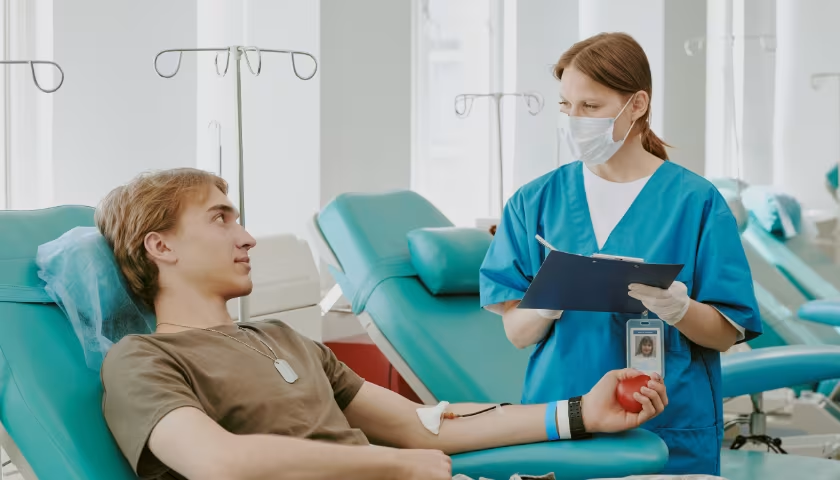
Phlebotomy is a clinical role centred on drawing blood and collecting specimens for laboratory tests. Phlebotomists talk with patients and donors to ease their nerves and then draw blood, verify patient identities, label samples and maintain sterile equipment. They work mainly in hospitals, diagnostic laboratories and clinics. Some phlebotomists travel to donation centres or patients’ homes.
What is Nursing?
Nursing involves providing comprehensive care to adults who are sick, injured or have disabilities. Nurses take temperatures and blood pressures, give injections and set up drips, monitor patient progress and update records. They collaborate with doctors and other professionals to decide what care to give and offer advice to patients and their families. Nurses work in hospitals, health centres, community settings and homes, often on shifts that include evenings, weekends and bank holidays.
Key Similarities Between Phlebotomy and Nursing
Both phlebotomists and nurses are part of the healthcare team, interacting directly with patients. Each role requires technical competence, attention to detail, good communication skills and the ability to reassure people who may be anxious or unwell.
Key Differences Between Phlebotomy and Nursing
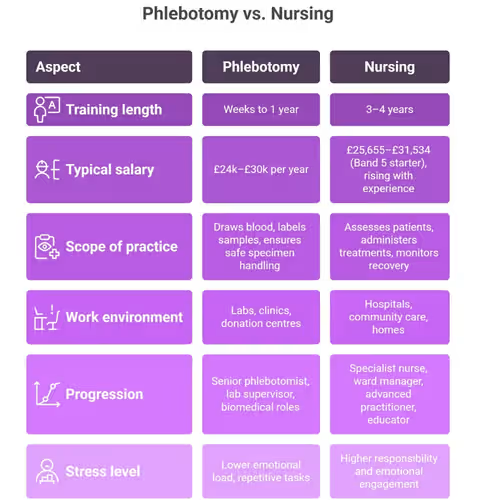
Phlebotomists specialise in collecting and processing blood samples, whereas nurses provide broad patient care, administer treatments and make clinical decisions. The scope of practice for nurses is wider and carries greater responsibility. Training for nursing is longer and more academically demanding, and the work environment can be more emotionally intense due to the holistic nature of patient care.
Training and Qualification Requirements for Phlebotomy and Nursing
To become a phlebotomist, you typically complete a post‑secondary certificate or diploma programme that focuses on venepuncture, anatomy and laboratory procedures. In the United States, these programmes usually take less than one year to complete, and some employers hire candidates with a high‑school diploma and provide on‑the‑job training. In the UK, short courses can be as brief as two to five days, while more detailed programmes last up to six months and include practical experience. Certification or registration may be required depending on the employer or region.
Registered nurses usually need a degree in nursing approved by the Nursing and Midwifery Council. In the UK, full‑time nursing degrees take three years to complete and include supervised clinical placements. Entry requirements often include four or five GCSEs (grades 9–4) and two or three A‑levels (including a science) or a Level‑3 diploma. You can also enter through a Registered Nurse Degree Apprenticeship, which combines academic study and paid work over about four years. After training, nurses must register with the Nursing and Midwifery Council.
Time and Cost Comparison Between Phlebotomy and Nursing Qualifications
Phlebotomy training is generally shorter and less costly. A certificate can be earned in a few weeks or months. Nursing degrees require at least three years of study and higher tuition fees. Apprenticeships offer paid positions but extend the training period to around four years. The longer academic and clinical requirements for nursing reflect the broader scope of practice and responsibility.
Career Progression in Phlebotomy vs Nursing
Phlebotomists can progress to senior roles, specialise in laboratory technology or gain supervisory responsibilities. Experience in phlebotomy can be valuable for other healthcare careers, such as biomedical science or nursing. Nurses have a wider range of progression routes: they can become ward managers, specialise in areas like intensive care or neonatal nursing, train as advanced nurse practitioners or move into management, education or research.
Career Outlook, Salary and Work Environment in Phlebotomy and Nursing
What Are the Salary Expectations for Phlebotomists and Nurses?
Phlebotomists generally earn a lower salary than nurses. In the UK, the National Careers Service lists a typical phlebotomist salary of £24,000 for starters, rising to £30,000 with experience. Registered nurses, starting in Band 5 of the NHS Agenda for Change pay scale, can earn from £25,655 to £31,534, with Band 6 nurses earning £32,306–£39,027 and senior nurses earning even more. The higher salary reflects the greater training commitment and responsibility associated with nursing.
What Is the Job Outlook for Phlebotomists and Nurses?
Employment of phlebotomists is projected to grow 6 % from 2024 to 2034, faster than the average for all occupations. Demand for phlebotomists is driven by the need for diagnostic tests and an ageing population. Nursing also faces strong demand: recent reports note around 39,000 vacancies for registered nurses in the UK, with one in ten posts unfilled on acute wards and one in five vacancies on mental health wards. The NHS has pledged to increase the number of nurses by 50,000 by 2025 to address the shortage.
Work Environment: Phlebotomy vs Nursing
Phlebotomists often work in controlled environments such as laboratories, clinics and donation centres. Their hours may be more regular, though hospital roles can require nights or weekends. Nurses work wherever patients need care – hospitals, health centres, hospices, community settings and patients’ homes. Shift work, including evenings, nights and weekends, is common, and the environment can be physically and emotionally demanding.
Stress and Job Satisfaction in Phlebotomy and Nursing
Nursing often involves higher stress levels due to long shifts, complex care and emotional situations. However, many nurses find the variety and meaningful interactions rewarding. Phlebotomy is more task‑focused and may be less emotionally demanding, but it requires precision and the ability to work efficiently under pressure. Choosing between the two should consider your tolerance for stress and desire for variety.
Skills, Qualities and Personal Fit for Phlebotomy and Nursing

What Skills Are Needed to Be Successful in Phlebotomy?
Successful phlebotomists need manual dexterity and attention to detail when drawing blood and handling specimens. They must explain procedures clearly, reassure patients who are nervous and maintain sterile equipment. Important qualities include communication skills, compassion, precision and the ability to follow safety protocols.
What Skills Are Needed to Be Successful in Nursing?
Nurses need strong communication, empathy and resilience. They must take vital signs, administer medications, monitor patients and handover information accurately. Patience, the ability to work under pressure and collaboration with other healthcare professionals are essential. Nurses also require critical thinking to assess patients and respond to changing conditions.
Which Career Path Suits Your Personality – Phlebotomy or Nursing?
If you enjoy technical, hands‑on work and prefer a focused role within a laboratory or clinic, phlebotomy may be a good fit. The role suits those who like working with precision instruments and delivering a specific service without managing broad patient care. If you thrive in a fast‑paced, patient‑centred environment, are comfortable with shift work and want to build deep relationships with patients, nursing could be a better choice.
How to Think About Your Long‑Term Goals in Phlebotomy and Nursing
Consider whether you want a specialised role with a clear focus or a versatile career with many pathways. Phlebotomy offers entry into healthcare with shorter training, and experience can open doors to laboratory technology, biomedical science or nursing. Nursing provides a broad foundation and opportunities to specialise, lead teams, move into advanced practice or even shift into teaching or research.
How to Get Started in Phlebotomy and Nursing
How to Start a Career in Phlebotomy
- Research accredited courses. Look for certificates or diplomas that include theoretical and practical training in phlebotomy.
- Complete the programme and gain clinical experience. Programmes often involve hands‑on practice and may take from a few days to several months
- Obtain certification if required. Employers may prefer candidates with recognised certification or proof of competence.
- Apply for entry‑level positions. Hospitals, diagnostic labs and blood donation centres frequently advertise trainee or entry‑level phlebotomy roles.
- Continue learning. Staying up to date with safety procedures and new collection techniques can improve your prospects.
How to Start a Career in Nursing
- Meet entry requirements. Ensure you have the necessary GCSEs and A‑levels (or equivalents), including science subjects.
- Apply for an approved nursing degree. Choose a programme recognised by the Nursing and Midwifery Council and apply via UCAS. Full‑time degrees take three years.
- Complete clinical placements. These provide hands‑on experience in different healthcare settings.
- Register with the NMC. After graduating, you must register with the Nursing and Midwifery Council to practise.
- Consider apprenticeships. A Registered Nurse Degree Apprenticeship allows you to earn while you learn over about four years.
How to Combine Phlebotomy and Nursing Education
Some nursing programmes include basic phlebotomy skills, and experience in phlebotomy can be a useful stepping stone into nursing. Starting as a phlebotomist offers hands‑on experience with patients and laboratory protocols, which can strengthen your nursing school application or ease the transition when learning intravenous procedures.
Educational Opportunities in Nursing Assistant Training
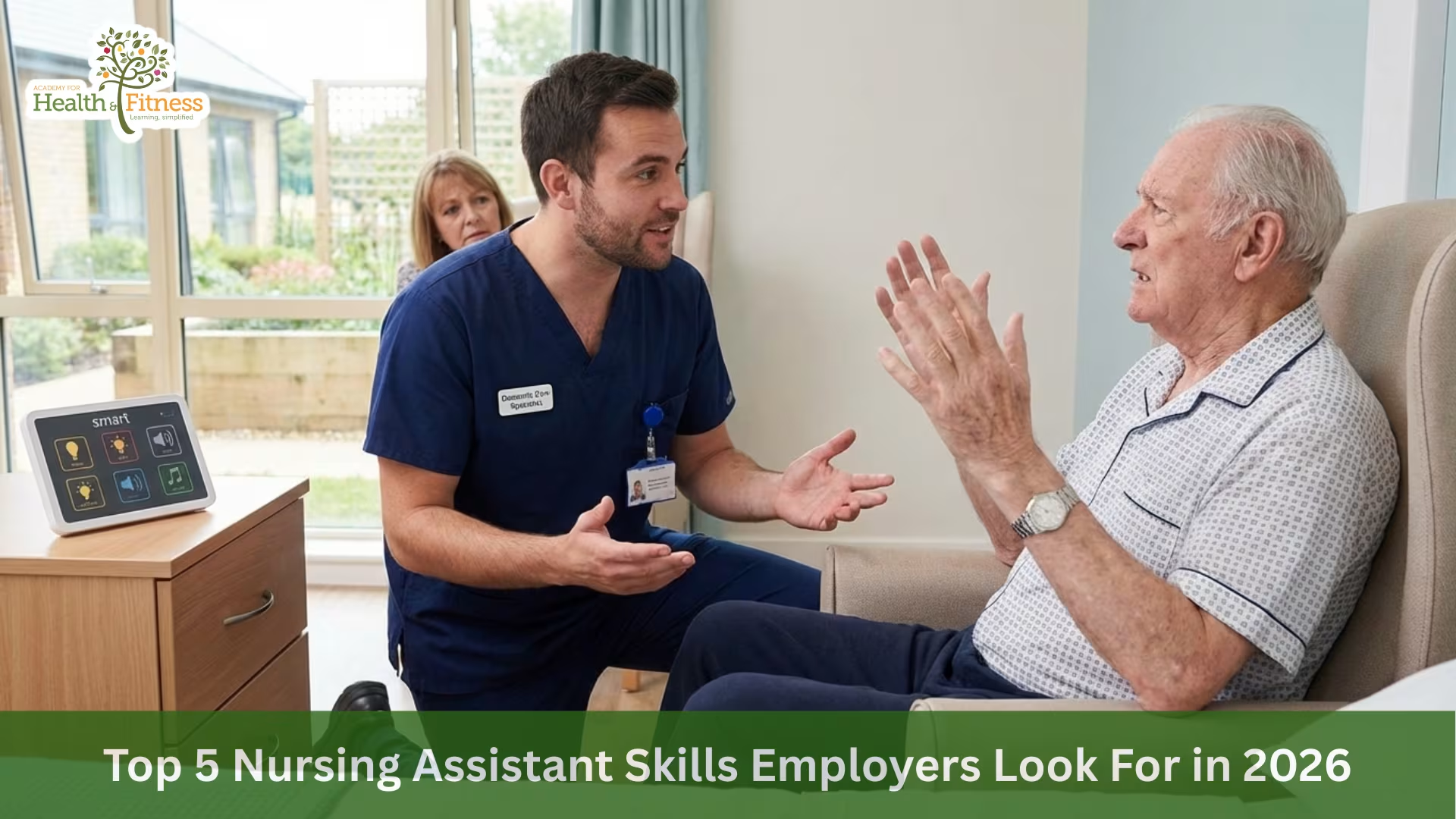
If you’re uncertain about committing immediately to a three‑year nursing degree, consider gaining experience as a nursing assistant. A nursing assistant qualification provides practical experience supporting patients with daily activities, monitoring vital signs and assisting nurses. The Nursing Assistant Diploma Online offers flexible learning and can be completed alongside other commitments. This route allows you to work in healthcare while you decide whether to pursue further studies.
Real‑Life Case Studies: Phlebotomy vs Nursing
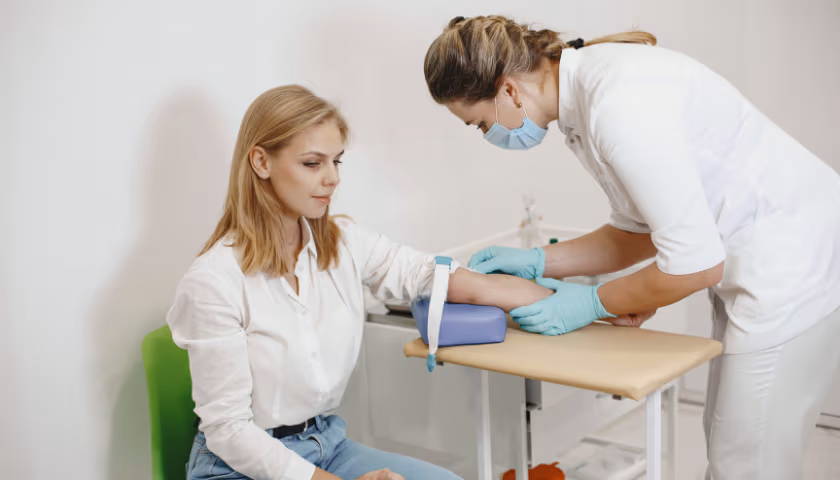
A day in the life of a phlebotomist.
Sarah (a fictional example) works in a busy hospital laboratory. She starts her day by reviewing the list of patients requiring blood tests. She prepares her equipment, greets each patient calmly and explains the procedure, then collects blood samples, labels them and ensures they reach the lab quickly. Her shift finishes in the afternoon, giving her evenings free. Sarah enjoys the precision of her work and the satisfaction of contributing to diagnoses without long shifts.
A day in the life of a nurse.
Michael (a fictional example) is a ward nurse in a surgical unit. He begins his twelve‑hour shift by receiving a handover from the night team. Throughout the day he monitors patients’ vital signs, administers medications, manages wound care and communicates with doctors and families. He often works evenings and weekends and finds the work demanding but rewarding because he sees patients recover and appreciates the variety of tasks.
Making the Decision: Phlebotomy or Nursing – Which Is Right for You?
Choosing between phlebotomy and nursing comes down to your interests, time commitment and career goals. The table below summarises key differences in a simple way:
Decision‑Making Framework
- Time & cost: Can you commit to several years of study? If not, phlebotomy offers a faster entry point.
- Type of work: Do you prefer technical, repetitive tasks or varied, holistic patient care?
- Work environment: Are you comfortable in a high‑pressure clinical setting with shift work? Nursing often involves longer hours.
- Career growth: Do you want numerous pathways and leadership roles? Nursing provides broader options.
Ultimately, the “right” choice depends on your situation. Shadowing professionals or volunteering in healthcare can give you valuable insight. Speaking with current phlebotomists and nurses will also help you make an informed decision.
Conclusion
Both phlebotomy and nursing are rewarding careers that contribute to patient care. Phlebotomy offers a focused technical role with shorter training and regular hours. Nursing requires a longer educational journey but provides diverse opportunities, higher salaries and closer patient relationships. Reflect on your interests, lifestyle and goals to decide which path fits you best, and remember that starting as a nursing assistant or phlebotomist can be a stepping stone toward your future in healthcare.