

Where to find the best opportunities in 2026 is a question more people are asking as the UK faces one of its biggest healthcare staffing gaps in decades. With over 124,000 NHS vacancies and an ageing population needing more support than ever, the demand for skilled nursing assistants is rising fast — and those who act now won’t be short of options. It’s a moment where the right move could shape your entire career.
To put it simply, the best nursing assistant jobs in 2026 will be found in NHS hospitals, care homes, community care teams, private hospitals, mental health services and rapidly growing primary care networks. These sectors will offer the widest choice, the strongest job security and the most consistent hiring throughout the year.
In this guide, you’ll discover:
- The sectors and UK regions offering the most opportunities
- Which employers will hire the most nursing assistants in 2026
- Salary ranges across NHS and private care
- Skills that make you stand out in a competitive hiring market
- Where to easily search and apply for the best roles
Why Nursing Assistant Jobs Are Booming in 2026

The UK health-care system is facing one of its biggest staffing gaps in decades. The NHS reported over 124,000 vacancies in 2023/24, with support-worker and nursing assistant roles making up a significant portion. Add an ageing population — with nearly 1 in 5 people now over 65 — and the demand for hands-on care continues to rise sharply every year.
The NHS Long Term Workforce Plan projects the need for tens of thousands more healthcare support workers by 2030, with the aim of reducing pressure on nurses and improving patient flow. This means nursing assistants are not just helpful — they are central to how hospitals, GP practices and community teams will function in the coming years.
Demand isn’t limited to the NHS either. Private hospitals, residential care homes, home-care agencies and mental health services are expanding their recruitment as chronic illness cases rise and social-care vacancies remain consistently high. In short, the sector is growing because the UK simply needs far more hands, support and day-to-day patient care — and nursing assistants are the workforce filling that gap.
7 Best Places to Find Nursing Assistant Jobs in 2026

NHS Hospitals
NHS hospitals remain the biggest employer of nursing assistants in the UK. Roles are available across medical wards, surgical units, A&E, outpatients, day surgery and specialised departments.
With ongoing staffing shortages and the NHS expanding its support-worker workforce, 2026 is set to bring even more openings, especially in acute and emergency settings.
Care Homes & Nursing Homes
Care homes—both independent local homes and large national providers—offer some of the most consistent opportunities. Long-term care needs are rising due to the UK’s ageing population, so demand for nursing assistants remains steady year-round. Jobs in these settings often offer stable hours and close patient relationships.
Community Care & Domiciliary Care
Home-care services are expanding rapidly as more people choose to receive support in their own homes.
Roles involve visiting service users for personal care, mobility and daily-living support.
With NHS community services and private agencies growing, this is one of the fastest-growing job markets, offering flexible hours and high availability.
GP Practices & Primary Care Networks (PCNs)

Primary care teams are becoming more multidisciplinary, meaning nursing assistants now support patient observations, health checks and admin tasks within GP surgeries.
As PCNs continue filling care-coordinator and support-worker roles, more NAs are being recruited to help manage rising patient workloads.
Private Hospitals & Specialist Clinics
Private hospitals often offer higher pay rates, clearer progression, and predictable shift patterns.
Specialist clinics—such as orthopaedic centres, fertility clinics and surgical day units—also hire nursing assistants for patient prep, discharge support and aftercare.
Mental Health Services
Mental health services across the UK continue to face severe staffing shortages.
Nursing assistants play a key role in supporting patients, monitoring wellbeing, de-escalating situations and assisting nurses with therapeutic activities.
In 2026, recruitment is expected to remain high due to increased funding and service expansion.
Rehabilitation Centres
Rehabilitation units hire nursing assistants to support post-operative recovery, neurological rehab, mobility therapy and daily-living skills.
These roles are ideal for those who enjoy structured routines and working closely with physiotherapists, occupational therapists and registered nurses.
Top UK Regions With the Most Nursing Assistant Opportunities
England Hotspots: London, Manchester, Birmingham, Leeds, Liverpool
These cities consistently top recruitment lists due to large hospital trusts, dense populations and high patient demand.
London offers the highest salaries thanks to the High-Cost Area Supplement, while Manchester, Birmingham, Leeds and Liverpool provide steady vacancies across NHS hospitals, care homes and community services.
Scotland, Wales & Northern Ireland Outlook
- Scotland: Strong demand across Glasgow, Edinburgh and Aberdeen due to ageing populations and expanding community-care services.
- Wales: Cardiff and Swansea offer the most roles, especially in NHS hospitals and care homes where staffing shortages remain ongoing.
- Northern Ireland: Belfast leads in opportunities, with consistent hiring across trusts and private care providers.
Across all devolved nations, rural areas often struggle most with recruitment, meaning job security is exceptionally high in community and care-home settings.
Why Some Regions Pay More or Hire More

Pay and demand vary due to:
- Cost of living (London & South East pay more).
- Hospital size & staffing shortages (big cities recruit constantly).
- Population health trends (areas with older populations hire more support staff).
- Private-sector concentration (more private hospitals = higher competitive wages).
London and the South East typically offer the highest earnings, while the North West, West Midlands and Yorkshire offer the highest number of vacancies.
Demand & Typical Salary by Region (2026)
Region | Demand Level | Typical Salary Range (NHS Band 2–3) | Why |
London | Very High | £23,500–£28,000 (HCA supplement included) | Largest trusts, high turnover, rising patient demand |
South East England | High | £22,000–£26,500 | Large ageing population, mix of NHS + private |
North West (Manchester, Liverpool) | Very High | £21,000–£25,500 | Big hospital networks + long-term staffing shortages |
West Midlands (Birmingham) | High | £21,000–£25,500 | Major acute hospitals and care-home expansion |
Yorkshire & Humber (Leeds) | High | £21,000–£25,000 | Diverse NHS trusts and strong community-care growth |
Scotland | Moderate–High | £21,500–£25,500 | Ageing population + community-care investments |
Wales | Moderate | £21,000–£24,500 | Fewer large hospitals but consistent care-home demand |
Northern Ireland | Moderate | £21,000–£24,000 | Steady NHS hiring, especially in Belfast |
Note: Salaries reflect projected NHS Band 2–3 rates for 2026; private-sector roles may pay slightly more.
How to Stand Out as a Nursing Assistant and Get Hired Faster
To stand out as a nursing assistant and get hired faster, you need to show employers that you have strong care skills, clear communication, reliability and the right training. Everything else you do — your CV, interview answers, and practical competence — builds on these essentials.
Employers make decisions quickly, often within seconds of looking at an application, so presenting yourself with clarity and confidence gives you an immediate advantage.
Build a Strong CV That Highlights the Right Skills

Recruiters look for specific qualities first, so make sure these appear clearly on your CV:
- Personal care experience
- Observation accuracy
- Communication and teamwork
- Infection control awareness
- Reliability and willingness to learn
Example Profile Statement
A compassionate and dependable nursing assistant with strong patient-care skills, accurate observation abilities and hands-on experience supporting adults in care settings.
Perform Well in Behavioural Interviews
Nursing assistant interviews rely heavily on behavioural questions to test judgement and empathy. Expect questions like:
- “What would you do if you noticed a sudden change in a patient?”
- “Tell me about a time you reassured someone who was distressed.”
Use the STAR method to give structured, calm, confident answers. Employers want to see safety awareness, communication skills and emotional steadiness.
Secure Certificates & Practical Training
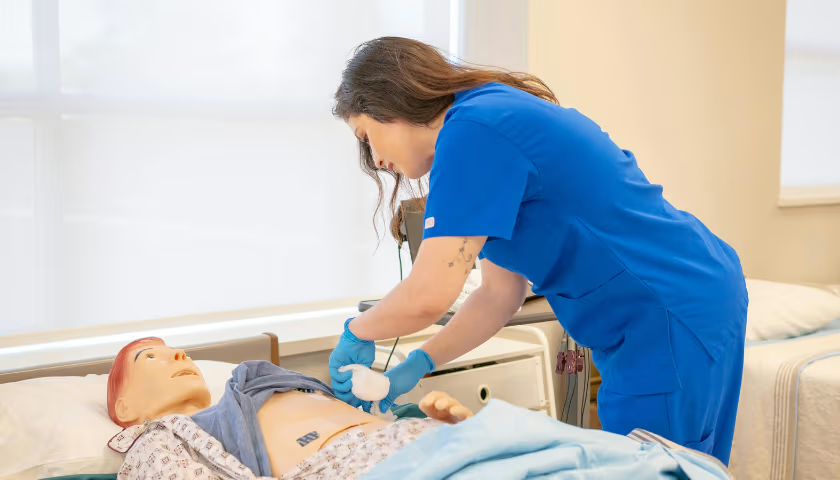
Candidates with recognised training get shortlisted faster because employers trust their competence.
Training should cover:
- Infection control
- Moving and handling
- Safeguarding
- Basic clinical observations
- Communication and professional conduct
Structured training routes like the Nursing Assistant Diploma Online can help build these skills in a flexible, well-supported way, which employers appreciate.
Final Tip to Speed Up Hiring
Respond quickly, keep documents ready (DBS, ID, references), and apply across multiple settings — NHS, care homes, community teams and agencies. Candidates who stay organised and proactive land jobs much faster.
Conclusion
Nursing assistant jobs in 2026 offer some of the strongest opportunities in UK healthcare, with rising demand, wider role options and stable employment across nearly every region. It’s a promising time to enter — or advance within — the field.
With the right skills, preparation and confidence, you can secure meaningful, steady work in environments that genuinely value what you do. The care sector needs committed people more than ever, and those who step forward now will shape the future of patient support.
Your next opportunity is out there — and you’re closer to it than you think.