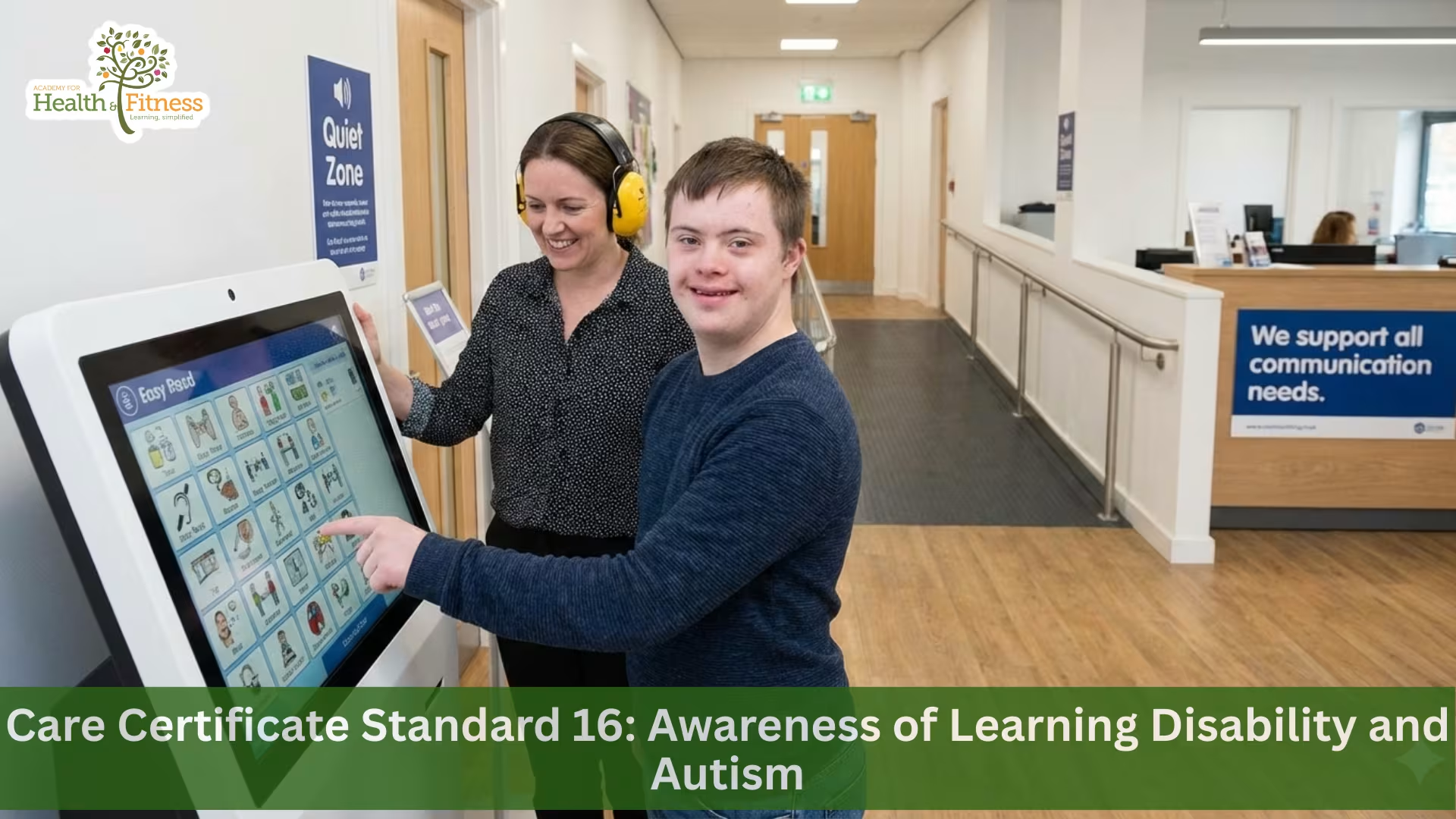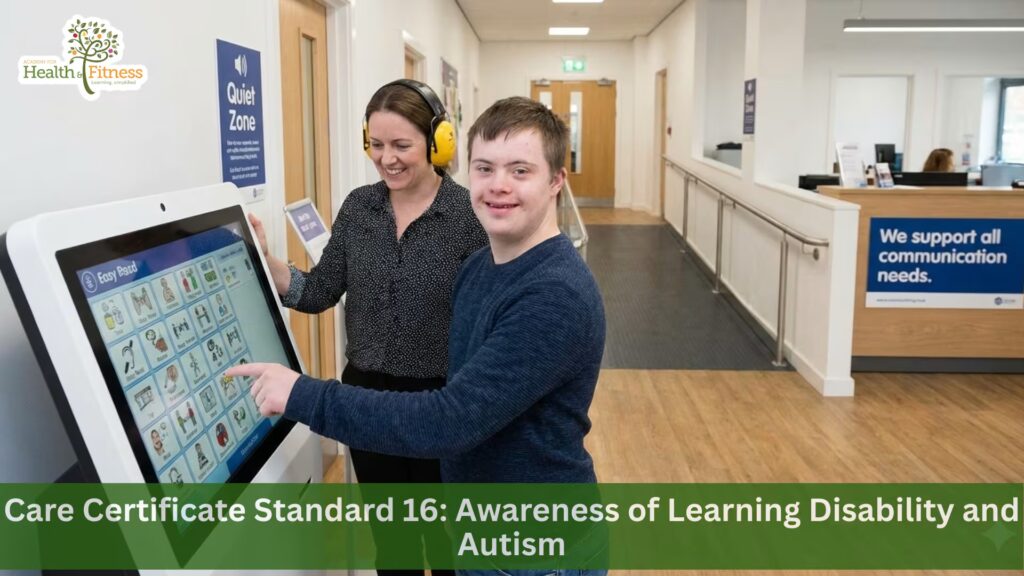


Every person you support is unique. Some will need extra time to process what’s happening around them, others might be overwhelmed by noisy corridors or unfamiliar routines. Care Certificate Standard 16: Awareness of Learning Disability and Autism reminds us to see each person as an individual, not a diagnosis. It’s about empathy as much as knowledge — understanding why someone may react differently and knowing how to help.
Care Certificate Standard 16 helps care workers understand what learning disabilities and autism are, spot the differences between them and respond with compassion. It promotes inclusion and person‑centred support so that people can live full lives, with the right help when they need it. In one simple sentence: Standard 16 teaches you to respect, communicate with and advocate for people with learning disabilities and autistic people so they’re not excluded.
In this blog you’ll find:
- What learning disability and autism awareness means
- Key characteristics and differences between the two
- How to communicate well
- Your responsibilities under Standard 16
- Practical support strategies
- Rights, dignity and inclusion
- Relevant laws and frameworks
Why Awareness Matters in Everyday Care
Standard 16 expects you to understand the impact of learning disabilities and autism and to promote dignity and independence. A learning disability is a lifelong condition that affects a person’s ability to learn new information, develop skills and live independently. Autism, by contrast, affects how people think and see the world, and may make social communication and change hard. Both conditions are lifelong and vary widely, but each person can still lead a meaningful life with the right support.
A common example might be a situation where water is spilled on a tiled floor in a busy day-service environment. While most people might step around it without thinking, someone with a learning disability may freeze, stare at the floor, or seem unsure what to do next. They may worry about slipping but struggle to express this. When staff notice and respond quickly—cleaning the spill, offering reassurance, slowing the pace—it shows how awareness of subtle differences helps keep people safe, comfortable and respected.
Learning Disability and Autism Explained Simply

A learning disability affects how someone learns and copes with daily tasks. Children with learning disabilities tend to struggle with school learning and independence skills like self‑care or managing money. They may learn far more slowly than their peers and need support into adulthood. The severity can vary: many people with a mild learning disability communicate and learn, just at a slower pace.
Autism is a developmental condition that affects how people think, communicate and experience the world. Autistic people may find social communication and interaction hard, prefer routine, have highly focused interests and be sensitive to sounds, lights or textures. Autism is not an illness; it means the brain works differently. Some autistic people have average or above-average intelligence; others may also have a learning disability.
Learning disabilities and autism can occur together or separately. A key difference is how people learn: children with a learning disability learn more slowly but in a typical way. Children with autism may learn quickly when a subject interests them but may struggle with social aspects of learning or noisy environments. Sensory sensitivities — being over‑ or under‑sensitive to noise, light or touch — are common in autism but not typical of a learning disability.
Seeing the World From Someone Else’s Perspective
Person‑centred care means understanding how someone perceives their environment. Autistic people may find bright lights or loud noises overwhelming, become anxious in unfamiliar situations or take longer to understand information. Someone with a learning disability may need extra time to process questions or instructions and might miss non‑verbal cues.
Imagine sitting in a busy café where the radio blares, crockery clatters and people chatter. For an autistic person this everyday environment can feel like standing under a waterfall of sound. Sensory overload can lead to distress, withdrawal or behaviours that others see as “challenging.” Moving to a quieter corner, dimming lights or offering noise‑cancelling headphones can make the world feel safer.
Your Role: What Standard 16 Asks of You

Awareness is not just knowledge; it’s action. Under Standard 16 you should:
- Follow care plans and support independence — respect the person’s wishes and encourage them to make their own choices. The Mental Capacity Act says we must presume people have capacity unless proved otherwise and support them to make decisions.
- Prevent discrimination and promote inclusion — the Equality Act 2010 protects disabled people from discrimination and requires organisations to remove barriers.
- Report concerns and advocate — speak up if someone’s needs are overlooked or if they experience bullying or exclusion. Support reasonable adjustments such as extra time for appointments or a quiet waiting area.
- Keep learning — CQC‑registered services must ensure all health and social care staff receive appropriate training on learning disability and autism. The Oliver McGowan code of practice describes tiered training so everyone understands what a learning disability and autism are, how they affect people and what reasonable adjustments may be needed.
For example, if a colleague tries to lift someone without a hoist because they’re in a hurry, you can remind them of the person’s support plan and help find appropriate equipment. Advocacy may feel uncomfortable, but it’s vital for safety and dignity.
Communication Approaches That Really Help
Communication isn’t just talking; it’s listening, observing and adapting. Mencap suggests that good communication with people with a learning disability includes using accessible language, avoiding jargon, being prepared to use different communication tools, following the person’s lead and going at their pace. Practical tips include:
- Create the right environment – find a quiet space without distractions.
- Ask open questions – avoid yes/no questions so the person can express themselves.
- Check understanding – repeat back what you think they said: “The TV isn’t working? Is that right?”.
- Use visuals and gestures – drawings, photos, Makaton signs or communication boards can help.
- Respect individual preferences – some people prefer face‑to‑face conversation; others may need larger print or longer time to reply.
Remember that autistic people often take language literally and may not understand phrases like “it’s raining cats and dogs”. Using clear, concrete language helps. Visual schedules or social stories can show what will happen next, reducing anxiety about change.
When Support Isn’t Easy
Distressed behaviours, anxiety, sensory overload or misunderstandings can make support challenging. A person might shout or withdraw when overwhelmed. Take a breath, stay calm and remove triggers where possible. You might say, “Let’s step outside where it’s quieter,” rather than insisting they stay put. If someone makes an “unwise” decision, remember the Mental Capacity Act’s principle that people have the right to make decisions others may not agree with. Only if a person lacks capacity for that decision should you act in their best interests and in the least restrictive way.
Patience and empathy are vital. I once supported a young woman with autism who became distressed if routines changed. When a bus route was diverted, she shouted and covered her ears. Instead of telling her to stop, I sat beside her, acknowledged that it was noisy and unpredictable, and showed her a map of the new route. Explaining what to expect calmed her within minutes.
Rights, Law and Professional Guidance
Several laws protect people with learning disabilities and autistic people and guide your practice:
- Equality Act 2010 – this law protects disabled people from discrimination and requires organisations, including health and social care, to remove barriers and make reasonable adjustments. Examples include accessible buildings, plain English letters, priority appointments and longer consultation times.
- Mental Capacity Act 2005 – sets out five principles: assume capacity; support individuals to make decisions; respect unwise decisions; act in the person’s best interests if they lack capacity; and choose the least restrictive option.
- Autism Act 2009 – requires the UK Government to introduce and keep under review an adult autism strategy. The latest strategy (2021–2026) includes children and young people and focuses on improving awareness, education, employment and health.
- Health and Care Act 2022 / Oliver McGowan Mandatory Training – mandates that all CQC‑registered health and social care providers deliver training on learning disability and autism to their staff. The Oliver McGowan code of practice explains that training should be tiered: basic awareness for all staff and additional training for those providing direct support or making decisions. The training covers what learning disabilities and autism are, how they affect people and what reasonable adjustments mean.
These laws and frameworks ensure that people with learning disabilities and autistic people receive fair, appropriate care and that workers have the knowledge and skills to support them.
Connecting Standard 16 With Your Wider Learning

Standard 16 doesn’t exist in isolation. It links closely to other Care Certificate standards:
- Communication – Standard 6 emphasises listening and adapting your communication. Without clear, respectful communication, person‑centred support isn’t possible.
- Mental Capacity and Safeguarding – Standards 9 and 10 remind us to presume capacity and protect people from harm. Awareness of learning disabilities and autism helps you recognise when someone may be at risk and understand their rights.
- Privacy, Dignity and Person‑Centred Care – Standards 1–5 stress respect for each person’s individuality. Understanding sensory needs, processing time and communication preferences ensures dignity isn’t compromised.
- Health and Safety – Standard 13 highlights creating safe environments. Recognising sensory triggers or the need for reasonable adjustments is part of keeping people safe.
By integrating learning across standards, you build a holistic, compassionate approach. Awareness of learning disability and autism isn’t an add‑on; it underpins quality care.
Conclusion
Awareness of learning disabilities and autism transforms care from routine tasks into meaningful support. By understanding how people learn, communicate and experience the world, you help them live with dignity and independence. You are not just following procedures; you are championing inclusion and respect.
Stay curious, keep learning and remember that small adjustments — a quiet room, a clear explanation, or extra time — make a big difference. For structured, flexible learning that supports your growth, explore our Care Certificate Online Training Course.