
Working at Height Training for Roofers
Roofing work exposes professionals to constant fall risks, unstable surfaces, and changing weather conditions. Enrol now to strengthen height safety awareness before a single misjudged step results in serious injury or enforcement action.
4.5
(6 Reviews) 168 Students


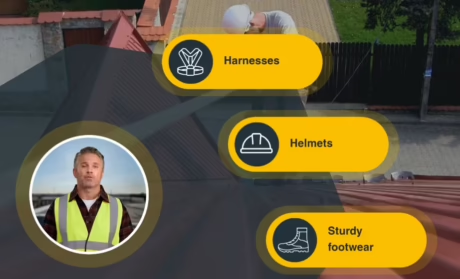
Working at Height Training for Roofers
Exclusive Deal! 94% Off, Today Only!
Sale Ends In

 TAKE All courses for
£99
TAKE All courses for
£99 


This course includes:
-
 Access1 Year Access
 -
 Skill Level
 -
 Duration14 minutes, 40 seconds
 -
 Students168 Students
- Original price was: £425.£25Current price is: £25. ex VAT
- 1 year
- Advanced
- Number of Units18
- Number of Quizzes0
- 14 minutes, 40 seconds Gift this course
 14-Day Money-Back Guarantee
Course Overview
Falls from height remain the leading cause of fatal injuries in the UK construction sector, accounting for approximately 25% of workplace deaths each year. Roofing professionals operate at significant elevation, often on sloped, fragile, or weather-exposed surfaces where stability can change rapidly. Inadequate preparation, unsuitable equipment, or overlooked risk assessments can result in severe injury, prosecution, or costly project delays.
This Working at Height Training for Roofers course provides structured knowledge of legal responsibilities, equipment preparation, and safe working practices aligned with UK Work at Height Regulations. Learners explore fall prevention strategies, appropriate access systems, behavioural discipline, and structured incident response procedures. The programme also reinforces continuous safety review practices that strengthen compliance and long-term operational resilience.
By completing this course, roofing professionals enhance structured height awareness and regulatory readiness before avoidable oversights compromise personal safety, contractual obligations, or organisational reputation.
Learning Outcomes
- Identify fall hazards present across active roofing sites.
- Explain legal duties under UK height safety regulations.
- Select appropriate access equipment for roofing tasks safely.
- Apply safe preparation procedures before starting roof work.
- Assess surface stability and weather-related risks effectively.
- Maintain safe positioning on sloped roofing surfaces consistently.
- Support effective incident response following roofing height accidents.
- Implement structured fall prevention measures during roofing activities.
- Define working at height responsibilities within roofing operations clearly.
- Promote continuous improvement within roofing safety management practices.
Why People Love and Enrol in this Training?
- CPD Accredited Course
- Unlimited access for 12 months – learn at your own pace ️
- Earn instant certificate upon course completion
- Get a free student ID card to showcase
- Flexible study – no deadlines
- Transparent pricing – no hidden fees
- Dedicated tutor support on weekdays
- Fast assessments & instant results
Who is this Course For?
- Professional roofing contractors
- Construction site roofers
- Roof repair technicians
- Building maintenance roof teams
- Site supervisors and managers
- Self-employed roofing specialists
CPD Certification
After successfully completing the course, you will qualify for a CPD Certificate as proof of your continued professional development and achievement. This certificate can enhance your professional profile and showcase your commitment to building relevant skills and knowledge. You can receive your digital certificate for only £10, or request a printed hard copy sent by post for just £29 or both for £39.

Assessment
For assessing your learning, you have to complete an automated MCQ exam. It is required for the students to score at least 60% to pass the exam. Learners can apply for the certificate after they clear the exam.
There are assignment questions provided at the end of the course. You are suggested to complete the questions to enrich your understanding of the course. You can complete this according to your preferred time. The expert tutor will provide feedback on your performance after assessing your assignment.
Prerequisites
There are no prerequisites, and you may use any internet-enabled device to study at your own speed, it is adaptable and available to students of all skill levels.
Job Opportunities
Height safety competence is essential within the UK roofing and construction sector, where employers and contractors prioritise compliance with Work at Height Regulations and structured fall prevention systems. Demonstrated awareness strengthens employability, contract eligibility, and professional credibility within high-risk construction environments.
- Roofing Technician
Performs installation, repair, and maintenance work at elevation while adhering to strict fall prevention procedures and regulatory compliance requirements. Applies structured equipment preparation and hazard awareness during varied weather conditions and complex site environments. Average salary £25,000 to £40,000. - Roofing Site Supervisor
Oversees roofing teams ensuring height safety controls, access systems, and risk assessments are implemented consistently across projects. Coordinates compliance documentation and structured incident response procedures onsite. Average salary £35,000 to £55,000. - Construction Health and Safety Officer
Monitors height-related risks across roofing operations and ensures alignment with UK legislation and company safety frameworks. Conducts audits and supports corrective action planning following inspections or incidents. Average salary £38,000 to £60,000. - Building Maintenance Manager
Leads roof inspection and repair programmes across commercial or residential portfolios requiring structured compliance oversight. Implements preventive maintenance and height risk control strategies. Average salary £40,000 to £65,000. - Project Manager (Roofing and Construction)
Coordinates roofing contracts while ensuring fall prevention measures and safety documentation meet regulatory and contractual standards. Strengthens risk management processes across multi-site operations. Average salary £45,000 to £70,000. - Access Equipment Specialist
Provides technical oversight of scaffolding, harness systems, and elevated work platforms used in roofing tasks. Ensures equipment conformity and safety readiness prior to deployment. Average salary £30,000 to £48,000. - Compliance and Risk Advisor (Construction Sector)
Supports policy development and regulatory adherence for roofing and height-related activities. Evaluates incident data to promote continuous improvement initiatives. Average salary £40,000 to £65,000. - Facilities and Estates Manager
Oversees roof safety compliance across property estates and contractor operations. Ensures inspection, reporting, and height procedures remain aligned with legislation. Average salary £45,000 to £75,000. - Rope Access Technician (Progression Role)
Performs specialist high-level roofing and façade tasks requiring advanced height safety discipline and structured oversight. Builds expertise within regulated working at height environments. Average salary £35,000 to £55,000. - Operations Director (Construction Firm)
Leads organisational safety strategy across roofing and height-intensive projects while ensuring compliance governance is embedded company-wide. Strengthens corporate accountability for fall prevention performance. Average salary £60,000 to £95,000.
Course Curriculum
| Introduction | |||
| Introduction | 00:00:44 | ||
| Module 1: Understanding Risks and Legal Responsibilities | |||
| 1.1 Common Roofing Hazards | 00:00:51 | ||
| 1.2 Legal Requirements | 00:00:58 | ||
| 1.3 Roof Types and Hazards | 00:00:50 | ||
| 1.4 Risk Assessment | 00:00:52 | ||
| Module 2: Equipment and Preparation | |||
| 2.1 Access Equipment | 00:00:46 | ||
| 2.2 Personal Protective Equipment (PPE) | 00:00:49 | ||
| 2.3 Planning the Work | 00:00:48 | ||
| 2.4 Weather and Environment | 00:00:44 | ||
| Module 3: Safe Work Practices | |||
| 3.1 Ladder Safety | 00:00:45 | ||
| 3.2 Scaffold and Platforms | 00:00:51 | ||
| 3.3 Fall Prevention Systems | 00:00:52 | ||
| 3.4 Handling Tools and Materials | 00:00:53 | ||
| Module 4: Incident Response and Continuous Improvement | |||
| 4.1 Incident Reporting | 00:00:48 | ||
| 4.2 Emergency Response | 00:00:51 | ||
| 4.3 Promoting a Safety Culture | 00:00:55 | ||
| 4.4 Ongoing Training | 00:00:55 | ||
| Conclusion | |||
| Conclusion | 00:00:28 | ||