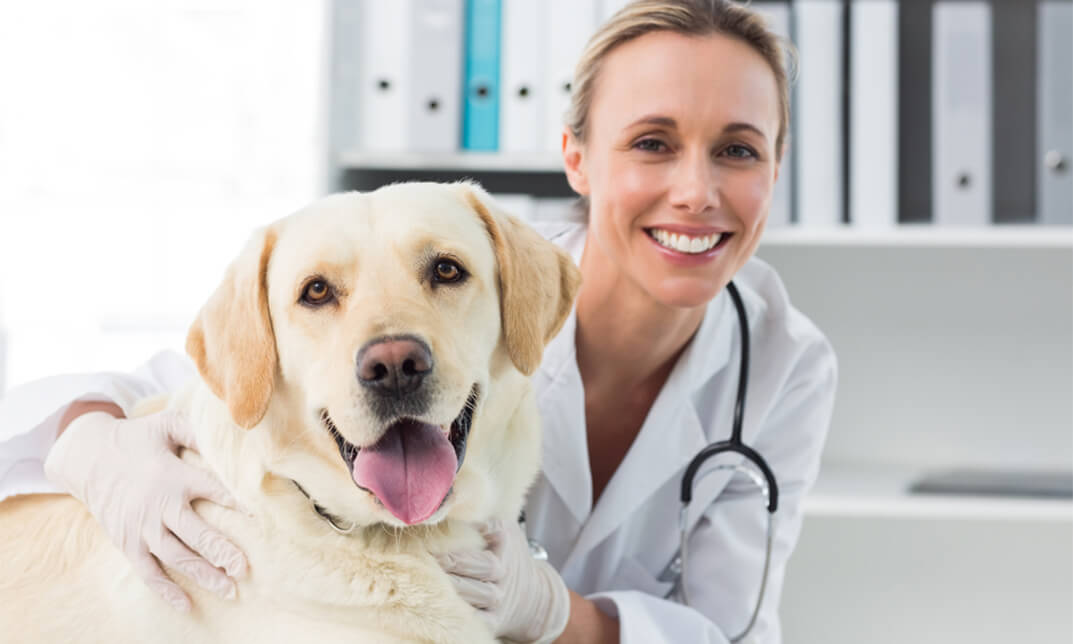
Veterinary Physiotherapy – Level 2 is a CPD-accredited course for aspiring animal physiotherapy assistants, veterinary support workers and animal care professionals seeking essential rehabilitation knowledge with certificate support for career development. Learn animal behaviour, physiotherapy assessment, exercise physiology, neurological and muscular conditions, and physiotherapy clinic setup.
4.7
(6 Reviews)
44 Students
Exclusive Deal! 94% Off, Today Only!
Sale Ends In
CPD Point
With 62% of UK households estimated to own one of the country’s 36.5 million pets in 2026, knowledge of animal health, movement and rehabilitation is increasingly valuable across animal care settings. Veterinary Physiotherapy – Level 2 offers an engaging introduction to the principles behind supporting animal mobility, physical wellbeing and rehabilitation.
Throughout the course, you will explore animal behaviour, physiotherapy assessment techniques, comparative exercise physiology, and common neurological and muscular conditions affecting small animals. You will also learn about the essential considerations involved in setting up a physiotherapy clinic, giving you a broader understanding of both animal care and professional practice.
By completing this CPD-accredited course, you can strengthen your CV, improve your confidence when working with animals and expand your knowledge for veterinary support, animal care or rehabilitation-related roles. Study at your own pace and build valuable, career-relevant knowledge that can support your professional development.
This Veterinary Physiotherapy – Level 2 course is designed to provide a clear understanding of animal behaviour, physiotherapy assessment and exercise physiology, making it an ideal choice for anyone interested in animal care, veterinary support or rehabilitation-related knowledge.
Throughout this veterinary physiotherapy course, you will explore how to assess animals for physiotherapy needs, understand comparative exercise physiology, and recognise common neurological and muscular conditions affecting small animals. You will also develop valuable knowledge of animal behaviour, helping you better understand how animals respond during assessment, handling and rehabilitation support.
In addition to animal health and physiotherapy principles, this course introduces the essential considerations involved in setting up a physiotherapy clinic. By combining theoretical knowledge with career-relevant topics, the course can help you build confidence, strengthen your CV and support your professional development in animal care, veterinary support or animal rehabilitation-related environments.
By completing this Veterinary Physiotherapy – Level 2 online course, you will:
Whether you are starting your career in animal care or looking to expand your knowledge of veterinary rehabilitation, this Veterinary Physiotherapy – Level 2 course provides essential theoretical understanding to support your professional development.
As a focused veterinary physiotherapy course, it helps you build knowledge of animal behaviour, physiotherapy assessment, comparative exercise physiology, and common neurological and muscular conditions affecting small animals. You will also explore key considerations involved in setting up a physiotherapy clinic.
This course can support your progression towards animal care, veterinary support and rehabilitation-related roles by strengthening your subject knowledge, professional confidence and CV. It is also suitable for existing animal care professionals who want to broaden their understanding of animal mobility, physical wellbeing and physiotherapy principles.
This course is ideal for individuals who want to start or progress in animal care, veterinary support or animal rehabilitation-related fields, particularly those interested in animal movement, physical wellbeing and physiotherapy principles.
It is suitable for:
There are no specific prerequisites to enrol in this Veterinary Physiotherapy – Level 2 course. Anyone with an interest in animal care, rehabilitation or veterinary physiotherapy can take this course.
The course is fully accessible from any internet-enabled smart device, allowing you to study conveniently from the comfort of your home.
All you need is a passion for learning, basic literacy skills and to be over the age of 16.
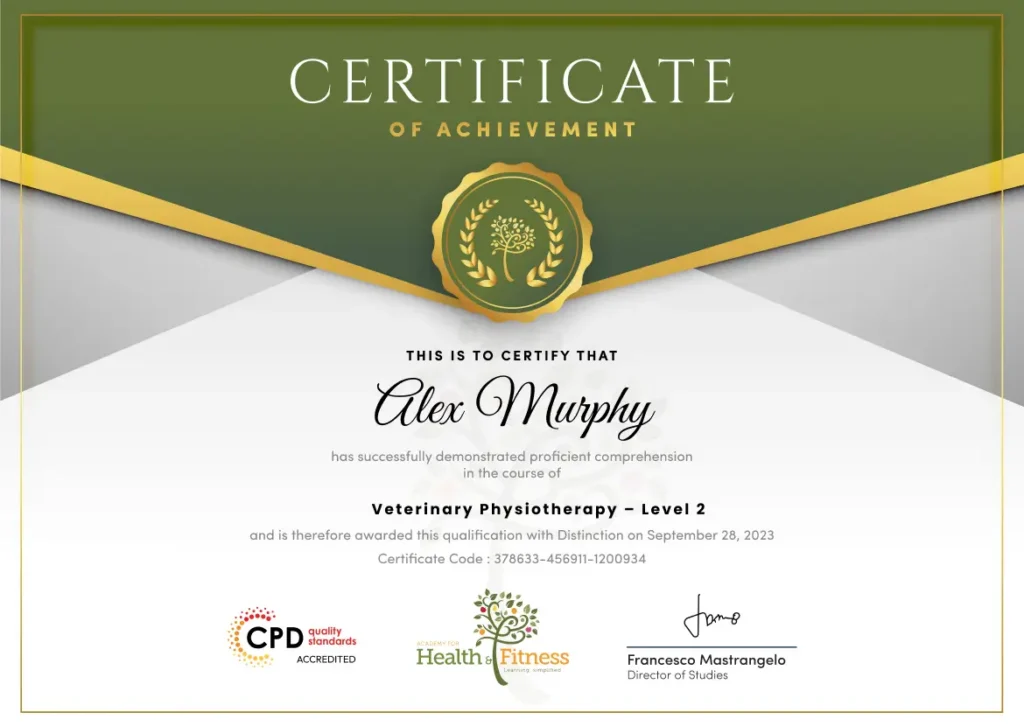
After successfully completing the Veterinary Physiotherapy – Level 2 course, you will qualify for a CPD Certificate as proof of your continued professional development and achievement. This certificate can enhance your professional profile and showcase your commitment to building relevant skills and knowledge. You can receive your digital certificate for only £10, or request a printed hard copy sent by post for just £29 or both for £39.
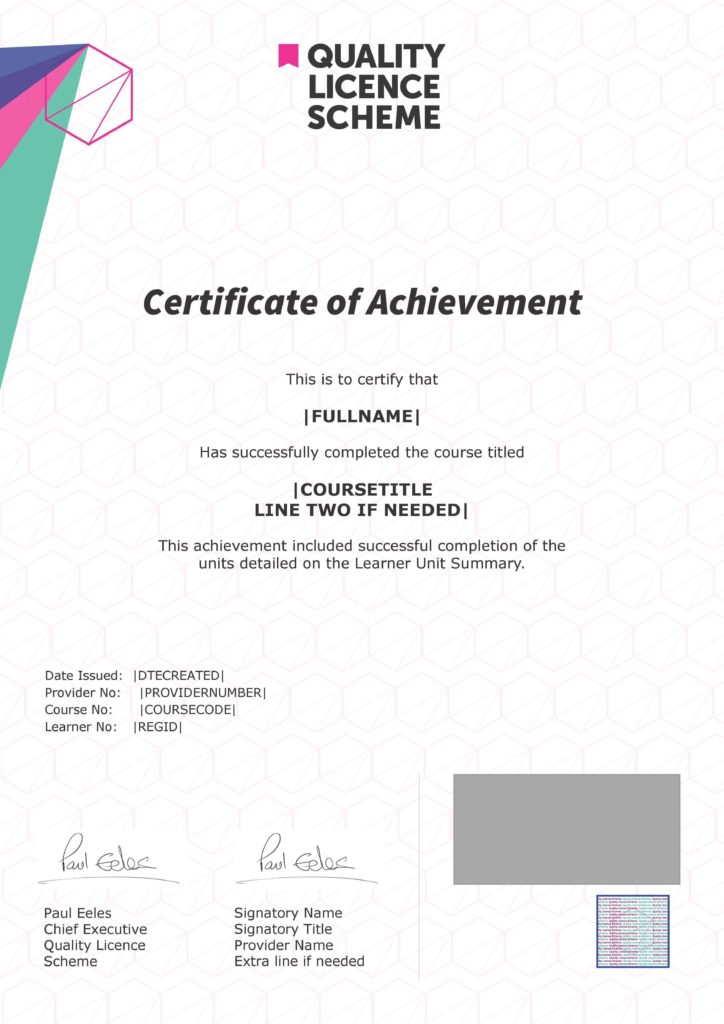
After successfully completing the course, learners will be able to order a QLS Endorsed Certificate as proof of their new achievement. The Level QLS Endorsed certificate can be ordered and get delivered to your home by post for £119 only. There is an additional £10 postage charge for international students.
For assessing your learning, you have to complete an automated MCQ exam. It is required for the students to score at least 60% to pass the exam and fulfil the Quality Licence Scheme-endorsed certificate criteria. Learners can apply for the certificate after they clear the exam.
There are assignment questions provided at the end of the course. You are suggested to complete the questions to enrich your understanding of the course. You can complete this according to your preferred time. The expert tutor will provide feedback on your performance after assessing your assignment.
The Veterinary Physiotherapy – Level 2 is an online, knowledge-based course designed to build foundational understanding of animal behaviour, physiotherapy assessment, exercise physiology, and common neurological and muscular conditions. While this course does not provide a professional licence or qualify learners as veterinary physiotherapists, it can support progression towards entry-level, supportive, and further-training opportunities across animal care and veterinary environments.
This course covers animal behaviour, physiotherapy assessment for animals, comparative exercise physiology, and common neurological and muscular conditions affecting small animals. It also introduces key considerations involved in setting up a physiotherapy clinic.
Yes. This course is suitable for beginners who want to build foundational knowledge of animal physiotherapy, rehabilitation and physical wellbeing. No previous experience in veterinary physiotherapy is required to enrol.
Yes. Veterinary Physiotherapy – Level 2 is delivered online, allowing you to study from home and fit learning around work, family or other commitments. The flexible format makes it suitable for self-paced learners.
Yes. Successful learners can receive a CPD-accredited certificate upon completion. This can help demonstrate your continued professional development, strengthen your CV and showcase your knowledge of veterinary physiotherapy principles.
No. This is a knowledge-based Level 2 course and does not provide a professional licence or qualify you to practise independently as a veterinary physiotherapist. Further recognised training and professional requirements may be needed for regulated or clinical practice.
This course can support knowledge relevant to roles such as animal care assistant, veterinary assistant, kennel worker, animal technician and other animal care support positions. Further qualifications may be required for specialist or professional roles.
This course is ideal for aspiring animal care professionals, veterinary support workers, animal care assistants and beginners interested in rehabilitation. It is also suitable for learners who want to understand animal movement and physical wellbeing.
You will develop an introductory understanding of physiotherapy assessment for animals, including how physical condition, mobility and related factors may be considered when exploring rehabilitation needs and animal wellbeing.
Yes. The course introduces common neurological and muscular conditions affecting small animals. This helps you build awareness of conditions that may influence movement, physical function and rehabilitation-related support.
Yes. You will study comparative exercise physiology to develop a clearer understanding of how exercise and physical activity relate to animal function, movement and wellbeing across different contexts.
Yes. The course introduces key considerations involved in setting up a physiotherapy clinic, helping you understand important practical and professional aspects of developing a rehabilitation-related service environment.
Animal mobility and physical wellbeing are important aspects of effective care and rehabilitation support. This course helps you build relevant knowledge, strengthen your CV and develop greater confidence for animal care, veterinary support or further study pathways.
| Module 01: Animal Behaviour | |||
| Animal Behaviour | 01:04:00 | ||
| Module 02: Physiotherapy Assessment for Animals | |||
| Physiotherapy Assessment for Animals Part-1 | 00:18:00 | ||
| Physiotherapy Assessment for Animals (Part-2) | 00:18:00 | ||
| Physiotherapy Assessment for Animals (Part-3) | 00:18:00 | ||
| Structure and Function of the Musculoskeletal System | 01:17:00 | ||
| Module 03: Comparative Exercise Physiology | |||
| Comparative Exercise Physiology | 01:03:00 | ||
| Module 04: Small Animal Neurological and Muscular Conditions | |||
| Small Animal Neurological and Muscular Conditions ( part 1) | 00:17:00 | ||
| Small Animal Neurological and Muscular Conditions (Part-2) | 00:52:00 | ||
| Small Animal Neurological and Muscular Conditions (Part-3) | 00:43:00 | ||
| Module 05: Setting Up a Physiotherapy Clinic | |||
| Setting Up a Physiotherapy Clinic | 00:55:00 | ||
| Order your Certificates | |||
| Claim Your Certificates | 00:00:00 | ||
| Module 01: Animal Behaviour | |||
| Animal Behaviour | 01:04:00 | ||
| Module 02: Physiotherapy Assessment for Animals | |||
| Physiotherapy Assessment for Animals Part-1 | 00:18:00 | ||
| Physiotherapy Assessment for Animals (Part-2) | 00:18:00 | ||
| Physiotherapy Assessment for Animals (Part-3) | 00:18:00 | ||
| Structure and Function of the Musculoskeletal System | 01:17:00 | ||
| Module 03: Comparative Exercise Physiology | |||
| Comparative Exercise Physiology | 01:03:00 | ||
| Module 04: Small Animal Neurological and Muscular Conditions | |||
| Small Animal Neurological and Muscular Conditions ( part 1) | 00:17:00 | ||
| Small Animal Neurological and Muscular Conditions (Part-2) | 00:52:00 | ||
| Small Animal Neurological and Muscular Conditions (Part-3) | 00:43:00 | ||
| Module 05: Setting Up a Physiotherapy Clinic | |||
| Setting Up a Physiotherapy Clinic | 00:55:00 | ||
| Order your Certificates | |||
| Claim Your Certificates | 00:00:00 | ||