Step into the Substance Misuse Outreach Worker course, a CPD-accredited training built for outreach, recovery, support, and community-facing roles. Aimed at those who want to become trusted substance misuse support professionals, this powerful programme transforms compassion into action, preparing you to guide vulnerable people toward safety, recovery, and hope daily.
Exclusive Deal! 94% Off, Today Only!
Sale Ends In
Do you want to be the person who meets vulnerable people before a crisis collapses, and helps move them toward treatment, safety, and recovery? If yes, Substance Misuse Outreach Worker Training is relevant to you because modern services need people who can engage individuals realistically, understand addiction properly, and respond with structure, empathy, and professional boundaries.
The demand is real, not imaginary marketing fluff. In England, 329,646 adults accessed drug and alcohol treatment between April 2024 and March 2025, a 6% increase and the highest on record. There were 5,565 drug-poisoning deaths in 2024 and 10,473 alcohol-specific deaths in 2023. National strategies now emphasise expanding and developing the treatment and recovery workforce.Â
Here, you will learn substance misuse foundations, drug and alcohol awareness, causes of addiction, biological, psychological and social perspectives, policy implementation, effects on body and mind, assessment and treatment support, health considerations, treatment situations, child-focused safeguarding, pharmacological management, risk factors, prevention, awareness, and practice improvement.
Enrol now to build recognised knowledge, strengthen your CV, and move closer to meaningful frontline support work.
Build essential confidence in substance misuse outreach, support, safeguarding, assessment, treatment awareness, and recovery-focused practice. This learning helps you understand addiction from multiple perspectives, respond more professionally, and support vulnerable individuals with judgement, safer boundaries, and stronger community-focused intervention skills.
This substance misuse outreach worker course online UK is designed to help you build essential, career-focused knowledge for substance misuse support, drug and alcohol outreach, recovery-focused intervention, safeguarding, referral support, prevention, and community-based support roles, giving you the confidence and subject understanding employers, charities, treatment providers, and support services increasingly value.
This programme suits beginners, support staff, care workers, youth-focused professionals, community volunteers, and career changers who want structured knowledge of addiction, outreach, intervention, and recovery support. It also helps existing practitioners strengthen confidence, improve communication, and work safely across services.
There are no specific prerequisites to enrol in this Substance Misuse Outreach Worker – CPD Accredited Course. Anyone and everyone can take this course.
The Substance Misuse Outreach Worker – CPD Accredited Course is fully accessible from any internet-enabled smart device, so you can study from the comfort of your home.
All you need is a passion for learning, basic literacy skills, and to be over the age of 16.
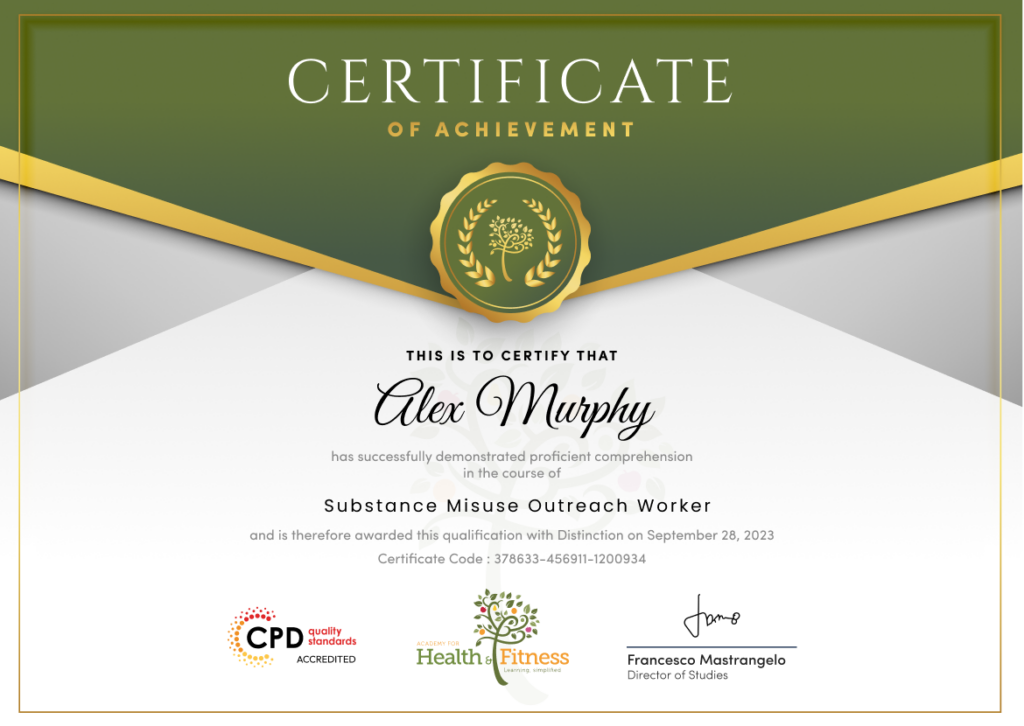
After successfully completing the Substance Misuse Outreach Worker course, you will qualify for a CPD Certificate as proof of your continued professional development and achievement. This certificate can enhance your professional profile and showcase your commitment to building relevant skills and knowledge. You can receive your digital certificate for only £10, or request a printed hard copy sent by post for just £29 or both for £39.
After successfully completing the Substance Misuse Outreach Worker course, learners will be able to order a QLS Endorsed Certificate as proof of their new achievement. The Level QLS Endorsed certificate can be ordered and get delivered to your home by post for £119 only. There is an additional £10 postage charge for international students.
For assessing your learning, you have to complete an automated MCQ exam. It is required for the students to score at least 60% to pass the exam and fulfil the Quality Licence Scheme-endorsed certificate criteria. Learners can apply for the certificate after they clear the exam.
There are assignment questions provided at the end of the course. You are suggested to complete the questions to enrich your understanding of the course. You can complete this according to your preferred time. The expert tutor will provide feedback on your performance after assessing your assignment.
Substance misuse knowledge opens routes into community support, outreach, recovery, prevention, safeguarding, and rehabilitation services. Employers value workers who can engage vulnerable people, understand addiction, recognise risk, and support referrals. These roles show where this training can help, from frontline support to broader public health and justice settings today professionally.
Substance misuse outreach workers engage people affected by drug or alcohol problems, build trust, offer advice, identify risk, and encourage access to treatment or recovery services. The role suits learners who want frontline community contact, meaningful support work, and a realistic entry into addiction-focused services with progression opportunities over time.
Salary range: £24,000 – £37,000.Â
Recovery workers support service users through engagement, assessment support, care planning, relapse prevention, and links to treatment, housing, or wider support networks. This role fits people who want structured case-focused work and regular contact with individuals moving through addiction, stabilisation, and longer-term recovery journeys in community-based services.
Salary range: £24,000 – £37,000.
Drug and alcohol support workers help clients access advice, appointments, recovery services, and safer decision-making support. The role often involves listening, motivating, signposting, recording concerns, and working with partner agencies. It suits practical, calm learners who want to support vulnerable adults without jumping immediately into senior clinical positions.
Salary range: £20,000 – £37,000.Â
Youth workers support young people with personal, social, and educational development, and can play an important role when substance risk, peer pressure, or vulnerability are involved. This role suits learners who want prevention-focused, relationship-based work with younger people in community, education, or targeted support environments.
Salary range: £22,000 – £35,000.Â
Family support workers help families manage difficulties affecting wellbeing, stability, and child development. Substance misuse knowledge matters because addiction rarely harms one person alone. This role suits learners who want to work with families, offer guidance, identify safeguarding concerns, and support healthier home environments through coordinated multi-agency intervention.
Salary range: £24,000 – £36,000.Â
Social work assistants help people with physical, emotional, and social needs, often supporting access to services, practical advice, and safeguarding processes. Substance misuse awareness strengthens this work where addiction affects safety, family life, or vulnerability. This role suits organised learners who want support-focused responsibilities inside wider care systems.
Salary range: £20,000 – £28,000.Â
Community development workers help improve local areas by building engagement, organising initiatives, and connecting people with services. Substance misuse knowledge is useful in prevention, awareness, and outreach settings. This role suits learners who want community-level impact, partnership working, and practical involvement in improving support access and local resilience.
Salary range: £19,000 – £36,000.Â
Health trainers encourage healthier choices and support people improving wellbeing. In addiction-related settings, that can include motivation, education, habit change, and referral support. This role suits learners who want prevention-focused work, one-to-one guidance, and practical behaviour-change conversations rather than intensive case management or formal therapeutic responsibilities.
Salary range: £24,000 – £30,000.
Health promotion specialists educate communities about health risks and healthier behaviours. Substance misuse knowledge supports awareness campaigns, prevention strategies, public health messaging, and partnership work. This role suits learners who prefer broader population-level impact, programme development, and evidence-informed communication rather than exclusively one-to-one frontline outreach work.
Salary range: £25,000 – £35,000.Â
Probation officers supervise people serving community or prison sentences and help reduce reoffending. Substance misuse knowledge matters because addiction often intersects with offending, instability, and relapse risk. This role suits resilient learners who want structured case responsibility, risk management, and the chance to support long-term behaviour change in justice settings.
Salary range: £26,000 – £40,000.
Youth offending team officers work with under-18s to reduce offending and prevent reoffending. Substance misuse awareness is valuable where alcohol, drugs, exploitation, or vulnerability are present. This role suits learners who want targeted intervention work, multi-agency collaboration, and meaningful responsibility supporting young people under pressure and risk.
Salary range: £26,000 – £39,000.
A substance misuse outreach worker engages people affected by drugs or alcohol, builds trust, identifies immediate risks, gives practical advice, and helps individuals access treatment, recovery, housing, health, or safeguarding services. The work is part support, part intervention, and part coordination, with strong boundaries and accurate recording always essential.
A common route is building relevant knowledge in addiction, outreach, safeguarding, communication, and support work, then applying for entry-level or related roles in charities, local services, housing, youth support, or recovery settings. Employers often value practical understanding, empathy, reliability, and strong judgement more than empty buzzwords.
Yes. Online learning works well for people balancing work, family, or a career change because it lets you build knowledge of addiction, drug and alcohol awareness, safeguarding, intervention, and recovery support flexibly. What matters is whether the training is structured, relevant, and useful for real support settings and employers.
Yes, and the demand is backed by evidence, not wishful thinking. Treatment numbers in England rose to the highest level on record in 2024 to 2025, while NHS England is actively developing and growing the drug and alcohol treatment and recovery workforce. That means the sector needs better-trained people.
Requirements vary by employer. Some roles accept candidates with strong support-work knowledge and transferable experience, while others prefer health, social care, youth work, or safeguarding backgrounds. The blunt truth is that employers want people who understand addiction, risk, referral pathways, professional boundaries, documentation, and service-user engagement.
You will typically learn substance misuse basics, types of drugs and alcohol issues, reasons people use substances, biological and psychological factors, social influences, policy, body and mind effects, safeguarding, risk factors, assessment support, treatment awareness, prevention, harm reduction, and recovery-focused practice. That is the practical core employers care about.
Yes, provided the structure is beginner-friendly and actually explains addiction properly instead of dumping jargon on you. Recovery worker training is useful because it helps beginners understand engagement, referral, boundaries, relapse issues, safeguarding, and support planning. It is a realistic first step for people entering frontline community and recovery services.
It can support progression toward substance misuse outreach worker, recovery worker, drug and alcohol support worker, youth worker, family support worker, social work assistant, health trainer, health promotion specialist, probation-related roles, and other community outreach positions. It is especially valuable where addiction awareness improves engagement, risk recognition, and referral support.
No, not always. Previous experience helps, but it is not the only route in. A solid foundation in substance misuse, outreach, safeguarding, communication, and support principles can still strengthen applications, especially for entry-level, volunteer-supported, or transferable roles where employers value attitude, judgement, and relevant knowledge over polished CV nonsense.
Because guessing gets people harmed. Drug and alcohol awareness helps workers recognise risk, understand behaviour, communicate without judgement, respond safely, and connect people to the right services faster. In outreach, you often meet people before stability exists, so strong awareness improves decisions, trust, safeguarding, and the quality of support offered.
| Module 01: Substance Misuse and Outreach Worker | |||
| Substance Misuse and Outreach Worker | 00:13:00 | ||
| Module 02: Substances: Drugs, Alcohol and Others | |||
| Substances Drugs, Alcohol and Others | 00:06:00 | ||
| Module 03: Abuses of Substance Misuse | |||
| Abuses of Substance Misuse | 00:14:00 | ||
| Module 04: Why People Use Drug and Alcohol? | |||
| Why People Use Drug and Alcohol | 00:17:00 | ||
| Module 05: The Nature of Substance Misuse: Biological, Psychological and Social Perspectives | |||
| The Nature of Substance Misuse Biological, Psychological and Social Perspective | 00:18:00 | ||
| Module 06: Understand Possible Causes of Substance and Drug Abuse | |||
| Understand Possible Causes of Substance and Drug Abuse | 00:09:00 | ||
| Module 07: Implementing Substance Use Policy | |||
| Implementing Substance Use Policy | 00:14:00 | ||
| Module 08: Effects of Drugs on the Body and Mind | |||
| Effects of Drugs on the Body and Mind | 00:12:00 | ||
| Module 09: Enhancing Assessment and Treatment of Substance Misuse | |||
| Enhancing Assessment and Treatment of Substance Misuse | 00:27:00 | ||
| Module 10: Health Consideration | |||
| Health Consideration | 00:19:00 | ||
| Module 11: Specific Treatment Situations | |||
| Specific Treatment Situations | 00:30:00 | ||
| Module 12: Substance Misusers: Children | |||
| Substance Misusers Children | 00:07:00 | ||
| Module 13: Risk Factors | |||
| Risk Factors | 00:06:00 | ||
| Module 14: Pharmacological Agents Used in the Management of Substance Misuse Problems | |||
| Pharmacological Agents Used in the Management of Substance Misuse Problems | 00:07:00 | ||
| Module 15: Planning and Implementing a Practice Improvement Subject | |||
| Planning and Implementing a Practice Improvement Subject | 00:08:00 | ||
| Module 16: Prevention and Awareness | |||
| Prevention and Awareness | 00:20:00 | ||
| Module 17: Substance Use Capabilities Across All Level of Social Work | |||
| Substance Use Capabilities Across All Level of Social Work | 00:05:00 | ||
| Module 18: Career Consultancy | |||
| Career Consultancy | 00:06:00 | ||
| Assignment | |||
| Assignment – Substance Misuse Outreach Worker | 1 week, 6 days | ||
| Order Your Certificate | |||
| Claim Your Certificates | 00:00:00 | ||
| Module 01: Substance Misuse and Outreach Worker | |||
| Substance Misuse and Outreach Worker | 00:13:00 | ||
| Module 02: Substances: Drugs, Alcohol and Others | |||
| Substances Drugs, Alcohol and Others | 00:06:00 | ||
| Module 03: Abuses of Substance Misuse | |||
| Abuses of Substance Misuse | 00:14:00 | ||
| Module 04: Why People Use Drug and Alcohol? | |||
| Why People Use Drug and Alcohol | 00:17:00 | ||
| Module 05: The Nature of Substance Misuse: Biological, Psychological and Social Perspectives | |||
| The Nature of Substance Misuse Biological, Psychological and Social Perspective | 00:18:00 | ||
| Module 06: Understand Possible Causes of Substance and Drug Abuse | |||
| Understand Possible Causes of Substance and Drug Abuse | 00:09:00 | ||
| Module 07: Implementing Substance Use Policy | |||
| Implementing Substance Use Policy | 00:14:00 | ||
| Module 08: Effects of Drugs on the Body and Mind | |||
| Effects of Drugs on the Body and Mind | 00:12:00 | ||
| Module 09: Enhancing Assessment and Treatment of Substance Misuse | |||
| Enhancing Assessment and Treatment of Substance Misuse | 00:27:00 | ||
| Module 10: Health Consideration | |||
| Health Consideration | 00:19:00 | ||
| Module 11: Specific Treatment Situations | |||
| Specific Treatment Situations | 00:30:00 | ||
| Module 12: Substance Misusers: Children | |||
| Substance Misusers Children | 00:07:00 | ||
| Module 13: Risk Factors | |||
| Risk Factors | 00:06:00 | ||
| Module 14: Pharmacological Agents Used in the Management of Substance Misuse Problems | |||
| Pharmacological Agents Used in the Management of Substance Misuse Problems | 00:07:00 | ||
| Module 15: Planning and Implementing a Practice Improvement Subject | |||
| Planning and Implementing a Practice Improvement Subject | 00:08:00 | ||
| Module 16: Prevention and Awareness | |||
| Prevention and Awareness | 00:20:00 | ||
| Module 17: Substance Use Capabilities Across All Level of Social Work | |||
| Substance Use Capabilities Across All Level of Social Work | 00:05:00 | ||
| Module 18: Career Consultancy | |||
| Career Consultancy | 00:06:00 | ||
| Assignment | |||
| Assignment – Substance Misuse Outreach Worker | 1 week, 6 days | ||
| Order Your Certificate | |||
| Claim Your Certificates | 00:00:00 | ||