Neuropsychology & Development of Children is a CPD Accredited course for fitness professionals and wellbeing practitioners, enhancing knowledge of child development, behaviour, and psychology with a CPD Certificate of Completion.
4.5
(1 Reviews)
82 Students
Exclusive Deal! 94% Off, Today Only!
Sale Ends In
CPD Point
Neuropsychology & Development of Children is designed for fitness professionals, wellbeing practitioners, and those working with children who want to deepen their understanding of how the brain, behaviour, and development are connected. With children’s mental health and wellbeing becoming an increasing priority in the UK, professionals with knowledge of child development are better equipped to provide effective support.
This CPD Accredited course explores key areas including psychosocial development, adolescent behaviour, brain development, parenting influences, hormones, learning theories, reinforcement, and the impact of childhood experiences. You will gain insight into how children think, learn, respond, and develop emotionally.
By completing this course, you can enhance your professional skills, improve communication with children and families, and apply evidence-based knowledge within fitness, wellbeing, education, and support environments. A CPD Certificate of Completion helps demonstrate your commitment to continuous professional development.
Neuropsychology & Development of Children is designed to provide a comprehensive understanding of child brain development, behaviour, and psychological growth, making it an ideal CPD course for fitness professionals, wellbeing practitioners, and those working with children.
Throughout this course, you will explore key concepts including psychosocial development, learning theories, adolescent risk-taking, brain development, parenting influences, behaviour management, and the impact of childhood experiences. You will develop valuable knowledge of how children think, learn, and respond to different environments.
This course also helps you understand the relationship between neuroscience, behaviour, and emotional development, allowing you to support children more effectively within professional settings. By completing this CPD Accredited course, you can enhance your communication skills, expand your professional knowledge, and gain confidence when working with children and families in fitness, wellbeing, and support environments.
By completing this Neuropsychology & Development of Children online course, you will:
Whether you are looking to enhance your professional skills or develop a deeper understanding of child development, the Neuropsychology & Development of Children course provides essential knowledge about brain development, behaviour, and psychological growth.
This CPD Accredited course is designed to help learners understand how children develop emotionally, socially, and cognitively, while exploring key topics such as psychosocial development, learning theories, adolescent behaviour, parenting influences, and childhood experiences.
By completing this course, you can strengthen your ability to communicate with and support children in professional environments, including fitness, wellbeing, education, and childcare settings. It provides a valuable foundation for anyone seeking to improve their understanding of children’s development and enhance their career opportunities.
This Neuropsychology & Development of Children course is suitable for learners who want to understand child development, behaviour, and brain function while gaining valuable knowledge for professional practice.
It is suitable for:
There are no specific entry requirements to enrol in this Neuropsychology & Development of Children course. Anyone with an interest in child development, psychology, and human behaviour can join and start learning.
The course is fully accessible online through any internet-enabled device, allowing you to study flexibly from the comfort of your home or workplace.
All you need is a willingness to learn, basic literacy skills, and to be aged 16 or above to begin your learning journey.
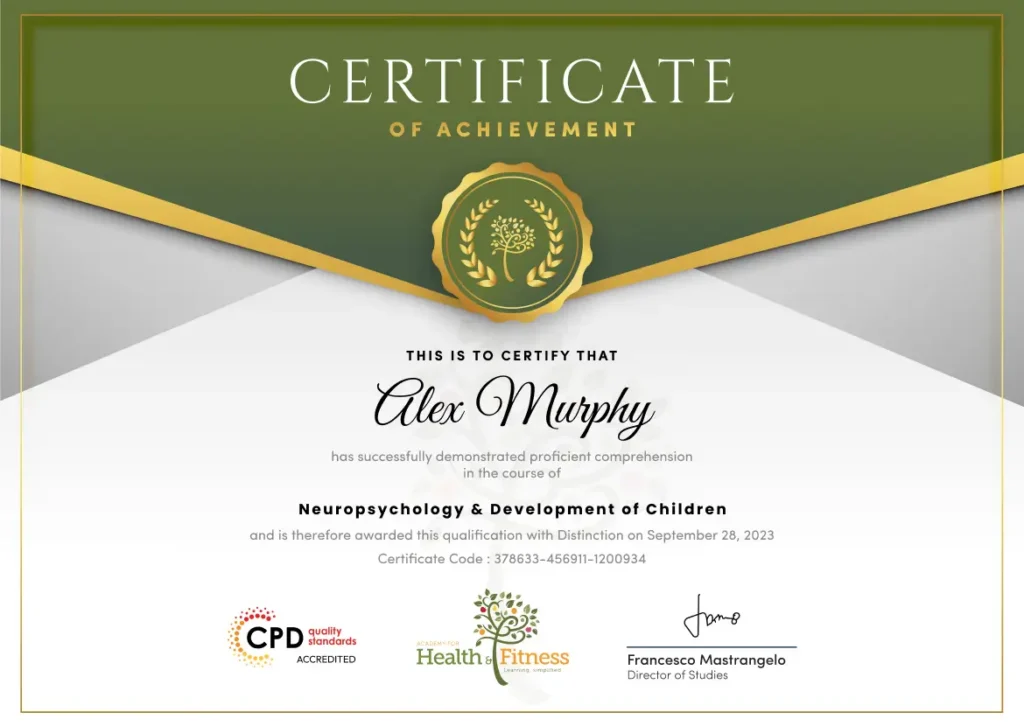
After successfully completing the Neuropsychology & Development of Children course, you will qualify for a CPD Certificate as proof of your continued professional development and achievement. This certificate can enhance your professional profile and showcase your commitment to building relevant skills and knowledge. You can receive your digital certificate for only £10, or request a printed hard copy sent by post for just £29 or both for £39.
For assessing your learning, you have to complete an automated MCQ exam. It is required for the students to score at least 60% to pass the exam and fulfil the Quality Licence Scheme-endorsed certificate criteria. Learners can apply for the certificate after they clear the exam.
There are assignment questions provided at the end of the course. You are suggested to complete the questions to enrich your understanding of the course. You can complete this according to your preferred time. The expert tutor will provide feedback on your performance after assessing your assignment.
The Neuropsychology & Development of Children is an online knowledge-based CPD course designed to develop your understanding of child brain development, behaviour, emotions, and psychological growth. While it does not provide a professional licence, it can enhance your knowledge and support progression into child-focused, wellbeing, education, and support roles.
This course covers child brain development, psychological growth, behaviour, psychosocial development, learning theories, adolescent behaviour, parenting influences, hormones, and the impact of childhood experiences. It helps learners understand how children develop emotionally, socially, and cognitively.
Yes. This course is suitable for beginners, fitness professionals, wellbeing practitioners, childcare workers, educators, and anyone interested in understanding child development. No previous experience in psychology or neuroscience is required.
Yes. The course is fully online, allowing you to study from home or any location with internet access. You can learn at your own pace and fit your studies around work or other commitments.
Yes. Successful learners will receive a CPD Certificate of Completion, helping demonstrate their commitment to professional development and enhance their CV.
No. This course does not provide a professional licence or qualify you as a registered child psychologist or neuropsychologist. It provides valuable knowledge and supports further learning and professional development.
This course can support knowledge for roles such as childcare support worker, teaching assistant, wellbeing practitioner, youth support worker, family support worker, and fitness professional working with children.
The course includes online assessments designed to test your understanding of key concepts. Learners can complete assessments at their own pace and receive results to support their progress.
This course is ideal for fitness professionals, wellbeing practitioners, childcare workers, educators, parents, carers, and anyone who wants to understand children’s behaviour, development, and emotional wellbeing.
Understanding child development helps professionals recognise behaviour patterns, communicate effectively, and provide better support for children’s emotional, social, and cognitive growth.
This course can enhance your knowledge of child psychology and development, improve your communication skills, and help you provide more informed support in fitness, wellbeing, education, and child-focused environments.
Yes. Knowledge of child development and psychology is valuable across childcare, education, health, wellbeing, and support sectors. Professionals with an understanding of children’s behaviour and development can better support young people and families.
Children’s early experiences, brain development, and environment play an important role in shaping future behaviour and wellbeing. This course provides valuable insights into child development, helping you build confidence and knowledge for personal and professional growth.
| Neuropsychology and Development of Children | |||
| The Theory of Psycho-social Development | 00:09:00 | ||
| Serve & Return | 00:03:00 | ||
| Practical Tips For Serve & Return | 00:04:00 | ||
| Fuzzy Trace Theory – Explains and Predicts Adolescent Risk Taking | 00:06:00 | ||
| Adolescent Risk Taking and the Prefrontal Cortex | 00:03:00 | ||
| Operant Conditioning – How Reinforcement Works and How it can help you | 00:08:00 | ||
| The Danger of Unearned Rewards (Habituation and Expectations) | 00:04:00 | ||
| Influencing behavior through linguistic cuing | 00:04:00 | ||
| Does violent media lead to aggressive kids? | 00:04:00 | ||
| Parenting Styles | 00:05:00 | ||
| Culture and seeing world | 00:04:00 | ||
| How childhood experience (ie violence) can result in choosing abusive partners | 00:04:00 | ||
| A Highly Regimented Life is a Very Stressful Life | 00:02:00 | ||
| Heritable vs. Inherited | 00:04:00 | ||
| Hormones and Development | 00:04:00 | ||
| Resources | |||
| Resources – Neuropsychology & Development of Children | 00:00:00 | ||
| Neuropsychology and Development of Children | |||
| The Theory of Psycho-social Development | 00:09:00 | ||
| Serve & Return | 00:03:00 | ||
| Practical Tips For Serve & Return | 00:04:00 | ||
| Fuzzy Trace Theory – Explains and Predicts Adolescent Risk Taking | 00:06:00 | ||
| Adolescent Risk Taking and the Prefrontal Cortex | 00:03:00 | ||
| Operant Conditioning – How Reinforcement Works and How it can help you | 00:08:00 | ||
| The Danger of Unearned Rewards (Habituation and Expectations) | 00:04:00 | ||
| Influencing behavior through linguistic cuing | 00:04:00 | ||
| Does violent media lead to aggressive kids? | 00:04:00 | ||
| Parenting Styles | 00:05:00 | ||
| Culture and seeing world | 00:04:00 | ||
| How childhood experience (ie violence) can result in choosing abusive partners | 00:04:00 | ||
| A Highly Regimented Life is a Very Stressful Life | 00:02:00 | ||
| Heritable vs. Inherited | 00:04:00 | ||
| Hormones and Development | 00:04:00 | ||
| Resources | |||
| Resources – Neuropsychology & Development of Children | 00:00:00 | ||