Build real clinical support knowledge with the Level 7 Advanced Diploma in Nursing Assistant, a CPD-accredited programme supporting aspiring nursing assistants, healthcare assistants, patient care assistants, and care support workers. Aimed at those who want to become trusted frontline professionals, this dramatic, career-focused training helps you develop vital care confidence, strengthen employability, and move toward healthcare roles employers urgently need today.
Exclusive Deal! 94% Off, Today Only!
Sale Ends In
Are you drawn to healthcare work that is essential, people-focused, and genuinely employable—but know you still need the right knowledge to support patients safely and professionally? Then this Nursing Assistant Diploma is directly relevant to you. Healthcare employers need support staff who understand patient care, safeguarding, infection control, communication, health observations, medicine awareness, and professional standards across hospitals, care homes, clinics, and community settings.
The demand is not imaginary. NHS England reported that the vacancy rate for Agenda for Change staff stood at 7.1% in June 2024, equivalent to 96,000 whole-time equivalent vacancies, while its long-term workforce plan warned that NHS services had been reporting over 112,000 vacancies and that the population aged over 85 is projected to grow by 55% by 2037. In adult social care, Skills for Care reported 111,000 vacant posts in 2024/25, 1.6 million filled posts, and a projected need for around 470,000 new posts by 2040 to meet rising demand.
You will study healthcare settings, safeguarding law, mental health awareness, communication in nursing, observation skills, PPE, infection control, medicine handling, anatomy and physiology, pharmacology, nutrition, oxygenation, care planning, and medical records. For anyone asking how to become a nursing assistant, what qualifications do I need to be a nursing assistant, or can I study nursing assistant online, this programme gives you flexible, career-focused training that matches real workforce needs.
Enrol today and build the healthcare credibility employers are actively looking for.
Develop patient care confidence through structured nursing support training covering communication, safeguarding, infection prevention, observation, medicine awareness, and care planning. Gain the knowledge to support patients effectively, work responsibly across healthcare settings, and strengthen readiness for nursing assistant roles professionally.
This nursing assistant course online UK is designed to help you build essential, career-focused knowledge for patient care, healthcare support, safeguarding, infection control, and clinical assistance roles, giving you the confidence and subject understanding employers and healthcare-focused organisations increasingly value.
This programme suits learners who want flexible healthcare training that builds essential support knowledge for real care environments. It is useful for beginners, career changers, and existing support staff who want stronger patient care understanding, better progression opportunities, and a recognised credential that supports confidence in healthcare-related responsibilities and roles.
There are no specific prerequisites to enrol in this Level 7 Advanced Diploma in Nursing Assistant – CPD Accredited Course. Anyone and everyone can take this course.
The Level 7 Advanced Diploma in Nursing Assistant – CPD Accredited Course is fully accessible from any internet-enabled smart device. So, you can study from the comfort of your home!
All you need is a passion for learning, literacy, and to be over the age of 16.
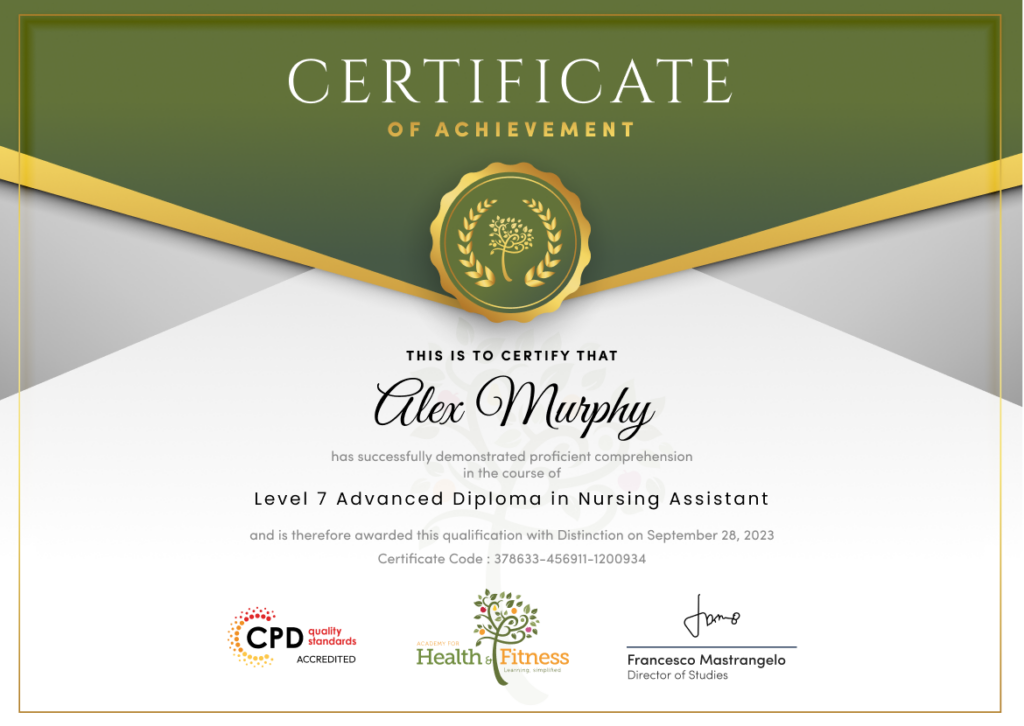
After successfully completing the Level 7 Advanced Diploma in Nursing Assistant course, you will qualify for a CPD Certificate as proof of your continued professional development and achievement. This certificate can enhance your professional profile and showcase your commitment to building relevant skills and knowledge. You can receive your digital certificate for only £10, or request a printed hard copy sent by post for just £29 or both for £39.
For assessing your learning, you have to complete an automated MCQ exam. It is required for the students to score at least 60% to pass the exam and fulfil the Quality Licence Scheme-endorsed certificate criteria. Learners can apply for the certificate after they clear the exam.
There are assignment questions provided at the end of the course. You are suggested to complete the questions to enrich your understanding of the course. You can complete this according to your preferred time. The expert tutor will provide feedback on your performance after assessing your assignment.
Healthcare support skills can open doors across hospitals, clinics, care homes, community settings, and home care services. Employers need workers who understand patient support, safeguarding, communication, infection control, and documentation. This training supports entry into practical care roles and can also strengthen progression toward more responsible healthcare support positions.
Nursing assistants support patients with daily care, hygiene, mobility, comfort, observation, and communication while assisting nurses in delivering safe, compassionate care. They work in hospitals, clinics, and long-term care environments where reliability, empathy, and attention to patient wellbeing matter every day.
Salary range: £20,000 – £28,000
Healthcare assistants help patients with personal care, bed making, feeding, observation, record updates, and routine support tasks under supervision. They are widely employed across NHS and private settings, making this one of the most practical entry routes for learners starting in healthcare.
Salary range: £21,000 – £30,000
Patient care assistants focus on hands-on patient support, comfort, hygiene, movement, and basic observation in wards, clinics, and residential settings. The role suits people who want direct patient interaction and who can work calmly, professionally, and responsibly in busy care environments.
Salary range: £20,000 – £29,000
Support workers assist individuals with daily living, emotional support, safety, and health-related routines in residential, supported living, or community settings. This role values patience, communication, safeguarding awareness, and the ability to support people with dignity and consistency.
Salary range: £21,000 – £29,000
Care assistants provide personal support with washing, dressing, feeding, mobility, and companionship for elderly or vulnerable individuals. They are needed in care homes and home care services, and the role suits learners who want a people-focused career with steady employability.
Salary range: £20,000 – £27,000
Residential care workers support residents with daily routines, safety, wellbeing, and social engagement in residential care settings. They help maintain a safe, stable environment while reporting concerns and contributing to quality care plans for residents with varying support needs.
Salary range: £22,000 – £30,000
Home care assistants visit clients in their own homes to provide personal care, medication support, meal help, mobility assistance, and companionship. This role suits organised, trustworthy individuals who value independent work while still delivering compassionate care directly to clients.
Salary range: £21,000 – £30,000
Clinical support workers assist with non-complex clinical duties, patient preparation, observations, infection prevention, and practical support for nurses and clinical teams. They work in hospitals and outpatient departments, where basic clinical understanding and safe working habits are essential.
Salary range: £22,000 – £31,000
Mental health support workers help individuals manage routines, wellbeing, emotional challenges, and safe daily living in community or residential environments. This role requires calm communication, safeguarding awareness, empathy, and a solid understanding of mental health support principles.
Salary range: £22,000 – £31,000
Rehabilitation support workers help patients regain mobility, independence, and confidence after illness, injury, or surgery. They support care plans, observe progress, encourage exercises, and assist with safe movement, making this role suitable for patient and motivated healthcare workers.
Salary range: £22,000 – £30,000
Domiciliary care workers travel to clients’ homes and deliver personal care, practical support, medication prompts, and companionship. This role is in demand because many people prefer receiving care at home, and it suits dependable individuals with strong time management.
Salary range: £21,000 – £29,000
Nursing home assistants support residents with personal care, hygiene, meal routines, mobility, comfort, and observation while working alongside nurses and senior carers. It is a direct, practical role for those who want to build experience in structured long-term care environments.
Salary range: £20,000 – £28,000
Start by building relevant healthcare knowledge, understanding patient care basics, and gaining a recognised credential that strengthens your CV. A structured online programme can help you develop confidence in safeguarding, communication, infection control, and care support responsibilities before applying for entry-level healthcare roles.
Requirements vary by employer, but many entry-level roles value practical knowledge, care awareness, communication skills, and a relevant certificate. A nursing assistant diploma can help show commitment, improve your healthcare understanding, and make your application stronger in a competitive hiring market.
Yes. Many learners choose an online nursing assistant course because it offers flexible access, self-paced study, and the ability to build healthcare knowledge around work or family commitments. It is a practical option for people who need convenience without abandoning career progression.
It is worth it when the course builds relevant, job-focused knowledge employers actually care about. A strong programme can improve your confidence, sharpen your CV, and help you understand key care topics such as safeguarding, infection control, communication, and patient support.
A strong nursing assistant course typically covers healthcare settings, safeguarding, communication, infection control, hygiene, PPE, health observations, medicine handling, anatomy, nutrition, pain awareness, care planning, and record keeping. Those areas matter because they reflect real responsibilities found in support-based healthcare roles.
It can support progression into roles such as nursing assistant, healthcare assistant, patient care assistant, support worker, care assistant, clinical support worker, and home care assistant. It is not magic, but it does give you more credibility than applying with nothing relevant.
It is suitable for beginners because it starts with healthcare foundations and builds gradually into practical support knowledge. The value comes from clear structure, flexible study, and career-focused content rather than fake promises about instant employment or guaranteed placement.
The titles often overlap depending on the employer. In practice, both roles support patient care, daily living needs, comfort, hygiene, and basic observation. Some settings use one title more than the other, but the core support responsibilities are usually very similar.
That depends on your schedule, discipline, and study pace. Online learners can move faster or slower depending on available time. The main issue is not speed alone; it is whether you actually understand the material well enough to use it confidently.
Yes. It is one of the more essential routes for career changers because it gives flexible access to healthcare knowledge without requiring immediate full-time attendance. That said, you still need genuine interest in care work, because healthcare is demanding and not for the lazy.
No. Any provider implying guaranteed employment is selling fantasy. Training improves your credibility, knowledge, and readiness, but employers still judge your attitude, communication, reliability, and suitability for care work. A certificate helps, but it does not replace effort or professionalism.
Look for relevant healthcare topics, flexible study, recognised certification, clear learning outcomes, practical employability value, and content covering safeguarding, communication, infection prevention, medicine awareness, and care planning. If the syllabus is shallow or vague, the course is weak no matter how flashy the marketing looks.
| Module 01: Introduction to Nursing Assistant | |||
| Introduction to Nursing | 00:15:00 | ||
| Module 02: Working in Different Healthcare Settings | |||
| Working in Different Healthcare Settings | 00:15:00 | ||
| Module 03: Legal, Standards and Professional Aspects of Ethical Practice – Part 1 | |||
| Legal, Standards and Professional Aspects of Ethical Practice: Part – 1 | 00:50:00 | ||
| Module 04: Legal, Standards and Professional Aspects of Ethical Practice – Part 2 | |||
| Legal, Standards and Professional Aspects of Ethical Practice: Part – 2 | 00:48:00 | ||
| Module 05: Principles for Safeguarding Vulnerable Adults | |||
| Principles for Safeguarding Vulnerable Adults | 00:14:00 | ||
| Module 06: UK Safeguarding Laws and Legislation | |||
| UK Safeguarding Laws and Legislations | 00:13:00 | ||
| Module 07: Understanding Mental Health Awareness | |||
| Mental Health Awareness | 00:15:00 | ||
| Module 08: Understanding Aspects of Abuse and Neglect | |||
| Understanding Aspects of Abuse and Neglect | 00:12:00 | ||
| Module 09: Roles and Responsibilities for Safeguarding Adults | |||
| Roles and Responsibilities for Safeguarding Adults | 00:13:00 | ||
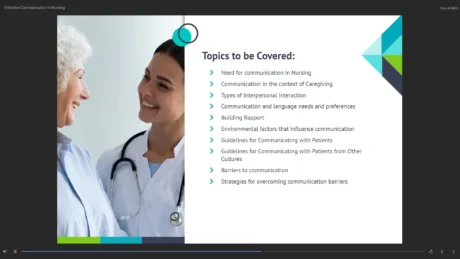
| Module 10: Effective Communication in Nursing | |||
| Effective Communication in Nursing | 00:47:00 | ||
| Module 11: Observation Skills for Carers | |||
| Observation Skills | 00:15:00 | ||
| Module 12: Basic Health Observations | |||
| Basic Health Observation | 00:21:00 | ||
| Module 13: Health and Safety | |||
| Health and Safety | 00:47:00 | ||
| Module 14: Personal Hygiene | |||
| Personal Hygiene | 00:30:00 | ||
| Module 15: Infection Control | |||
| Infection Control | 00:57:00 | ||
| Module 16: Personal Protective Equipment (PPE) | |||
| Personal Protective Equipment (PPE) | 00:20:00 | ||
| Module 17: Understanding person-to-person spread of disease | |||
| Understanding person-to-person spread of disease | 00:20:00 | ||
| Module 18: Asepsis in Nursing | |||
| Asepsis in Nursing | 00:16:00 | ||
| Module 19: Basics of Medicine Handling | |||
| Basics of Medicine Handling | 00:15:00 | ||
| Module 20: Medication Administration in Nursing | |||
| Medication Administration in Nursing | 00:18:00 | ||
| Module 21: Anatomy and Physiology of Body Parts | |||
| Anatomy and physiology of Body Parts | 00:16:00 | ||
| Module 22: Understanding the Immune System in Nursing | |||
| Understanding the Immune System in Nursing | 00:26:00 | ||
| Module 23: Rest and Sleep Management in Nursing | |||
| Rest and Sleep Management in Nursing | 00:17:00 | ||
| Module 24: Mobility and Immobility Issues of Patients in Nursing | |||
| Mobility and Immobility Issues of Patients in Nursing | 00:15:00 | ||
| Module 25: Pain Management for Nurses | |||
| Pain Management for Nurses | 00:22:00 | ||
| Module 26: Types of Pain | |||
| Types of Pain | 00:16:00 | ||
| Module 27: Physiology and Psychology of Acute Pain | |||
| Physiology and Psychology of Acute Pain | 00:20:00 | ||
| Module 28: Nutrition in Nursing | |||
| Nutrition in Nursing | 00:23:00 | ||
| Module 29: Fluid and Electrolyte Balance | |||
| Fluid and Electrolyte Balance | 00:21:00 | ||
| Module 30: Oxygenation in Nursing | |||
| Oxygenation in Nursing | 00:28:00 | ||
| Module 31: Fundamental Principles of Pharmacology | |||
| Fundamental Principles of Pharmacology | 00:23:00 | ||
| Module 32: Drug Development and Regulation | |||
| Drug Development and Regulation | 00:15:00 | ||
| Module 33: Care Planning Process | |||
| Care Planning Process | 00:17:00 | ||
| Module 34: Planning Care With the Individual in Need | |||
| Planning Care With the Individual in Need | 00:17:00 | ||
| Module 35: Maintaining Medical Records | |||
| Maintaining Medical Records | 00:22:00 | ||
| Mock Exam | |||
| Mock Exam – Nursing Assistant Masterclass | 00:20:00 | ||
| Final Exam | |||
| Final Exam – Nursing Assistant Masterclass | 00:20:00 | ||
| Module 01: Introduction to Nursing Assistant | |||
| Introduction to Nursing | 00:15:00 | ||
| Module 02: Working in Different Healthcare Settings | |||
| Working in Different Healthcare Settings | 00:15:00 | ||
| Module 03: Legal, Standards and Professional Aspects of Ethical Practice – Part 1 | |||
| Legal, Standards and Professional Aspects of Ethical Practice: Part – 1 | 00:50:00 | ||
| Module 04: Legal, Standards and Professional Aspects of Ethical Practice – Part 2 | |||
| Legal, Standards and Professional Aspects of Ethical Practice: Part – 2 | 00:48:00 | ||
| Module 05: Principles for Safeguarding Vulnerable Adults | |||
| Principles for Safeguarding Vulnerable Adults | 00:14:00 | ||
| Module 06: UK Safeguarding Laws and Legislation | |||
| UK Safeguarding Laws and Legislations | 00:13:00 | ||
| Module 07: Understanding Mental Health Awareness | |||
| Mental Health Awareness | 00:15:00 | ||
| Module 08: Understanding Aspects of Abuse and Neglect | |||
| Understanding Aspects of Abuse and Neglect | 00:12:00 | ||
| Module 09: Roles and Responsibilities for Safeguarding Adults | |||
| Roles and Responsibilities for Safeguarding Adults | 00:13:00 | ||
| Module 10: Effective Communication in Nursing | |||
| Effective Communication in Nursing | 00:47:00 | ||
| Module 11: Observation Skills for Carers | |||
| Observation Skills | 00:15:00 | ||
| Module 12: Basic Health Observations | |||
| Basic Health Observation | 00:21:00 | ||
| Module 13: Health and Safety | |||
| Health and Safety | 00:47:00 | ||
| Module 14: Personal Hygiene | |||
| Personal Hygiene | 00:30:00 | ||
| Module 15: Infection Control | |||
| Infection Control | 00:57:00 | ||
| Module 16: Personal Protective Equipment (PPE) | |||
| Personal Protective Equipment (PPE) | 00:20:00 | ||
| Module 17: Understanding person-to-person spread of disease | |||
| Understanding person-to-person spread of disease | 00:20:00 | ||
| Module 18: Asepsis in Nursing | |||
| Asepsis in Nursing | 00:16:00 | ||
| Module 19: Basics of Medicine Handling | |||
| Basics of Medicine Handling | 00:15:00 | ||
| Module 20: Medication Administration in Nursing | |||
| Medication Administration in Nursing | 00:18:00 | ||
| Module 21: Anatomy and Physiology of Body Parts | |||
| Anatomy and physiology of Body Parts | 00:16:00 | ||
| Module 22: Understanding the Immune System in Nursing | |||
| Understanding the Immune System in Nursing | 00:26:00 | ||
| Module 23: Rest and Sleep Management in Nursing | |||
| Rest and Sleep Management in Nursing | 00:17:00 | ||
| Module 24: Mobility and Immobility Issues of Patients in Nursing | |||
| Mobility and Immobility Issues of Patients in Nursing | 00:15:00 | ||
| Module 25: Pain Management for Nurses | |||
| Pain Management for Nurses | 00:22:00 | ||
| Module 26: Types of Pain | |||
| Types of Pain | 00:16:00 | ||
| Module 27: Physiology and Psychology of Acute Pain | |||
| Physiology and Psychology of Acute Pain | 00:20:00 | ||
| Module 28: Nutrition in Nursing | |||
| Nutrition in Nursing | 00:23:00 | ||
| Module 29: Fluid and Electrolyte Balance | |||
| Fluid and Electrolyte Balance | 00:21:00 | ||
| Module 30: Oxygenation in Nursing | |||
| Oxygenation in Nursing | 00:28:00 | ||
| Module 31: Fundamental Principles of Pharmacology | |||
| Fundamental Principles of Pharmacology | 00:23:00 | ||
| Module 32: Drug Development and Regulation | |||
| Drug Development and Regulation | 00:15:00 | ||
| Module 33: Care Planning Process | |||
| Care Planning Process | 00:17:00 | ||
| Module 34: Planning Care With the Individual in Need | |||
| Planning Care With the Individual in Need | 00:17:00 | ||
| Module 35: Maintaining Medical Records | |||
| Maintaining Medical Records | 00:22:00 | ||
| Mock Exam | |||
| Mock Exam – Nursing Assistant Masterclass | 00:20:00 | ||
| Final Exam | |||
| Final Exam – Nursing Assistant Masterclass | 00:20:00 | ||