Health and Social Care Training – Reablement is a CPD-accredited online programme supporting care workers, support workers, domiciliary carers, and rehabilitation staff. Aimed at those who want to become confident reablement practitioners, this powerful training shows how to restore independence, spark recovery, and make every care interaction matter more deeply professionally.
Exclusive Deal! 94% Off, Today Only!
Sale Ends In
Do you want to help people regain confidence, rebuild daily living skills, and stay independent for longer? If so, Health and Social Care Training Reablement is highly relevant to you because modern care employers need staff who can do more than provide support—they need professionals who can promote recovery, goal-setting, dignity, and person-centred independence every day.
Demand is strong. Skills for Care reports 1.71 million adult social care posts in England in 2024/25, including 111,000 vacancies, while 13% of adults aged 65+ received help with at least one Activity of Daily Living and 24% reported unmet ADL need in 2024. England’s intermediate care framework also highlights reablement as vital for improving independence, reducing avoidable readmissions, and limiting premature long-term care.
You will learn what is reablement in health and social care, what is the difference between reablement and home care, how does reablement support independence, person centred reablement training methods, goal-setting, outcome measurement, promoting independence training, activities of daily living reablement, dementia support, family guidance, and reablement in domiciliary care.
Enrol now to build job-ready confidence, strengthen your CV, and gain flexible Reablement Online Training that supports real-world care progression. It also supports carers, support workers, and anyone pursuing a Reablement CPD Course online.
Build essential confidence in reablement by understanding principles, assessment, independence-focused support, and safe person-centred practice. Learn how goal-setting, communication, family involvement, outcome measurement, and dementia-aware approaches help care workers deliver effective reablement support across home, community, and intermediate care settings.
This reablement course online UK is designed to help you build essential, career-focused knowledge for recovery support, independence promotion, domiciliary care, intermediate care, rehabilitation support, and person-centred practice, giving you the confidence and subject understanding employers, care providers, and community-based organisations increasingly value.
Whether you want to enter care, strengthen domiciliary support skills, or understand independence-focused practice, this programme suits beginners and developing professionals alike. It is especially useful for flexible learners targeting community care, homecare, intermediate care, and person-centred support roles confidently.
There are no specific prerequisites to enrol in this Health and Social Care Training – Reablement – CPD Accredited Course. Anyone and everyone can take this course.
The Health and Social Care Training – Reablement – CPD Accredited Course is fully accessible from any internet-enabled smart device. So, you can study from the comfort of your home!
All you need is a passion for learning, literacy, and to be over the age of 16.
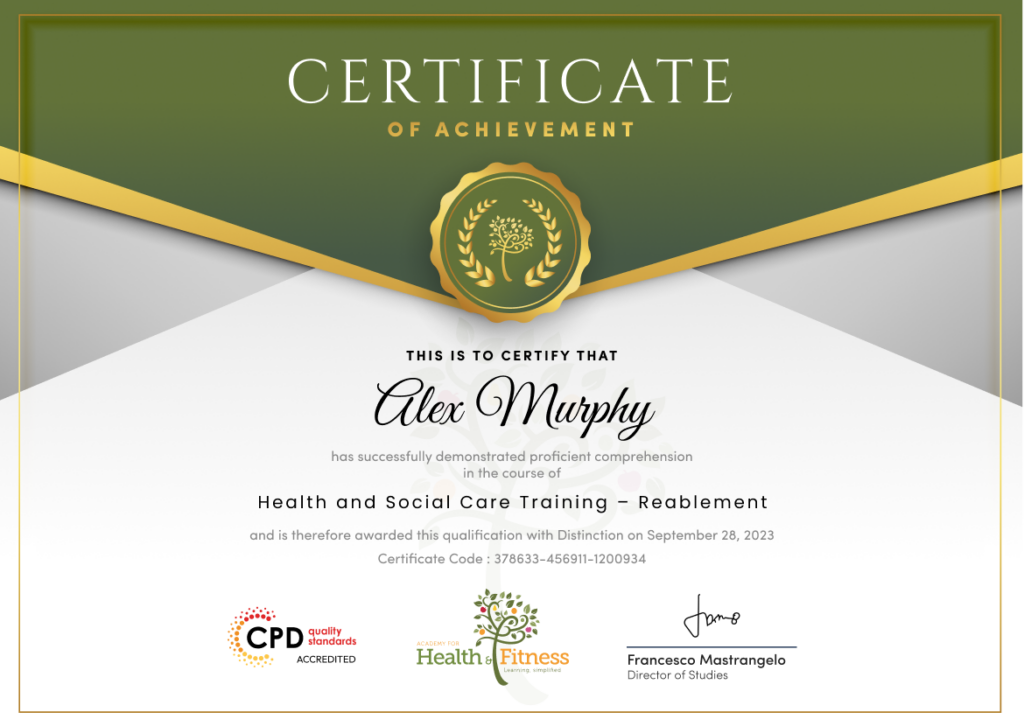
After successfully completing the Health and Social Care Training – Reablement course, you will qualify for a CPD Certificate as proof of your continued professional development and achievement. This certificate can enhance your professional profile and showcase your commitment to building relevant skills and knowledge. You can receive your digital certificate for only £10, or request a printed hard copy sent by post for just £29 or both for £39.
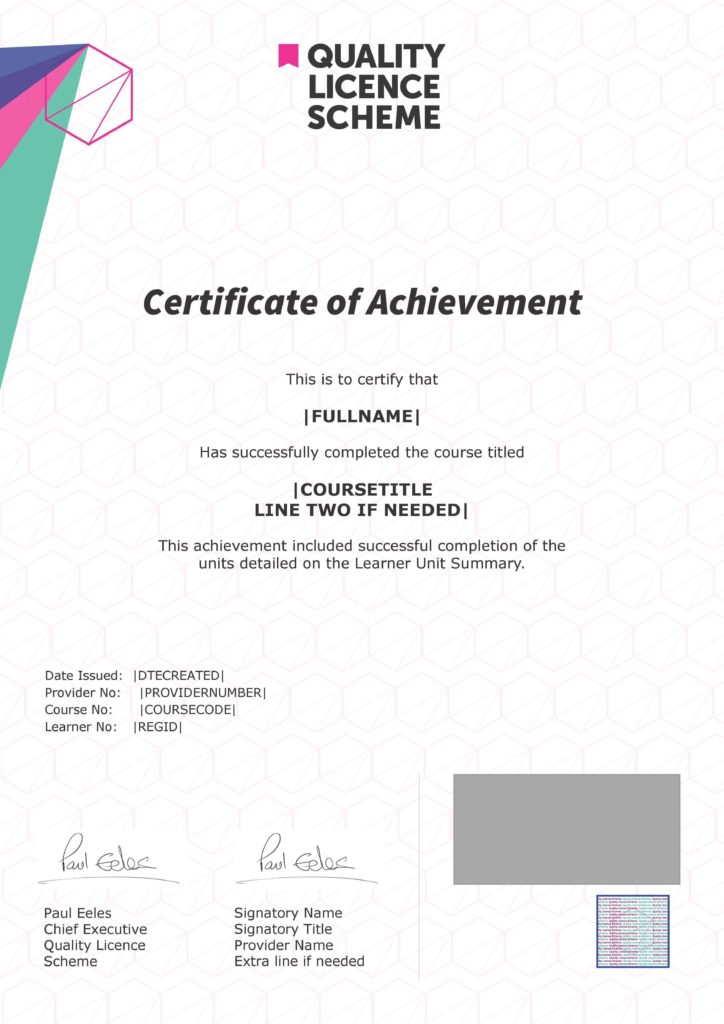
After successfully completing the Health and Social Care Training – Reablement course, learners will be able to order a QLS Endorsed Certificate as proof of their new achievement. The Level QLS Endorsed certificate can be ordered and get delivered to your home by post for £119 only. There is an additional £10 postage charge for international students.
For assessing your learning, you have to complete an automated MCQ exam. It is required for the students to score at least 60% to pass the exam and fulfil the Quality Licence Scheme-endorsed certificate criteria. Learners can apply for the certificate after they clear the exam.
There are assignment questions provided at the end of the course. You are suggested to complete the questions to enrich your understanding of the course. You can complete this according to your preferred time. The expert tutor will provide feedback on your performance after assessing your assignment.
Reablement knowledge can open doors across home care, community rehabilitation, hospital discharge support, and adult social care. Employers value workers who can promote independence, set goals, and reduce long-term dependency. The roles below show realistic directions for progression, with salary ranges based on current National Careers Service profiles today nationally.
Care workers support people with everyday tasks while encouraging them to do as much as possible safely. In reablement settings, that means helping with washing, dressing, mobility, meals, medication prompts, and confidence-building routines. It suits compassionate beginners wanting frontline experience, flexible progression, and practical independence-focused responsibilities in community care daily.
Salary range: £20,000 – £25,000.
Senior care workers combine hands-on support with supervision, guidance, and care planning. Reablement knowledge helps them lead goal-focused practice, coach junior staff, monitor progress, and keep support person-centred. This role suits experienced carers ready for more responsibility, better communication with families, and stronger leadership within domiciliary or community teams services.
Salary range: £24,000 – £29,000.
Occupational therapy support workers help people rebuild independence after illness, injury, disability, or ageing-related decline. They support exercises, equipment use, home adaptations, and practical daily living goals under professional guidance. This role fits learners who enjoy rehabilitation, observation, encouragement, and working closely with occupational therapists in homes or community services.
Salary range: £26,000 – £31,000.
Physiotherapy assistants support mobility, movement, and rehabilitation plans set by physiotherapists. Reablement training strengthens their ability to encourage safe practice, monitor progress, and help people regain confidence in transfers, walking, and routine tasks. This role suits practical learners who enjoy motivating others and supporting recovery in community or healthcare settings.
Salary range: £25,000 – £31,000.
Social work assistants help people manage practical, emotional, and social needs while linking them with services. Reablement knowledge adds strength-based thinking, independence planning, and better understanding of home-based recovery. This role suits organised communicators who want meaningful support work, community involvement, and progression within adult social care environments compassionately effectively.
Salary range: £20,000 – £28,000.
Social workers assess needs, protect vulnerable adults, coordinate support, and promote independent living. Reablement knowledge is valuable because it strengthens strengths-based assessments, realistic goal planning, and collaboration with families, therapists, and care teams. This role suits ambitious learners who want professional responsibility, decision-making authority, and longer-term progression in care services.
Salary range: £32,000 – £48,000.
Occupational therapists help people overcome barriers caused by illness, disability, accidents, or ageing. Reablement principles are central to their work because daily living goals, adaptive strategies, and independence planning sit at the heart of practice. This role suits motivated learners aiming for specialist progression, clinical judgement, and person-centred rehabilitation careers.
Salary range: £32,000 – £48,000.
Residential support workers look after vulnerable adults’ wellbeing and daily routines in supported settings. Reablement knowledge helps them focus on capability, confidence, and step-by-step independence rather than doing everything for residents. This role suits patient, observant learners who want structured care work and opportunities to build progression through experience steadily.
Salary range: £22,000 – £30,000.
Healthcare assistants support patients in hospitals and sometimes at home with personal care, comfort, and observation. Reablement understanding helps them encourage safe participation instead of passive dependence, especially after illness or discharge. This role suits reliable learners seeking entry into health and social care with practical, people-focused responsibilities and progression.
Salary range: £25,000 – £27,000.
Family support workers guide families and carers through challenges, routines, and support planning. Reablement knowledge improves how they encourage independence, involve carers positively, and build realistic daily living goals around the person. This role suits empathetic communicators who enjoy tailored support, partnership working, and family-centred problem solving every day professionally.
Salary range: £24,000 – £36,000.
Physiotherapists assess movement problems and create treatment plans that improve mobility, strength, balance, and function. Reablement knowledge supports their focus on restoring everyday independence after illness, injury, surgery, or ageing-related decline. This role suits committed learners seeking advanced progression, clinical autonomy, multidisciplinary teamwork, and strong long-term career prospects nationally today.
Salary range: £32,000 – £48,000.
Reablement in health and social care is short-term, goal-focused support that helps people regain confidence, relearn practical skills, and live as independently as possible after illness, injury, crisis, or hospital discharge. It focuses on doing with people, not doing for them, using strengths, progress, and personalised daily goals measurable outcomes.
Home care often provides ongoing help with daily tasks, while reablement is time-limited and designed to rebuild independence. Reablement encourages people to regain skills, confidence, and function through active support, goal-setting, and practice. In some cases, NICE notes reablement may be provided alongside home care when appropriate locally for individuals.
Reablement supports independence by breaking daily tasks into achievable steps, focusing on strengths, and encouraging people to practise safely. Support workers guide rather than take over. Common goals include washing, dressing, mobility, meal preparation, and community access, helping people rebuild confidence, routine, function, and control within their environment over time.
People who may need reablement include adults recovering after hospital discharge, illness, injury, a fall, or a sudden decline in daily functioning. It can support people with dementia or rising care needs when the aim is to improve independence, prevent long-term dependency, and help them stay home safely more confidently.
Reablement is usually short term. SCIE describes it as time-limited support of up to six weeks, although many services review progress regularly and may finish earlier when goals are achieved. Local NHS and council arrangements vary, but the purpose remains recovery, confidence-building, and practical independence rather than permanent long-term care.
Yes. Reablement training for care workers and carers strengthens day-to-day practice by teaching goal-setting, motivational support, safe prompting, and person-centred independence techniques. It is especially useful for domiciliary carers, support workers, rehabilitation assistants, and healthcare staff involved in discharge support, recovery services, community care, or strengths-based homecare delivery models daily.
Person centred reablement training matters because independence cannot be built through one-size-fits-all care. People progress faster when support reflects their abilities, wishes, routines, risks, and personal goals. NICE recommends involving people and, where appropriate, families and carers in decisions, assessments, and planning throughout intermediate care and reablement support for everyone.
Activities of daily living in reablement are everyday tasks linked to personal care and home functioning. Examples include washing, dressing, toileting, taking medication, getting in and out of bed, preparing food, shopping, and moving around safely. Reablement uses these activities to set practical goals and measure real progress over time.
Reablement in domiciliary care shifts support from task completion to independence-building. Instead of simply doing everything for someone, staff encourage safe participation, goal practice, and routine rebuilding at home. This approach can reduce dependency, support recovery after illness, and create outcomes for people, families, providers, and community services over time.
Reablement online training can be worth it for career progression because employers value staff who understand recovery, discharge support, goal-setting, and independence promotion. It can strengthen CVs for care worker, support worker, domiciliary care, rehabilitation assistant, and health and social care roles while building more confident person-centred practice for employers.
| Module 1: Introduction to Reablement | |||
| Introduction to Reablement | 00:08:00 | ||
| Module 2: Policy Context | |||
| Policy Context | 00:09:00 | ||
| Module 3: Guidance for Families and Carers | |||
| Guidance for Families and Carers | 00:22:00 | ||
| Module 4: Understanding Intermediate Care & Reablement | |||
| Understanding Intermediate Care & Reablement | 00:06:00 | ||
| Module 5: Guideline for Intermediate Care & Reablement | |||
| Guideline for Intermediate Care & Reablement | 00:42:00 | ||
| Module 6: Required Culture Change | |||
| Required Culture Change | 00:16:00 | ||
| Module 7: The Importance of Goal-Setting in Reablement | |||
| The Importance of Goal-Setting in Reablement | 00:05:00 | ||
| Module 8: Skills Mix and Supporting Services | |||
| Skills Mix and Supporting Services | 00:08:00 | ||
| Module 9: Outcome Measurement – Features of a Successful Reablement | |||
| Outcome Measurement – Features of a Successful Reablement | 00:15:00 | ||
| Module 10: Supporting People Living with Dementia | |||
| Supporting People Living with Dementia | 00:13:00 | ||
| Module 11: Successfully Ending a Period of Reablement | |||
| Successfully Ending a Period of Reablement | 00:05:00 | ||
| Module 1: Introduction to Reablement | |||
| Introduction to Reablement | 00:08:00 | ||
| Module 2: Policy Context | |||
| Policy Context | 00:09:00 | ||
| Module 3: Guidance for Families and Carers | |||
| Guidance for Families and Carers | 00:22:00 | ||
| Module 4: Understanding Intermediate Care & Reablement | |||
| Understanding Intermediate Care & Reablement | 00:06:00 | ||
| Module 5: Guideline for Intermediate Care & Reablement | |||
| Guideline for Intermediate Care & Reablement | 00:42:00 | ||
| Module 6: Required Culture Change | |||
| Required Culture Change | 00:16:00 | ||
| Module 7: The Importance of Goal-Setting in Reablement | |||
| The Importance of Goal-Setting in Reablement | 00:05:00 | ||
| Module 8: Skills Mix and Supporting Services | |||
| Skills Mix and Supporting Services | 00:08:00 | ||
| Module 9: Outcome Measurement – Features of a Successful Reablement | |||
| Outcome Measurement – Features of a Successful Reablement | 00:15:00 | ||
| Module 10: Supporting People Living with Dementia | |||
| Supporting People Living with Dementia | 00:13:00 | ||
| Module 11: Successfully Ending a Period of Reablement | |||
| Successfully Ending a Period of Reablement | 00:05:00 | ||