CPD-Accredited Forensic Anthropology Course for Aspiring Forensic Professionals, Archaeology and Criminal Justice Learners | Certificate Included
Learn skeletal analysis, human osteology, biological profiling, trauma assessment, ethics, and forensic report writing.
4.6
(3 Reviews)
5 Students
Exclusive Deal! 94% Off, Today Only!
Sale Ends In
CPD Point
Unlock the science behind human identification and crime scene investigations with our CPD-accredited Forensic Anthropology course. In the UK, 95.5% of forensic science graduates are in work or further study within 15 months, highlighting the strong value of forensic science skills in today’s job market.
This course takes you through the fundamentals of forensic anthropology, including human osteology, skeletal identification, age and sex estimation, ancestral affiliation, trauma analysis, ethical practice, and forensic report writing. You’ll develop a solid understanding of the techniques used to analyse human remains and support criminal investigations.
Whether you’re pursuing a career in forensic science, archaeology, criminal justice, healthcare, or simply want to expand your knowledge, this course will strengthen your analytical skills and enhance your CV. Gain practical, career-relevant knowledge and earn a recognised CPD certificate to demonstrate your professional development.
This CPD-accredited Forensic Anthropology course is designed to provide a comprehensive understanding of human skeletal analysis, osteology, and the scientific methods used to examine human remains. It is ideal for learners interested in forensic science, archaeology, criminal justice, anthropology, and related professional fields.
Throughout this online forensic anthropology course, you will explore human and comparative osteology, skeletal identification, and techniques used to estimate sex, age, stature, BMI, minimum number of individuals, and ancestral affiliation. You will also learn how bones are examined for signs of trauma and how findings are documented in a clear forensic report.
In addition to technical knowledge, the course introduces ethical considerations surrounding human remains and forensic investigations. By completing the course, you can strengthen your analytical, observational, and report-writing skills while earning a CPD-accredited certificate to support your professional development and enhance your CV.
By completing this Forensic Anthropology online course, you will:
Whether you are beginning your career or looking to explore forensic science, archaeology, anthropology, or criminal justice, this Forensic Anthropology course provides the essential knowledge needed to understand human skeletal analysis and forensic investigation.
The course introduces essential methods used to examine skeletal remains, including human osteology, sex and age estimation, stature assessment, ancestral affiliation, trauma analysis, and forensic report writing. It also develops your understanding of the ethical responsibilities involved in handling and interpreting human remains.
This course can strengthen your analytical, observational, and evidence-evaluation skills while helping you build a solid foundation for further study or professional development. It is suitable for aspiring forensic professionals, archaeology learners, criminal justice students, and anyone interested in how skeletal evidence contributes to human identification and investigations.
This course is ideal for individuals who want to explore forensic anthropology, forensic science, archaeology, and human skeletal analysis.
It is suitable for:
There are no specific prerequisites to enrol in this Forensic Anthropology course. It is suitable for beginners and learners from any educational or professional background.
The course is fully accessible from any internet-enabled smart device, allowing you to study conveniently from home or any preferred location.
All you need is basic literacy, a passion for learning, reliable internet access, and to be at least 16 years old.
After successfully completing the Forensic AnthropologyÂ
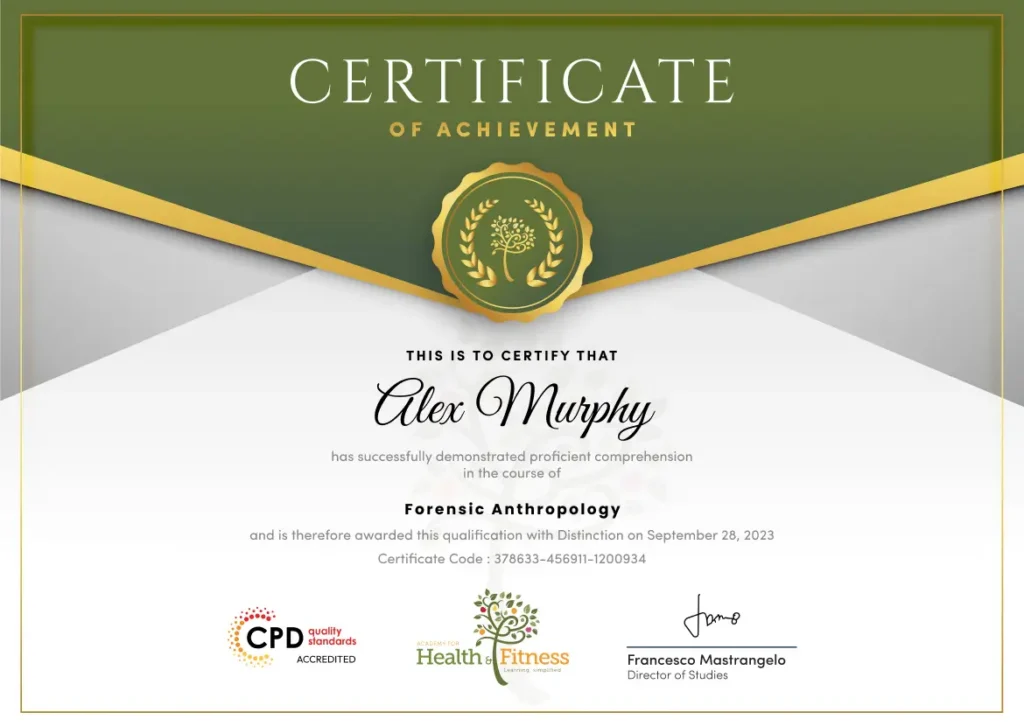
course, you will qualify for a CPD Certificate as proof of your continued professional development and achievement. This certificate can enhance your professional profile and showcase your commitment to building relevant skills and knowledge. You can receive your digital certificate for only £10, or request a printed hard copy sent by post for just £29 or both for £39.
For assessing your learning, you have to complete an automated MCQ exam. It is required for the students to score at least 60% to pass the exam and fulfil the Quality Licence Scheme-endorsed certificate criteria. Learners can apply for the certificate after they clear the exam.
There are assignment questions provided at the end of the course. You are suggested to complete the questions to enrich your understanding of the course. You can complete this according to your preferred time. The expert tutor will provide feedback on your performance after assessing your assignment.
The Forensic Anthropology course is an online, knowledge-based programme covering human osteology, skeletal identification, biological profiling, trauma analysis, ethics, and forensic reporting. Although this course does not provide a professional licence or guarantee employment, it can support further study and progression towards forensic science, archaeology, laboratory, museum, and heritage careers.
This course covers human osteology, comparative osteology, skeletal identification, biological profiling, trauma analysis, ethical considerations, and forensic report writing. Learners will explore how skeletal remains can help support identification and investigation.
Yes. This course is suitable for beginners with no previous experience in forensic anthropology. It introduces key topics step by step, making it accessible to learners from different educational and professional backgrounds.
Yes. The course is delivered entirely online, allowing you to study from home or any location with internet access. You can work through the course at a pace that suits your schedule.
Yes. Successful learners will receive a CPD-accredited certificate. This can demonstrate your commitment to professional development and strengthen your CV or further-study applications.
No. This is a knowledge-based professional development course and does not provide a professional licence or qualify you to practise independently as a forensic anthropologist. Advanced roles generally require relevant university qualifications and essential experience.
You will learn how to identify and examine human bones, distinguish human remains from animal bones, and estimate characteristics such as sex, age, stature, BMI, and ancestral affiliation.
Yes. The course introduces methods used to examine bones for evidence of trauma. You will develop an understanding of how skeletal injuries may be observed, interpreted, and documented.
This course is ideal for aspiring forensic professionals, anthropology and archaeology students, criminal justice learners, researchers, museum workers, and anyone interested in human osteology and skeletal investigation.
The course can support further study and professional development towards careers in forensic science, archaeology, laboratory work, museums, heritage, crime scene investigation, and related research fields.
Forensic anthropology combines science, investigation, and human identification. This course helps develop observation, analytical thinking, evidence interpretation, and report-writing skills that can benefit your academic and professional development.
There are no formal entry requirements. Learners should be at least 16 years old, have basic English literacy, access to an internet-enabled device, and an interest in forensic anthropology.
Yes. You will explore the ethical responsibilities associated with examining, handling, interpreting, and reporting information about human remains in forensic and archaeological contexts.
| Section 01: Course outline | |||
| Vertex Colourings | 00:05:00 | ||
| Section 02: The field of Anthropology | |||
| What is Anthropology? | 00:01:00 | ||
| Introduction to Anthropology | 01:08:00 | ||
| Section 03: Forensic Anthropology | |||
| Forensic Anthropology | 00:45:00 | ||
| Role of Forensic Anthropology | 01:05:00 | ||
| Section 04: Human Osteology | |||
| Human Osteology | 00:01:00 | ||
| Supplemental bone identification video lecture | 00:02:00 | ||
| Section 05: Comparative Osteology | |||
| Comparative Osteology | 02:15:00 | ||
| Supplemental comparative osteology video lecture | 00:04:00 | ||
| Section 06: Estimation of sex from skeletal remains | |||
| Estimating sex from skeletal elements | 00:05:00 | ||
| Estimating sex from human remains PowerPoint | 03:00:00 | ||
| Section 07: Estimating age at death from skeletal remains | |||
| Estimating age at death from skeletal remains | 00:01:00 | ||
| Estimate age at death PowerPoint | 02:45:00 | ||
| Supplemental age estimation video lecture | 00:04:00 | ||
| Introduction | 00:01:00 | ||
| Section 08: Estimating stature, BMI, and MNI | |||
| Estimating Stature, BMI, and MNI | 00:01:00 | ||
| Dual Graphs | 00:11:00 | ||
| Section 09: Estimating ancestral affiliation | |||
| Estimating ancestry | 00:02:00 | ||
| Estimating ancestry PowerPoint | 01:35:00 | ||
| Supplemental ancestry estimation video lecture | 00:04:00 | ||
| Section 10: Analyzing bones for trauma | |||
| Analyzing trauma | 00:01:00 | ||
| How does trauma present on the skeleton; Projectile trauma | 03:05:00 | ||
| Sharp force trauma | 00:40:00 | ||
| Blunt force trauma | 01:05:00 | ||
| Supplemental trauma analysis video lecture | 00:05:00 | ||
| Section 11: Writing it up! | |||
| Writing it up! How to produce a professional report | 00:01:00 | ||
| Writing it up PowerPoint presentation | 00:45:00 | ||
| Section 12: Ethical Considerations | |||
| Ethical considerations | 00:01:00 | ||
| Physical anthropology code of ethics | 00:55:00 | ||
| Forensic anthropology code of ethics | 00:10:00 | ||
| Ethical code for human rights work | 07:55:00 | ||
| Section 13: Exercise Answers | |||
| Sex estimation exercise key | 00:15:00 | ||
| Age estimation exercise key | 00:05:00 | ||
| Ancestry estimation exercise key 66 | 00:15:00 | ||
| Bone identification exercise key | 00:15:00 | ||
| Trauma exercise key | 00:20:00 | ||
| Section 14: Textbooks | |||
| Supplemental textbook recommendations video | 00:02:00 | ||
| Assignment | |||
| Assignment – Forensic Anthropology | 00:00:00 | ||
| Section 01: Course outline | |||
| Vertex Colourings | 00:05:00 | ||
| Section 02: The field of Anthropology | |||
| What is Anthropology? | 00:01:00 | ||
| Introduction to Anthropology | 01:08:00 | ||
| Section 03: Forensic Anthropology | |||
| Forensic Anthropology | 00:45:00 | ||
| Role of Forensic Anthropology | 01:05:00 | ||
| Section 04: Human Osteology | |||
| Human Osteology | 00:01:00 | ||
| Supplemental bone identification video lecture | 00:02:00 | ||
| Section 05: Comparative Osteology | |||
| Comparative Osteology | 02:15:00 | ||
| Supplemental comparative osteology video lecture | 00:04:00 | ||
| Section 06: Estimation of sex from skeletal remains | |||
| Estimating sex from skeletal elements | 00:05:00 | ||
| Estimating sex from human remains PowerPoint | 03:00:00 | ||
| Section 07: Estimating age at death from skeletal remains | |||
| Estimating age at death from skeletal remains | 00:01:00 | ||
| Estimate age at death PowerPoint | 02:45:00 | ||
| Supplemental age estimation video lecture | 00:04:00 | ||
| Introduction | 00:01:00 | ||
| Section 08: Estimating stature, BMI, and MNI | |||
| Estimating Stature, BMI, and MNI | 00:01:00 | ||
| Dual Graphs | 00:11:00 | ||
| Section 09: Estimating ancestral affiliation | |||
| Estimating ancestry | 00:02:00 | ||
| Estimating ancestry PowerPoint | 01:35:00 | ||
| Supplemental ancestry estimation video lecture | 00:04:00 | ||
| Section 10: Analyzing bones for trauma | |||
| Analyzing trauma | 00:01:00 | ||
| How does trauma present on the skeleton; Projectile trauma | 03:05:00 | ||
| Sharp force trauma | 00:40:00 | ||
| Blunt force trauma | 01:05:00 | ||
| Supplemental trauma analysis video lecture | 00:05:00 | ||
| Section 11: Writing it up! | |||
| Writing it up! How to produce a professional report | 00:01:00 | ||
| Writing it up PowerPoint presentation | 00:45:00 | ||
| Section 12: Ethical Considerations | |||
| Ethical considerations | 00:01:00 | ||
| Physical anthropology code of ethics | 00:55:00 | ||
| Forensic anthropology code of ethics | 00:10:00 | ||
| Ethical code for human rights work | 07:55:00 | ||
| Section 13: Exercise Answers | |||
| Sex estimation exercise key | 00:15:00 | ||
| Age estimation exercise key | 00:05:00 | ||
| Ancestry estimation exercise key 66 | 00:15:00 | ||
| Bone identification exercise key | 00:15:00 | ||
| Trauma exercise key | 00:20:00 | ||
| Section 14: Textbooks | |||
| Supplemental textbook recommendations video | 00:02:00 | ||
| Assignment | |||
| Assignment – Forensic Anthropology | 00:00:00 | ||