Diploma Of Forensics – CPD Accredited Course for aspiring forensic professionals, criminal justice learners, police support staff, and fitness industry personnel, with certificate included.
Explore criminology, offender behaviour, forensic psychology, police investigations, courtroom practice, research methods, and strategies to reduce re-offending through flexible online learning.
4.8
(7 Reviews)
15 Students
Exclusive Deal! 94% Off, Today Only!
Sale Ends In
CPD Point
Build a strong understanding of criminal behaviour and the vital role forensic psychology plays within the UK justice system. Ministry of Justice figures show that 29.6% of offenders in the April–June 2024 cohort committed a proven reoffence, highlighting the continued need for informed risk assessment and rehabilitation strategies.
The Diploma Of Forensics introduces you to criminology, theories of offending, offender characteristics, forensic research methods and interventions designed to reduce reoffending. You will also explore how forensic psychology supports police investigations, courtroom proceedings and professional practice.
This CPD-accredited course can strengthen your analytical thinking, behavioural awareness and understanding of evidence-based decision-making. It is ideal for aspiring forensic professionals, criminal justice learners, support workers and fitness industry personnel working with diverse or vulnerable individuals. Enrol today to develop valuable knowledge that can enhance your CV and support professional growth.cccc
This Diploma Of Forensics is designed to provide a comprehensive understanding of forensic psychology, criminal behaviour and the theories behind offending, making it an ideal course for anyone interested in criminology, law enforcement or the criminal justice sector.
Throughout this online forensics course, you will explore the history and development of forensic psychology, research methods, offender characteristics and interventions used to reduce the risk of reoffending. You will also learn how forensic psychology supports police investigations, courtroom proceedings and wider professional practice.
In addition to theoretical knowledge, the course develops your analytical thinking, behavioural awareness and ability to evaluate factors that may influence criminal activity. This deeper understanding can help you assess information more confidently and recognise how psychological principles are applied within real-world forensic settings.
Whether you are beginning your career or expanding your existing knowledge, this CPD-accredited course can strengthen your CV and support your professional development.
By completing this Diploma Of Forensics online course, you will:
Whether you are beginning your career or looking to develop knowledge of criminal behaviour, this Diploma Of Forensics provides the essential understanding needed to explore the fields of forensic psychology, criminology and criminal justice.
The course introduces theories of offending, offender characteristics, forensic research methods and interventions used to reduce reoffending. You will also learn how forensic psychology contributes to police investigations, courtroom proceedings and professional decision-making.
This course can support your progression towards further study or entry-level opportunities related to policing, probation, offender rehabilitation, youth justice and criminal justice support. It also helps strengthen analytical thinking, behavioural awareness and evidence-based reasoning, giving you a valuable foundation for future professional development.
This course is ideal for individuals who want to develop their understanding of forensic psychology, criminal behaviour and the criminal justice system.
It is suitable for:
There are no specific prerequisites to enrol in this Diploma Of Forensics. Anyone interested in forensic psychology, criminology, criminal behaviour or the justice system can take this course.
The Diploma Of Forensics is fully accessible from any internet-enabled smart device. Therefore, you can study flexibly from the comfort of your home.
All you need is a passion for learning, basic literacy skills and to be over the age of 16.
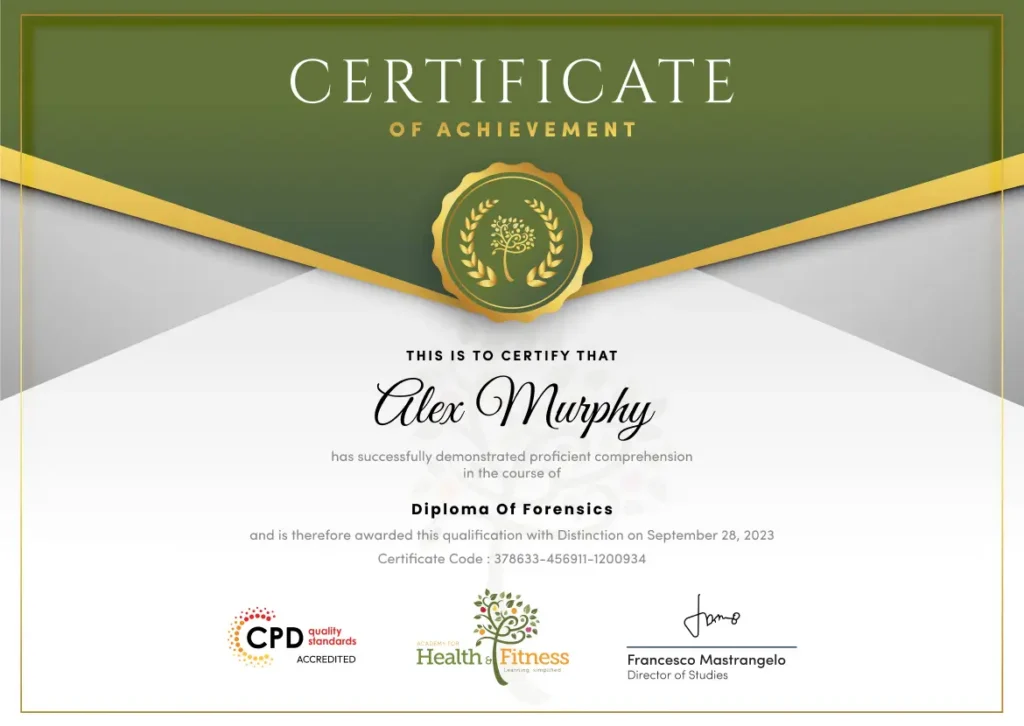
After successfully completing the Diploma Of Forensics course, you will qualify for a CPD Certificate as proof of your continued professional development and achievement. This certificate can enhance your professional profile and showcase your commitment to building relevant skills and knowledge. You can receive your digital certificate for only £10, or request a printed hard copy sent by post for just £29 or both for £39.
For assessing your learning, you have to complete an automated MCQ exam. It is required for the students to score at least 60% to pass the exam and fulfil the Quality Licence Scheme-endorsed certificate criteria. Learners can apply for the certificate after they clear the exam.
There are assignment questions provided at the end of the course. You are suggested to complete the questions to enrich your understanding of the course. You can complete this according to your preferred time. The expert tutor will provide feedback on your performance after assessing your assignment.
The Diploma Of Forensics is an online, knowledge-based course providing a foundation in forensic psychology, criminology, offender behaviour and criminal investigations. While it does not grant a professional licence, it can support further study and applications for entry-level or supporting roles.
This course covers forensic psychology, criminology, theories of offending, offender behaviour, research methods, police investigations, courtroom applications and professional forensic practice. It provides a solid introduction to the psychological principles used within the criminal justice system.
Yes. This course is designed for beginners as well as learners interested in forensic psychology, criminology, policing and criminal justice. No previous knowledge or experience is required.
Yes. The Diploma Of Forensics is delivered entirely online, allowing you to study from home at your own pace. This flexible format makes it easy to fit learning around work, family or other commitments.
Yes. After successfully completing the course, you will receive an HF Online CPD Accredited Certificate. This certificate can enhance your CV and demonstrate your commitment to professional development.
No. This course is a knowledge-based CPD programme and does not qualify you to practise as a registered forensic psychologist. In the UK, becoming a forensic psychologist requires accredited university qualifications, supervised training and HCPC registration.
This course can support progression towards roles such as forensic psychology assistant, police support officer, probation services assistant, youth offending support worker, victim support worker and other criminal justice support positions. It also provides a strong foundation for further study.
The course is assessed through an automated multiple-choice (MCQ) examination. Learners must achieve at least 60% to pass and receive their certificate.
This course is ideal for aspiring forensic psychology professionals, criminology students, police and criminal justice applicants, rehabilitation support workers, fitness industry professionals and anyone interested in understanding criminal behaviour.
Yes. Forensic psychology and criminology skills are valued across policing, probation, prisons, rehabilitation services and the wider criminal justice sector. This course provides a strong foundation for further education and career development.
Understanding criminal behaviour and forensic psychology is valuable for anyone interested in crime prevention, rehabilitation and the justice system. This course develops analytical thinking and evidence-based knowledge that can strengthen your CV and prepare you for future opportunities.
| Introduction | |||
| Interventions to reduce risk of re-offending | 00:07:00 | ||
| History of development of Forensic Psychology | 00:06:00 | ||
| Research Methods in Forensic Psychology | |||
| Research Design and Methodology | 00:12:00 | ||
| Critical evaluation of psychological research | 00:09:00 | ||
| Criminology | |||
| What is Criminology | 00:10:00 | ||
| Understanding Crime | 00:10:00 | ||
| Classification and Measurement of Crimes | 00:10:00 | ||
| Characteristics of Offenders (Criminals) | 00:05:00 | ||
| Theories of Offending | |||
| Introduction to theories of offending | 00:06:00 | ||
| Theories of sexual offending | 00:08:00 | ||
| Theories of violent offending | 00:08:00 | ||
| Theories of fire-setting behaviour | 00:08:00 | ||
| Personal Attributes of Offenders | |||
| Personal characteristics of offenders | 00:06:00 | ||
| Personality disordered offenders | 00:06:00 | ||
| Psychopathic offenders | 00:07:00 | ||
| Mental Illness and offending | 00:07:00 | ||
| Forensic Psychology in Police Investigations | |||
| An Introduction to Offender Profiling | 00:05:00 | ||
| Approaches to Offender Profiling | 00:05:00 | ||
| The Effectiveness of Offender Profiling | 00:06:00 | ||
| Forensic Psychology in the Courtroom | |||
| Eye-witness testimony | 00:09:00 | ||
| Expert witness testimony | 00:04:00 | ||
| Attitudes towards victims | 00:06:00 | ||
| Forensic Psychology in Practice | |||
| ’What works’ literature in reducing re-offending | 00:06:00 | ||
| Incident management (Crisis Negotiation) | 00:08:00 | ||
| Introduction: About the Course and the Tutor | 00:03:00 | ||
| Mock Exam | |||
| Mock Exam – Diploma Of Forensics | 00:20:00 | ||
| Final Exam | |||
| Final Exam – Diploma Of Forensics | 00:20:00 | ||
| Introduction | |||
| Interventions to reduce risk of re-offending | 00:07:00 | ||
| History of development of Forensic Psychology | 00:06:00 | ||
| Research Methods in Forensic Psychology | |||
| Research Design and Methodology | 00:12:00 | ||
| Critical evaluation of psychological research | 00:09:00 | ||
| Criminology | |||
| What is Criminology | 00:10:00 | ||
| Understanding Crime | 00:10:00 | ||
| Classification and Measurement of Crimes | 00:10:00 | ||
| Characteristics of Offenders (Criminals) | 00:05:00 | ||
| Theories of Offending | |||
| Introduction to theories of offending | 00:06:00 | ||
| Theories of sexual offending | 00:08:00 | ||
| Theories of violent offending | 00:08:00 | ||
| Theories of fire-setting behaviour | 00:08:00 | ||
| Personal Attributes of Offenders | |||
| Personal characteristics of offenders | 00:06:00 | ||
| Personality disordered offenders | 00:06:00 | ||
| Psychopathic offenders | 00:07:00 | ||
| Mental Illness and offending | 00:07:00 | ||
| Forensic Psychology in Police Investigations | |||
| An Introduction to Offender Profiling | 00:05:00 | ||
| Approaches to Offender Profiling | 00:05:00 | ||
| The Effectiveness of Offender Profiling | 00:06:00 | ||
| Forensic Psychology in the Courtroom | |||
| Eye-witness testimony | 00:09:00 | ||
| Expert witness testimony | 00:04:00 | ||
| Attitudes towards victims | 00:06:00 | ||
| Forensic Psychology in Practice | |||
| ’What works’ literature in reducing re-offending | 00:06:00 | ||
| Incident management (Crisis Negotiation) | 00:08:00 | ||
| Introduction: About the Course and the Tutor | 00:03:00 | ||
| Mock Exam | |||
| Mock Exam – Diploma Of Forensics | 00:20:00 | ||
| Final Exam | |||
| Final Exam – Diploma Of Forensics | 00:20:00 | ||