Master the Diploma in Water Chemistry Course, a CPD-accredited pathway supporting water treatment operators, laboratory technicians, environmental technicians, and aspiring water quality professionals. Aimed at those who want to become trusted specialists in water safety and treatment, this dramatic programme turns basic science into career power—helping you understand contamination, control quality, and step into an essential, future-focused industry with confidence.
Exclusive Deal! 94% Off, Today Only!
Sale Ends In
Do you want to understand what happens inside water treatment systems—and turn that knowledge into something employers can use? If so, this Water Chemistry Course is relevant to you because safe water depends on people who understand quality, contamination, treatment chemistry, and testing.Â
The need is clear. The UK water supply, sewerage, waste and remediation sector recorded 242,000 workforce jobs in Q4 2025, while Ofwat says PR24 allows up to £104 billion of expenditure for 2025–2030, the biggest five-year investment programme since privatisation. At the same time, the Drinking Water Inspectorate reported drinking water compliance in England at 99.97% in 2024, proving how critical accurate monitoring and chemical control remain. This programme helps you build practical knowledge step by step.Â
You will learn basic water chemistry, alkalinity of water, hard water behaviour, water treatment and purification, chemical processes of water treatment, inorganic chemicals, volatile and synthetic organic compounds, metalloids, heavy metals, laboratory safety, and oil analysis interpretation.Â
Enrol now to gain flexible training, recognised certification, and a stronger foundation in Water Chemistry.Â
Build essential scientific confidence as you progress from basic water chemistry to treatment-focused analysis and safety awareness. Learn how water quality is measured, how alkalinity, hardness, and contaminants affect systems, and how chemistry knowledge supports treatment, testing, and compliance work.
This water chemistry course online UK is designed to help you build essential, career-focused knowledge for water treatment, water quality monitoring, laboratory testing, purification processes, and environmental support roles, giving you the confidence and subject understanding employers, utilities, laboratories, and compliance-focused organisations increasingly value.
Whether you want a first step into water treatment, stronger lab knowledge, or essential chemistry skills for operational environments, this programme suits beginners and developing professionals alike. It is especially useful for learners who want flexible study that supports utilities, compliance, environmental, and water quality roles with confidence today professionally.
There are no specific prerequisites to enrol in this Diploma in Water Chemistry Course. Anyone and everyone can take this course.
The Diploma in Water Chemistry Course is fully accessible from any internet-enabled smart device. So, you can study from the comfort of your home!
All you need is a passion for learning, literacy, and to be over the age of 16.
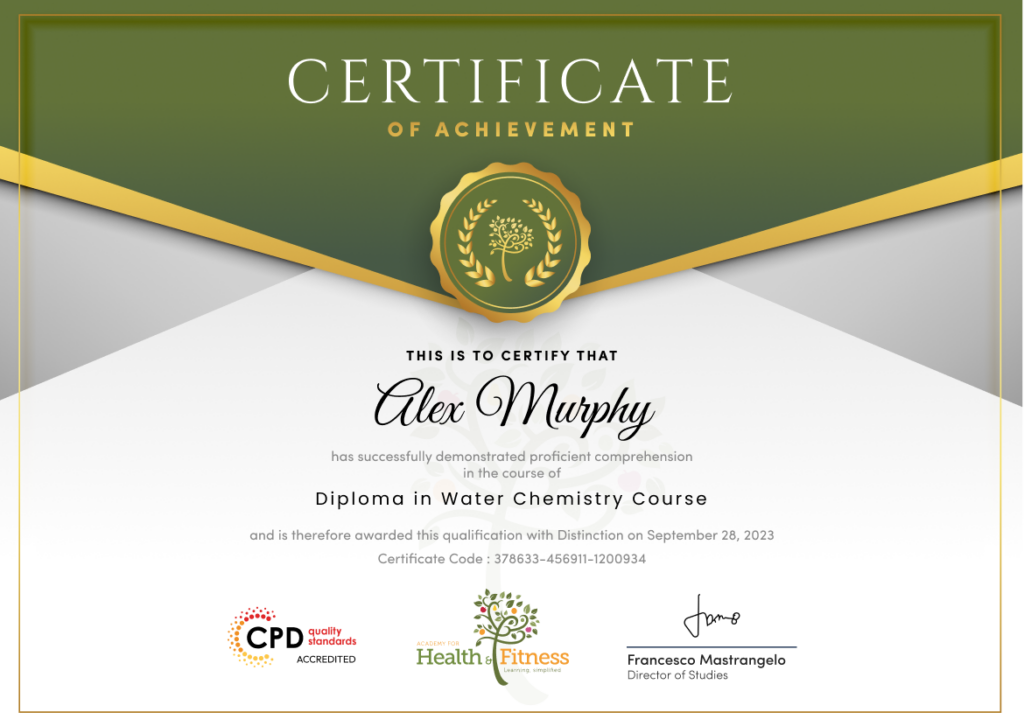
After successfully completing the Diploma in Water Chemistry Course, you will qualify for a CPD Certificate as proof of your continued professional development and achievement. This certificate can enhance your professional profile and showcase your commitment to building relevant skills and knowledge. You can receive your digital certificate for only £10, or request a printed hard copy sent by post for just £29 or both for £39.
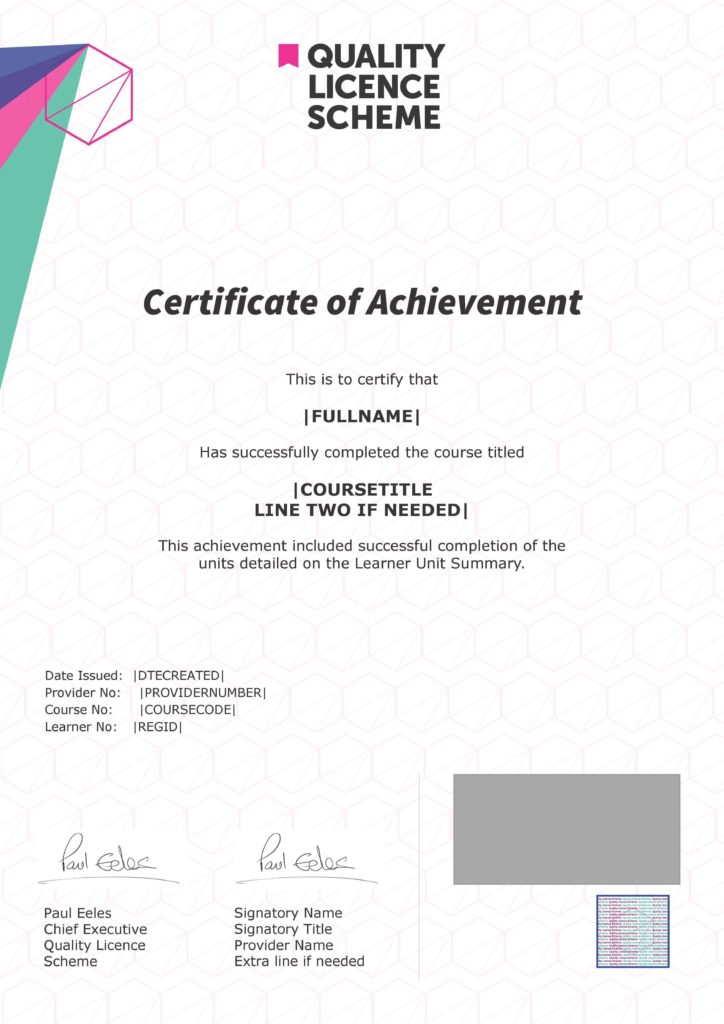
After successfully completing the course, learners will be able to order a QLS Endorsed Certificate as proof of their new achievement. The Level QLS Endorsed certificate can be ordered and get delivered to your home by post for £119 only. There is an additional £10 postage charge for international students.
For assessing your learning, you have to complete an automated MCQ exam. It is required for the students to score at least 60% to pass the exam and fulfil the Quality Licence Scheme-endorsed certificate criteria. Learners can apply for the certificate after they clear the exam.
There are assignment questions provided at the end of the course. You are suggested to complete the questions to enrich your understanding of the course. You can complete this according to your preferred time. The expert tutor will provide feedback on your performance after assessing your assignment.
Water chemistry knowledge supports work across treatment plants, laboratories, utilities, environmental services, and compliance teams. Employers value people who understand contamination, testing, and chemical control because safe water is non-negotiable. The roles below show practical directions this knowledge can support, alongside typical UK salary ranges.
Water chemistry is the study of the chemical properties of water and the substances dissolved or suspended in it. It matters because water quality affects public health, treatment efficiency, industrial processes, environmental safety, and regulatory compliance.
Yes. An online water chemistry course gives you flexible access to theory, treatment principles, and water quality concepts without forcing you into a rigid timetable. It suits busy learners, working professionals, and career changers.
Water chemistry training can support roles in water treatment, water quality testing, laboratory support, utilities, environmental services, and compliance. It is especially useful for operator, technician, assistant, and entry-level scientific roles.
Water chemistry focuses on the composition, properties, and behaviour of water. Water treatment chemistry is more applied, covering how chemicals and processes are used to improve water quality, remove contaminants, and make water suitable for drinking, discharge, or industrial use.
Alkalinity affects water’s ability to resist pH change. If you do not understand it, you can make bad treatment decisions, cause corrosion issues, reduce process efficiency, or fail to stabilise water properly.
Hardness matters because calcium and magnesium can cause scaling, reduce equipment efficiency, and affect cleaning, heating, and processing systems. Understanding hardness helps operators choose the right treatment approach and maintain better system performance.
You will learn water chemistry basics, alkalinity, hard water, purification principles, chemical treatment processes, inorganic contaminants, synthetic organics, metalloids, heavy metals, laboratory safety, and interpretation of analysis-related topics.
Yes, because operators make real decisions that affect dosing, treatment performance, equipment protection, and compliance. Guesswork is useless in a treatment environment. Strong chemistry knowledge makes decisions smarter and safer.
No advanced background is essential for most learners. A beginner-friendly structure can help you build understanding step by step, especially if you are starting with basic water chemistry or returning to study after time away.
A water quality chemistry course is useful for understanding contamination, treatment targets, testing indicators, and sample interpretation. It helps learners build practical knowledge that applies to utilities, labs, environmental work, and operator support roles.
It shows focused subject knowledge, commitment to professional development, and interest in technical water-related work. That matters when employers want evidence that you understand treatment, safety, testing, and compliance basics.
Yes, if you want a realistic entry point into a technical sector. Water is essential infrastructure, and employers need people who understand treatment logic, quality control, contamination risks, and safe operational thinking.
| Diploma in Water Chemistry | |||
| Module 01: Introduction to Water Chemistry | 00:23:00 | ||
| Designations of Lube Oils | 00:05:00 | ||
| Module 03: Alkalinity of Water | 00:15:00 | ||
| Module 04: Hard Water and Basic Water Treatment Principles | 00:20:00 | ||
| Module 05: Water Treatment and Purification | 00:31:00 | ||
| Module 06: Chemical Processes of Water Treatment | 00:16:00 | ||
| Module 07: Inorganic Chemicals | 00:17:00 | ||
| Module 08: Volatile and Synthetic Organic Compounds | 00:25:00 | ||
| Module 09: Metalloid Section | 00:18:00 | ||
| Module 10: Metals and Heavy Metal Section | 00:33:00 | ||
| Module 11: Laboratory Safety | 00:33:00 | ||
| Oil Analysis and Interpretation | 00:07:00 | ||
| Mock Exam | |||
| Mock Exam – Diploma in Water Chemistry | 00:20:00 | ||
| Final Exam | |||
| Final Exam – Diploma in Water Chemistry | 00:20:00 | ||
| Assignment | |||
| Assignment – Diploma in Water Chemistry | 2 weeks, 3 days | ||
| Order Your QLS Certificate | |||
| Claim Your Certificates | 00:00:00 | ||
| Diploma in Water Chemistry | |||
| Module 01: Introduction to Water Chemistry | 00:23:00 | ||
| Designations of Lube Oils | 00:05:00 | ||
| Module 03: Alkalinity of Water | 00:15:00 | ||
| Module 04: Hard Water and Basic Water Treatment Principles | 00:20:00 | ||
| Module 05: Water Treatment and Purification | 00:31:00 | ||
| Module 06: Chemical Processes of Water Treatment | 00:16:00 | ||
| Module 07: Inorganic Chemicals | 00:17:00 | ||
| Module 08: Volatile and Synthetic Organic Compounds | 00:25:00 | ||
| Module 09: Metalloid Section | 00:18:00 | ||
| Module 10: Metals and Heavy Metal Section | 00:33:00 | ||
| Module 11: Laboratory Safety | 00:33:00 | ||
| Oil Analysis and Interpretation | 00:07:00 | ||
| Mock Exam | |||
| Mock Exam – Diploma in Water Chemistry | 00:20:00 | ||
| Final Exam | |||
| Final Exam – Diploma in Water Chemistry | 00:20:00 | ||
| Assignment | |||
| Assignment – Diploma in Water Chemistry | 2 weeks, 3 days | ||
| Order Your QLS Certificate | |||
| Claim Your Certificates | 00:00:00 | ||