Diploma in Psychology is a CPD-accredited certificate course for aspiring counsellors, wellbeing support workers, care staff and anyone seeking a psychology-focused role. Learn key areas of human behaviour, motivation, stress, personality, mood disorders, research methods and assessments to build psychological understanding and support personal or professional development.
0
(0 Reviews)
27 Students
Exclusive Deal! 94% Off, Today Only!
Sale Ends In
CPD Point
In the UK, mental health and emotional wellbeing are major concerns, with NHS England reporting that 1 in 4 adults experiences a diagnosable mental health problem each year. This makes psychology knowledge valuable across care, education, wellbeing, HR and support-based roles.
The Diploma in Psychology introduces you to human behaviour, emotions, motivation, stress, personality and mental health conditions. You will explore psychological approaches, biological psychology, behavioural psychology, child development, social psychology, mood disorders, eating disorders, personality disorders, research methods, assessments and ethical issues.
This CPD-accredited course can help you understand people more confidently, improve communication and strengthen your professional skills. Whether you want to support others, enhance your CV or develop a career in a people-focused sector, this course gives you essential psychological insight for real-world professional growth.
This Diploma in Psychology is designed to provide a comprehensive understanding of human behaviour, emotions, personality, mental processes and psychological wellbeing, making it an ideal course for anyone looking to build knowledge in psychology, care, education, counselling support or people-focused professional roles.
Throughout this psychology course, you will explore key areas such as different psychological approaches, biological psychology, behavioural psychology, developmental psychology, social psychology, motivation, stress, anxiety, perception, learning, thinking and intelligence. You will also gain insight into psychological conditions, including mood disorders, eating disorders, personality disorders and atypical behaviours.
In addition to theoretical knowledge, this course develops your understanding of research methods, psychological assessments and ethical issues in psychology. This will help you improve communication, understand people more effectively and apply psychological knowledge with confidence in professional, academic or personal development settings.
By completing this Diploma in Psychology online course, you will:
Whether you are starting your learning journey or looking to build a career in a people-focused sector, this Diploma in Psychology provides essential knowledge of human behaviour, emotions, personality and mental wellbeing.
As a comprehensive psychology course, it is designed to help you understand how people think, feel, learn and respond to different life situations. You will explore key areas such as psychological approaches, stress, anxiety, motivation, social behaviour, development, mental health disorders, assessments and ethical issues.
This course supports your progression into roles in counselling support, care, education, wellbeing, HR, social support or community services. It also helps you improve communication, empathy and observation skills, giving you a strong foundation for professional growth or further study in psychology.
This course is ideal for individuals who want to understand human behaviour, mental processes, emotions and psychological wellbeing, especially in people-focused professional settings.
It is suitable for:
There are no specific prerequisites to enrol in this Diploma in Psychology. This course is suitable for beginners, aspiring psychology learners and anyone interested in understanding human behaviour, emotions and mental wellbeing.
The Diploma in Psychology is fully accessible from any internet-enabled smart device, allowing you to study online from the comfort of your home at your own pace.
All you need is a passion for learning, basic literacy skills and to be over the age of 16.
After successfully completing the Diploma in Psychology
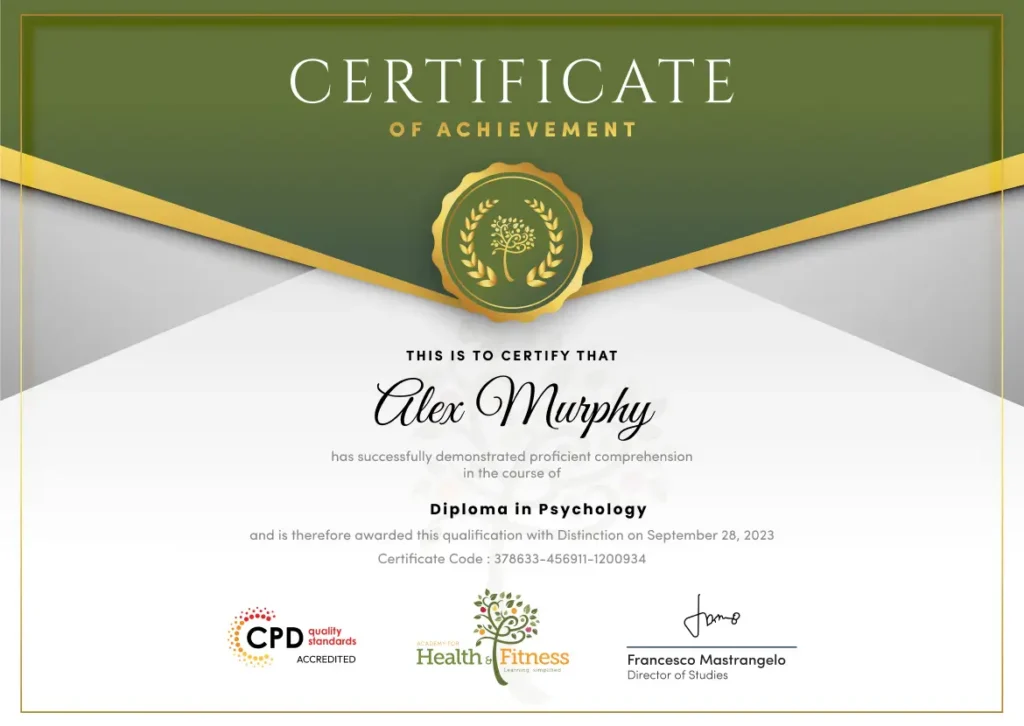
course, you will qualify for a CPD Certificate as proof of your continued professional development and achievement. This certificate can enhance your professional profile and showcase your commitment to building relevant skills and knowledge. You can receive your digital certificate for only £10, or request a printed hard copy sent by post for just £29 or both for £39.
For assessing your learning, you have to complete an automated MCQ exam. It is required for the students to score at least 60% to pass the exam and fulfil the Quality Licence Scheme-endorsed certificate criteria. Learners can apply for the certificate after they clear the exam.
There are assignment questions provided at the end of the course. You are suggested to complete the questions to enrich your understanding of the course. You can complete this according to your preferred time. The expert tutor will provide feedback on your performance after assessing your assignment.
The Diploma in Psychology is an online knowledge-based training designed to provide a strong foundation in human behaviour, emotions, personality, mental wellbeing and psychological assessment. While it does not provide a professional licence to practise as a psychologist, counsellor or therapist, it can support entry-level and supportive roles across care, education, wellbeing, HR and community support settings.
This course covers the foundations of psychology, psychological approaches, biological psychology, behavioural psychology, child development, social psychology, emotions, motivation, stress, personality, perception, learning, intelligence, mental health disorders, research methods and psychological assessments.
Yes. This course is suitable for beginners and does not require previous psychology knowledge. It is designed to introduce learners to key psychological concepts step by step.
Yes. The Diploma in Psychology is delivered online, allowing you to study from home at your own pace using any internet-enabled device.
Yes. After successfully completing the course, learners can receive a CPD-accredited certificate to demonstrate their learning and support professional development.
No. This course does not provide a professional licence to practise as a psychologist, counsellor or therapist. In the UK, regulated psychology roles require recognised degrees, supervised training and professional registration.
This course can support knowledge for roles such as mental health support worker, care support worker, wellbeing assistant, teaching assistant, SEN support assistant, HR assistant and community support worker.
The course is usually assessed through online assessment methods designed to check your understanding of the course topics. Learners can complete assessments after studying the modules.
This course is ideal for aspiring psychology learners, care workers, teaching assistants, support workers, HR professionals, wellbeing staff and anyone interested in human behaviour and mental wellbeing.
Yes. Psychology knowledge is valuable across care, education, wellbeing, HR, community support and mental health awareness roles, especially where understanding people and behaviour is important.
This course helps you understand how people think, feel, behave and respond to different situations. It can improve your communication, empathy, observation and people-support skills while strengthening your CV for people-focused career pathways.
| Module 01: The Foundation of Psychology | |||
| The Foundation of Psychology | 00:17:00 | ||
| Module 02: Different Approaches of Psychology | |||
| Different Approaches of Psychology | 00:19:00 | ||
| Module 03: Biological Psychology | |||
| Biological Psychology | 00:21:00 | ||
| Module 04: Behavioural Psychology | |||
| Behavioural Psychology | 00:24:00 | ||
| Module 05: Developmental Psychology: How Children Become Adults | |||
| Developmental Psychology: How Children Become Adults | 00:22:00 | ||
| Module 06: Social Psychology | |||
| Social Psychology | 00:17:00 | ||
| Module 07: Emotions in Terms of Psychology | |||
| Emotions in Terms of Psychology | 00:20:00 | ||
| Module 08: Motivation: Why Do We Do What We Do? | |||
| Motivation Why Do We Do What We Do | 00:20:00 | ||
| Module 09: Dealing with Stress and Anxiety | |||
| Dealing with Stress and Anxiety | 00:23:00 | ||
| Module 10: Personality: Psychological Factors That Make You an Individual | |||
| Personality: Psychological Factors That Make You an Individual | 00:14:00 | ||
| Module 11: Perception, Sensation and Love | |||
| Perception, Sensation and Love | 00:25:00 | ||
| Module 12: Learning: Understanding Acquired Behaviour | |||
| Learning: Understanding Acquired Behaviour | 00:25:00 | ||
| Module 13: Thinking: Exploring Mental Life | |||
| Thinking: Exploring Mental Life | 00:23:00 | ||
| Module 14: Intelligence: In Pursuit of Rational Thought and Effective Action | |||
| Intelligence: In Pursuit of Rational Thought and Effective Action | 00:16:00 | ||
| Module 15: Atypical Behaviours from a Psychological Perspective | |||
| Atypical Behaviours From A Psychological Perspective | 00:03:00 | ||
| Module 16: Mood Disorders | |||
| Mood Disorders | 00:17:00 | ||
| Module 17: Eating Disorders | |||
| Eating Disorders | 00:16:00 | ||
| Module 18: Personality Disorders | |||
| Personality Disorders | 00:22:00 | ||
| Module 19: Research Methods | |||
| Research Methods | 00:18:00 | ||
| Module 20: Psychological Assessments | |||
| Psychological Assessments | 00:24:00 | ||
| Module 21: Ethical Issues in Psychological Assessments | |||
| Ethical Issues in Psychological Assessments | 00:17:00 | ||
| Assignment | |||
| Assignment – Diploma in Psychology | 00:00:00 | ||
| Module 01: The Foundation of Psychology | |||
| The Foundation of Psychology | 00:17:00 | ||
| Module 02: Different Approaches of Psychology | |||
| Different Approaches of Psychology | 00:19:00 | ||
| Module 03: Biological Psychology | |||
| Biological Psychology | 00:21:00 | ||
| Module 04: Behavioural Psychology | |||
| Behavioural Psychology | 00:24:00 | ||
| Module 05: Developmental Psychology: How Children Become Adults | |||
| Developmental Psychology: How Children Become Adults | 00:22:00 | ||
| Module 06: Social Psychology | |||
| Social Psychology | 00:17:00 | ||
| Module 07: Emotions in Terms of Psychology | |||
| Emotions in Terms of Psychology | 00:20:00 | ||
| Module 08: Motivation: Why Do We Do What We Do? | |||
| Motivation Why Do We Do What We Do | 00:20:00 | ||
| Module 09: Dealing with Stress and Anxiety | |||
| Dealing with Stress and Anxiety | 00:23:00 | ||
| Module 10: Personality: Psychological Factors That Make You an Individual | |||
| Personality: Psychological Factors That Make You an Individual | 00:14:00 | ||
| Module 11: Perception, Sensation and Love | |||
| Perception, Sensation and Love | 00:25:00 | ||
| Module 12: Learning: Understanding Acquired Behaviour | |||
| Learning: Understanding Acquired Behaviour | 00:25:00 | ||
| Module 13: Thinking: Exploring Mental Life | |||
| Thinking: Exploring Mental Life | 00:23:00 | ||
| Module 14: Intelligence: In Pursuit of Rational Thought and Effective Action | |||
| Intelligence: In Pursuit of Rational Thought and Effective Action | 00:16:00 | ||
| Module 15: Atypical Behaviours from a Psychological Perspective | |||
| Atypical Behaviours From A Psychological Perspective | 00:03:00 | ||
| Module 16: Mood Disorders | |||
| Mood Disorders | 00:17:00 | ||
| Module 17: Eating Disorders | |||
| Eating Disorders | 00:16:00 | ||
| Module 18: Personality Disorders | |||
| Personality Disorders | 00:22:00 | ||
| Module 19: Research Methods | |||
| Research Methods | 00:18:00 | ||
| Module 20: Psychological Assessments | |||
| Psychological Assessments | 00:24:00 | ||
| Module 21: Ethical Issues in Psychological Assessments | |||
| Ethical Issues in Psychological Assessments | 00:17:00 | ||
| Assignment | |||
| Assignment – Diploma in Psychology | 00:00:00 | ||