Master the forces that shape our planet with the Diploma in Geology, a CPD-accredited route for aspiring geologists, geotechnicians, environmental consultants, and earth science support professionals. Aimed at those who want to become confident geology practitioners, this career-focused programme turns curiosity about rocks, resources, hazards, and Earth systems into practical knowledge, sharper insight, and real progression opportunities online from home.
Exclusive Deal! 94% Off, Today Only!
Sale Ends In
Do you look at mountains, coastlines, fossils, volcanoes, or rock layers and wonder how understanding them could actually help your future? The answer is direct: Diploma in Geology training is relevant because geology supports environmental protection, construction, water management, hazard awareness, mapping, resource understanding, and modern digital geoscience.Â
In the UK, green job creation has surged 42% since 2023 and job postings are up 9%. The Geological Society’s 2025 careers focus spans Energy Transition, Geohazards, Geoengineering & Georesilience, Climate & Ecology, Planetary Science, and Digital Geoscience, while the Society also highlights how digital techniques and machine learning are increasingly used to manage large geoscience datasets. In the U.S., geoscientist employment is projected to grow 3% from 2024 to 2034 with about 2,000 openings a year, while environmental scientists are projected to see about 8,500 openings annually.Â
This geology diploma online helps you build essential knowledge step by step through geology basics, Earth science foundations, the solar system, geologic time, plate tectonics, weathering, deserts, mineralogy, sedimentary rocks, metamorphic rocks, igneous rock, deformation, volcanoes, mass wasting, and surface water.Â
Enrol today and start turning curiosity into credible geological understanding.
Build solid geological understanding from Earth science foundations to interpreting rocks, minerals, structures, landforms, and surface processes. Explore geologic time, plate tectonics, weathering, sedimentation, deformation, volcanoes, water systems, and hazards while strengthening analytical thinking for future study and work readiness.
This geology course online UK is designed to help you build essential, career-focused knowledge for earth science, environmental awareness, geological interpretation, hazard understanding, mapping, and geoscience support roles, giving you the confidence and subject understanding employers, training providers, and science-focused organisations increasingly value.
Whether you want introductory geological knowledge, a stronger earth science foundation, or a route toward environmental, geotechnical, surveying, or science support work, this programme suits curious beginners and analytical learners who enjoy landscapes, natural processes, field evidence, and scientific thinking.
There are no specific prerequisites to enrol in this Diploma in Geology – CPD Accredited Course. Anyone and everyone can take this course.
The Diploma in Geology – CPD Accredited Course is fully accessible from any internet-enabled smart device. So, you can study from the comfort of your home!
All you need is a passion for learning, literacy, and to be over the age of 16.
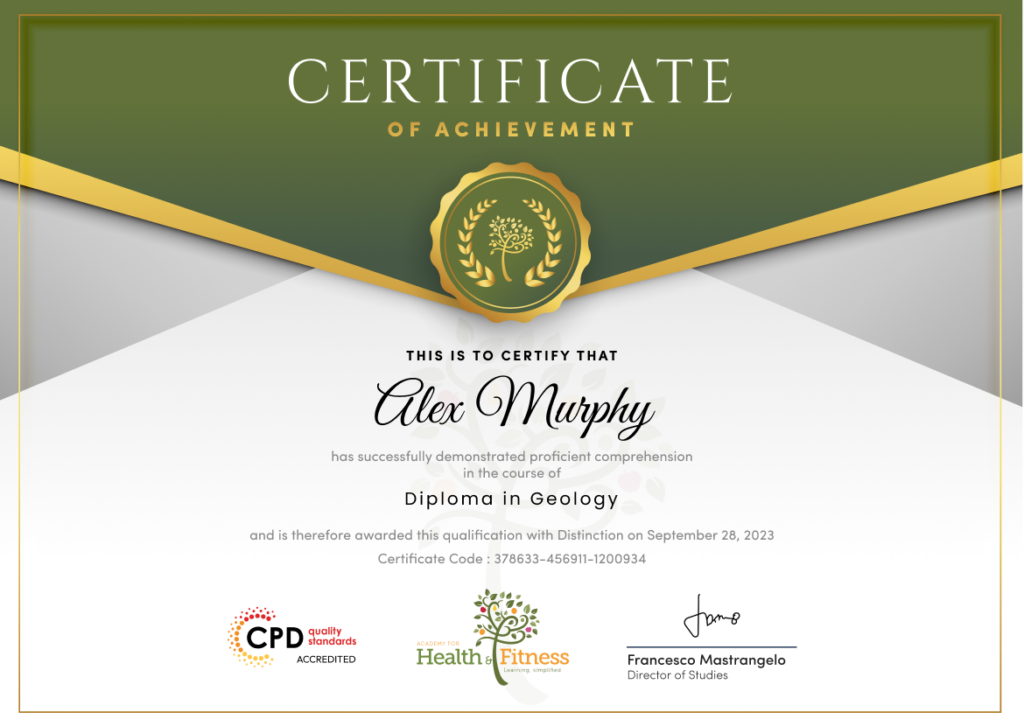
After successfully completing the Diploma in Geology course, you will qualify for a CPD Certificate as proof of your continued professional development and achievement. This certificate can enhance your professional profile and showcase your commitment to building relevant skills and knowledge. You can receive your digital certificate for only £10, or request a printed hard copy sent by post for just £29 or both for £39.
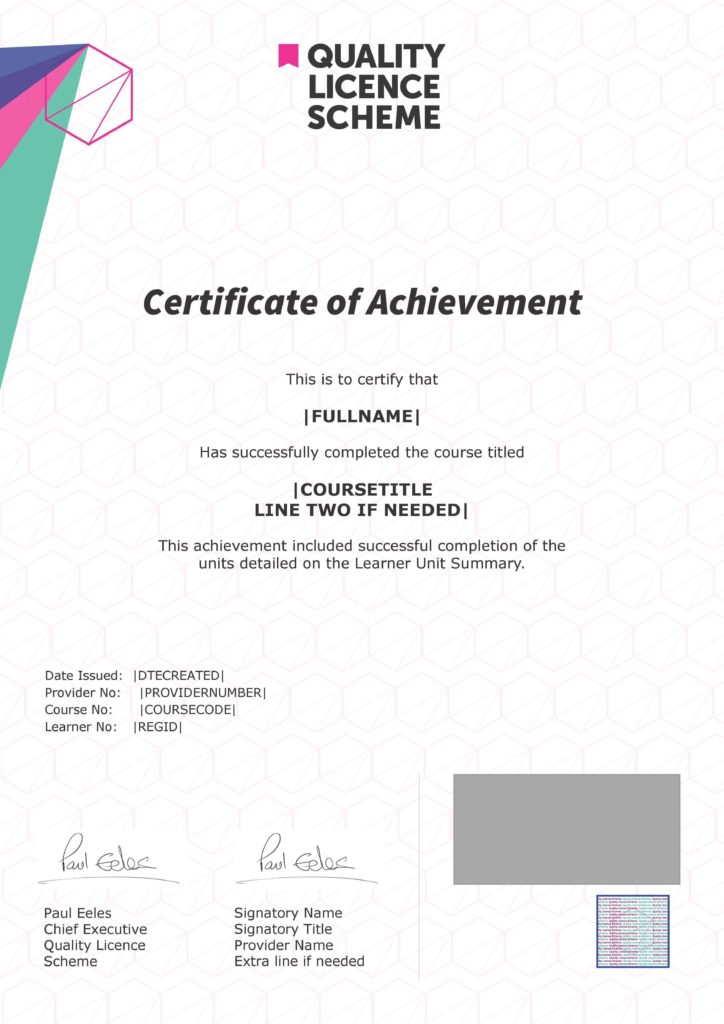
After successfully completing the Diploma in Geology course, learners will be able to order a QLS Endorsed Certificate as proof of their new achievement. The Level QLS Endorsed certificate can be ordered and get delivered to your home by post for £119 only. There is an additional £10 postage charge for international students.
For assessing your learning, you have to complete an automated MCQ exam. It is required for the students to score at least 60% to pass the exam and fulfil the Quality Licence Scheme-endorsed certificate criteria. Learners can apply for the certificate after they clear the exam.
There are assignment questions provided at the end of the course. You are suggested to complete the questions to enrich your understanding of the course. You can complete this according to your preferred time. The expert tutor will provide feedback on your performance after assessing your assignment.
Geology knowledge can support work across geoscience, construction, water, environmental consulting, mapping, laboratory analysis, and hazard assessment. Some professional roles require further study, but this diploma helps you build credible foundations, technical vocabulary, and sector awareness. Below are realistic UK-aligned pathways connected to geology, earth science, and applied geoscience careers.
Salary range: £28,000 – £45,000.Â
Salary range: £24,000 – £35,000.Â
Salary range: £25,000 – £50,000.Â
Salary range: £28,000 – £45,000.
Salary range: £24,000 – £50,000.Â
 Salary range: £23,000 – £45,000.Â
Salary range: £24,000 – £35,000.Â
Salary range: £24,000 – £45,000.
Salary range: £20,000 – £50,000.Â
Salary range: £24,000 – £31,000.Â
Salary range: £25,000 – £60,000.Â
Salary range: £30,000 – £55,000+.Â
Yes. You can study geology online for foundational knowledge, earth science understanding, and career exploration. That said, be realistic: professional geoscientist roles in the UK usually require a relevant degree such as geology, geoscience, geophysics, or Earth science, and postgraduate qualifications are becoming more common.
A geology course is about understanding the Earth’s materials, structure, history, and processes. It typically covers rocks, minerals, fossils, geologic time, plate tectonics, weathering, volcanoes, deformation, and water systems. This programme follows that practical foundation clearly and progressively.
For professional geoscientist or geologist roles, the usual UK route is a relevant degree. A diploma like this is useful for building introductory knowledge, confirming your interest, strengthening your CV, and preparing for further study or technician-level progression. It is a foundation, not a substitute for a geology degree.
It can be, but only if you understand where the demand is. The strongest current demand signals sit around environmental work, water, geohazards, energy transition, climate-related work, and digital geoscience. UK green job creation has risen sharply, and U.S. projections still show steady geoscientist and environmental scientist openings.
Geology knowledge can support progression into roles such as geoscientist, geotechnician, environmental consultant, hydrologist, seismologist, oceanographer, GIS technician, land surveyor, engineering geologist, hydrogeologist, cartographer, and laboratory technician. Some routes are entry-level or technical; others require further higher education and specialist training.
You will learn geology foundations, the solar system, geologic time, Earth’s internal structure, plate tectonics, weathering, deserts and winds, minerals, sedimentary rocks, metamorphic rocks, igneous rock, deformation, volcanoes, mass wasting, and surface water. In plain English: you will learn how Earth works and how geologists read evidence.
Yes. Environmental consulting, hydrology, and hydrogeology all rely on understanding land, water, natural processes, and contamination pathways. That makes geology highly relevant for learners who want to move toward sustainability, flood risk, groundwater, land quality, and environmental assessment work.
No. That assumption is too narrow. Geology includes rocks and minerals, but also fossils, geologic time, plate tectonics, volcanoes, faults, landforms, hazards, groundwater, rivers, erosion, and planetary processes. Good geology training is really about interpreting Earth systems, not just naming specimens.
Earth science is the broader umbrella. Geology is a major part of it, focused mainly on the solid Earth, its materials, structures, history, and processes. Earth science can also include atmospheric science, ocean science, and planetary science, which is why many online geology courses overlap with wider earth science content.
Yes. That is exactly where applied geology becomes useful. Engineering geologists, geotechnicians, surveyors, and related professionals use geological knowledge to understand ground conditions, hazards, stability, and site suitability before development and construction decisions are made.
It is worth it if your goal is foundational knowledge, CV improvement, confidence, and progression into further study or related support roles. It is not magic. It will not replace a geology degree for professional geoscientist roles, but it can absolutely help you build direction and usable subject knowledge.
Look for clear coverage of geology basics, geologic time, plate tectonics, mineralogy, rock identification, structural geology, environmental geology, hazards, and water systems. Also check whether the learning is flexible, career-focused, and logically structured. If the content is shallow or vague, it is not worth paying for.
| Introduction | |||
| Geology | 00:02:00 | ||
| Importance | 00:04:00 | ||
| Development | 00:09:00 | ||
| The Scientific Method | 00:05:00 | ||
| Solar System | |||
| OverView | 00:06:00 | ||
| The Sun | 00:07:00 | ||
| The Moon | 00:06:00 | ||
| Terrestrial Planets | 00:10:00 | ||
| Jovian Planets | 00:12:00 | ||
| Other Solar Bodies | 00:05:00 | ||
| Geologic Time | |||
| OverView | 00:02:00 | ||
| Relative Dating | 00:11:00 | ||
| Numerical Dating | 00:07:00 | ||
| Fossils | 00:11:00 | ||
| Geologic Time Scale | 00:05:00 | ||
| Inside Earth | |||
| Earth’s Internal Structure | 00:11:00 | ||
| Exploration | 00:16:00 | ||
| Plate Tectonics | |||
| Continental Drift | 00:10:00 | ||
| Modern Evidence | 00:11:00 | ||
| Earth’s Major Plates | 00:13:00 | ||
| Motion Drivers | 00:05:00 | ||
| Motion Measurement | 00:04:00 | ||
| Continental Margins | 00:05:00 | ||
| Ocean Floor Features | 00:05:00 | ||
| Oceanic Crust Layers | 00:02:00 | ||
| Destruction of Oceanic Crust | 00:02:00 | ||
| Features of Subduction Zones | 00:03:00 | ||
| Mountains | 00:07:00 | ||
| Topography | 00:07:00 | ||
| Weathering | |||
| OverView Weatheing | 00:04:00 | ||
| Mechanical Weathering | 00:08:00 | ||
| Chemical Weathering | 00:07:00 | ||
| Spheroidal Weathering | 00:02:00 | ||
| Soil | 00:11:00 | ||
| Deserts & Winds | |||
| Deserts | 00:08:00 | ||
| Wind Erosion | 00:05:00 | ||
| Wind as a Transporter | 00:05:00 | ||
| Wind Deposits | 00:08:00 | ||
| Minerals | |||
| Atom | 00:06:00 | ||
| Periodic Table | 00:05:00 | ||
| Bond-s | 00:07:00 | ||
| Minerals | 00:03:00 | ||
| Formation | 00:03:00 | ||
| Mineral Identification | 00:09:00 | ||
| Crystalline Habits | 00:35:00 | ||
| Sedimentary Rocks | |||
| OverView | 00:04:00 | ||
| Detrital Sedementary Rocks | 00:03:00 | ||
| Grain History | 00:07:00 | ||
| Chemical Sedementary Rocks | 00:04:00 | ||
| Coal | 00:06:00 | ||
| Sedimentary Rocks Identification Table | 00:05:00 | ||
| Sediments to Sedimentary Rocks | 00:05:00 | ||
| Sedimentary Structure | 00:06:00 | ||
| Metamorphic Rocks | |||
| Metamorphism | 00:08:00 | ||
| Metamorphic Rocks | 00:04:00 | ||
| Metamorphic Drivers | 00:06:00 | ||
| Metamorphic Textures | 00:08:00 | ||
| Igneous Rock | |||
| Magma | 00:12:00 | ||
| Igneous Textures | 00:09:00 | ||
| Deformation | |||
| Deformation | 00:09:00 | ||
| Deformation Stages | 00:08:00 | ||
| Folds | 00:08:00 | ||
| Faults & Joints | 00:14:00 | ||
| Volcanoes | |||
| OverView | 00:04:00 | ||
| Volcanic Eruptions | 00:07:00 | ||
| Extruded Material | 00:14:00 | ||
| Volcanic Landforms | 00:09:00 | ||
| Volcanic Hazards | 00:08:00 | ||
| Mass Wasting | |||
| OverView | 00:05:00 | ||
| Types | 00:07:00 | ||
| Triggers | 00:04:00 | ||
| Surface Water | |||
| Overview | 00:05:00 | ||
| Hydrologic Cycle | 00:08:00 | ||
| Running Water | 00:12:00 | ||
| Flow | 00:08:00 | ||
| Channels | 00:10:00 | ||
| Depositional Landforms | 00:07:00 | ||
| Floods | 00:09:00 | ||
| Resources | |||
| Resource – Diploma in Geology | 00:00:00 | ||
| Assignment | |||
| Assignment – Diploma in Geology | 3 weeks, 3 days | ||
| Order Your Certificate | |||
| Claim Your Certificates | 00:00:00 | ||
| Introduction | |||
| Geology | 00:02:00 | ||
| Importance | 00:04:00 | ||
| Development | 00:09:00 | ||
| The Scientific Method | 00:05:00 | ||
| Solar System | |||
| OverView | 00:06:00 | ||
| The Sun | 00:07:00 | ||
| The Moon | 00:06:00 | ||
| Terrestrial Planets | 00:10:00 | ||
| Jovian Planets | 00:12:00 | ||
| Other Solar Bodies | 00:05:00 | ||
| Geologic Time | |||
| OverView | 00:02:00 | ||
| Relative Dating | 00:11:00 | ||
| Numerical Dating | 00:07:00 | ||
| Fossils | 00:11:00 | ||
| Geologic Time Scale | 00:05:00 | ||
| Inside Earth | |||
| Earth’s Internal Structure | 00:11:00 | ||
| Exploration | 00:16:00 | ||
| Plate Tectonics | |||
| Continental Drift | 00:10:00 | ||
| Modern Evidence | 00:11:00 | ||
| Earth’s Major Plates | 00:13:00 | ||
| Motion Drivers | 00:05:00 | ||
| Motion Measurement | 00:04:00 | ||
| Continental Margins | 00:05:00 | ||
| Ocean Floor Features | 00:05:00 | ||
| Oceanic Crust Layers | 00:02:00 | ||
| Destruction of Oceanic Crust | 00:02:00 | ||
| Features of Subduction Zones | 00:03:00 | ||
| Mountains | 00:07:00 | ||
| Topography | 00:07:00 | ||
| Weathering | |||
| OverView Weatheing | 00:04:00 | ||
| Mechanical Weathering | 00:08:00 | ||
| Chemical Weathering | 00:07:00 | ||
| Spheroidal Weathering | 00:02:00 | ||
| Soil | 00:11:00 | ||
| Deserts & Winds | |||
| Deserts | 00:08:00 | ||
| Wind Erosion | 00:05:00 | ||
| Wind as a Transporter | 00:05:00 | ||
| Wind Deposits | 00:08:00 | ||
| Minerals | |||
| Atom | 00:06:00 | ||
| Periodic Table | 00:05:00 | ||
| Bond-s | 00:07:00 | ||
| Minerals | 00:03:00 | ||
| Formation | 00:03:00 | ||
| Mineral Identification | 00:09:00 | ||
| Crystalline Habits | 00:35:00 | ||
| Sedimentary Rocks | |||
| OverView | 00:04:00 | ||
| Detrital Sedementary Rocks | 00:03:00 | ||
| Grain History | 00:07:00 | ||
| Chemical Sedementary Rocks | 00:04:00 | ||
| Coal | 00:06:00 | ||
| Sedimentary Rocks Identification Table | 00:05:00 | ||
| Sediments to Sedimentary Rocks | 00:05:00 | ||
| Sedimentary Structure | 00:06:00 | ||
| Metamorphic Rocks | |||
| Metamorphism | 00:08:00 | ||
| Metamorphic Rocks | 00:04:00 | ||
| Metamorphic Drivers | 00:06:00 | ||
| Metamorphic Textures | 00:08:00 | ||
| Igneous Rock | |||
| Magma | 00:12:00 | ||
| Igneous Textures | 00:09:00 | ||
| Deformation | |||
| Deformation | 00:09:00 | ||
| Deformation Stages | 00:08:00 | ||
| Folds | 00:08:00 | ||
| Faults & Joints | 00:14:00 | ||
| Volcanoes | |||
| OverView | 00:04:00 | ||
| Volcanic Eruptions | 00:07:00 | ||
| Extruded Material | 00:14:00 | ||
| Volcanic Landforms | 00:09:00 | ||
| Volcanic Hazards | 00:08:00 | ||
| Mass Wasting | |||
| OverView | 00:05:00 | ||
| Types | 00:07:00 | ||
| Triggers | 00:04:00 | ||
| Surface Water | |||
| Overview | 00:05:00 | ||
| Hydrologic Cycle | 00:08:00 | ||
| Running Water | 00:12:00 | ||
| Flow | 00:08:00 | ||
| Channels | 00:10:00 | ||
| Depositional Landforms | 00:07:00 | ||
| Floods | 00:09:00 | ||
| Resources | |||
| Resource – Diploma in Geology | 00:00:00 | ||
| Assignment | |||
| Assignment – Diploma in Geology | 3 weeks, 3 days | ||
| Order Your Certificate | |||
| Claim Your Certificates | 00:00:00 | ||