
Diploma in Enterprise Resource Planning (ERP)
Step into the future of business with our Diploma in Enterprise Resource Planning (ERP). Learn how modern organisations integrate data, systems, and strategy to drive performance and innovation. Join now and future-proof your career!
4.7
(2 Reviews) 15 Students

Diploma in Enterprise Resource Planning (ERP)
Exclusive Deal! 94% Off, Today Only!
Sale Ends In

 TAKE All courses for
£99
TAKE All courses for
£99 


This course includes:
-
 Access1 Year Access
 -
 Skill Level
 -
 Duration1 hour, 58 minutes
 -
 Students15 Students
- Original price was: £415.£25Current price is: £25. ex VAT
- 1 year
- Level 2
- Number of Units43
- Number of Quizzes0
- 1 hour, 58 minutes Gift this course
 14-Day Money-Back Guarantee
Course Overview
Enterprise Resource Planning (ERP) has become the backbone of modern business operations. In a world where efficiency and data management define success, ERP systems such as SAP, Oracle, and Microsoft Dynamics are central to how organisations optimise performance. From finance and logistics to HR and production, ERP professionals are driving smarter, faster, and more connected enterprises.
The Diploma in Enterprise Resource Planning (ERP) provides a complete theoretical understanding of how businesses integrate technology, processes, and strategy. You’ll explore ERP functions, IT systems, business intelligence, and performance metrics that inform decision-making. The course also delves into innovation, creativity, and entrepreneurship within the enterprise environment.
Designed for business professionals, IT learners, and aspiring managers, this CPD Accredited course blends business strategy with technology insight. Enrol today to gain the knowledge to streamline processes, improve performance, and lead in today’s connected business world.
Learning Outcomes
- Understand the key concepts and importance of ERP systems.
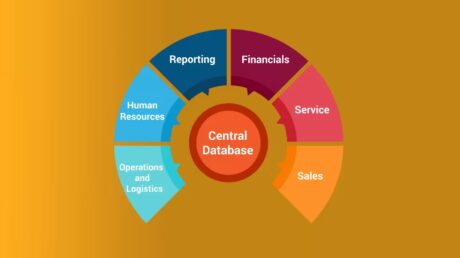
- Learn how enterprise systems integrate multiple business functions.
- Explore data management, KPIs, and operational performance indicators.
- Evaluate the role of innovation and creativity in ERP environments.
- Understand how ERP supports digital transformation and strategy.
- Analyse ERP-based performance measurement and presentation tools.
Why Choose Our Diploma in ERP?
- CPD Accredited and industry-relevant qualification
- 12 months of flexible online study
- Instant certificate upon completion
- Free student ID card included
- Transparent pricing with no hidden fees
- Expert tutor support (Monday–Friday)
- Quick assessments and instant results
Who is this Course For?
- Business and IT professionals seeking ERP literacy
- Operations managers aiming to improve efficiency
- Entrepreneurs interested in data-driven systems
- Graduates entering business, analytics, or management roles
- Anyone looking to understand enterprise integration and systems
Certificate of Achievement

CPD Certification from HF Online
After completing the MCQ assessment, you will qualify for the CPD Certificate from HF Online as proof of your continued professional development. You can order your certificate at a cost of £10 for PDF and £29 for hard copy certificate or both for £39.
Assessment
For assessing your learning, you have to complete an automated MCQ exam. It is required for the students to score at least 60% to pass the exam. Learners can apply for the certificate after they clear the exam.
There are assignment questions provided at the end of the course. You are suggested to complete the questions to enrich your understanding of the course. You can complete this according to your preferred time. The expert tutor will provide feedback on your performance after assessing your assignment.
Prerequisites
There are no prerequisites and you may use any internet-enabled device to study at your own speed, it is adaptable and available to students of all skill levels.
Job Opportunities
As a graduate of the Diploma in Enterprise Resource Planning (ERP), you’ll be prepared to step into a wide range of data-driven and management roles across business and IT sectors. Here are 10 trending jobs with insights into their demand, earning potential, and relevance in the UK market.
- ERP Analyst
ERP Analysts support the integration, configuration, and management of enterprise systems. With digital transformation expanding rapidly, average salaries range between £35,000–£55,000 annually. - Business Systems Consultant
Business Systems Consultants advise companies on optimising ERP workflows and efficiency. These roles are in high demand, offering salaries of £40,000–£65,000 per year. - ERP Project Coordinator
Project Coordinators ensure smooth ERP implementation and stakeholder collaboration. Salaries typically fall between £30,000–£50,000. - Data Analyst
Data Analysts interpret ERP-generated data to guide strategic decisions. Growing across all industries, salaries average £32,000–£48,000 annually. - IT Systems Administrator
Systems Administrators manage ERP systems and ensure seamless operations. The average salary is £28,000–£45,000. - Operations Manager
Operations Managers leverage ERP tools to monitor productivity and resources. Typical earnings range from £40,000–£60,000. - ERP Implementation Specialist
Specialists focus on ERP deployment and integration, helping organisations adopt new technology. Salaries range between £38,000–£55,000. - Business Intelligence Associate
BI Associates use ERP data to create dashboards and analytical reports. Average salaries fall between £35,000–£52,000. - Digital Transformation Officer
This role leads ERP-driven process improvements and innovation strategies, with salaries ranging from £45,000–£70,000. - ERP Consultant
ERP Consultants design, configure, and optimise systems for clients. These senior professionals often earn £50,000–£80,000+ annually.
Course Curriculum
| Section 01: Operations of an Economic Entity: Enterprise Resource Planning | |||
| Operations of an Economic Entity: Enterprise Resource Planning | 00:03:00 | ||
| The Hierarchical Perspective | 00:02:00 | ||
| Enterprise Resource Planning ERP | 00:01:00 | ||
| Technology’s Role in Business | 00:03:00 | ||
| Types of Information Systems | 00:03:00 | ||
| Interrelations between Systems | 00:01:00 | ||
| Functional IT Systems | 00:01:00 | ||
| Section 02: Entrepreneurship Creativity & Innovation | |||
| Enterprise Resource Planning: External Priorities | 00:02:00 | ||
| Why ERP? | 00:02:00 | ||
| Overall Implementation Requisites for ERP | 00:02:00 | ||
| Challenges of ERP Implementation in Business | 00:02:00 | ||
| Senior and Project Management | 00:03:00 | ||
| Critical Factors for Successful ERP Implementation | 00:07:00 | ||
| Implementation Steps | 00:03:00 | ||
| ERP: Integration and Supply Chain Support | 00:02:00 | ||
| Web Services Integration Options | 00:02:00 | ||
| Market Information and Sales Orders | 00:02:00 | ||
| Benefits of the Marketing Information System | 00:02:00 | ||
| Customer Relationship Management | 00:02:00 | ||
| Customer Relationship Management Functions | 00:02:00 | ||
| Section 03: Enterprise Resource Planning: Internal Priorities | |||
| ERP: HR Planning and Utilization | 00:03:00 | ||
| What is an HRIS? | 00:05:00 | ||
| ERP: Electronic Commerce – Accounting System Interface | 00:04:00 | ||
| E-Commerce Supply Chain Management Solutions | 00:04:00 | ||
| Problems in ERP and E-Commerce Integration | 00:01:00 | ||
| Section 04: Operational Indicator, KPI's & Metrics | |||
| Operational Indicator, KPI’s and Metrics | 00:03:00 | ||
| What is Metrics? | 00:01:00 | ||
| Need for Metrics in Testing and Quality Analysis | 00:01:00 | ||
| Metrics Continued | 00:04:00 | ||
| What are Quality Metrics? | 00:03:00 | ||
| Tips of Selection of Quality Metrics | 00:02:00 | ||
| Lead, Spot & Lagged Indicators – Drive, Monitor & Report Indicators | 00:05:00 | ||
| Lean Manufacturing and Agility | 00:05:00 | ||
| Quantitative vs. Qualitative Indicators and Measurement Scope | 00:02:00 | ||
| Section 05: Measurement and Presentation Tools | |||
| Measurement and Presentation Tools | 00:02:00 | ||
| Mechanisms of Success | 00:03:00 | ||
| Monitoring, Evaluation and Reporting | 00:05:00 | ||
| Balanced Scorecard Perspectives | 00:04:00 | ||
| Strategy Mapping | 00:03:00 | ||
| Balanced Scorecards vs. Dashboards | 00:04:00 | ||
| Metrics Measurements: IT Systems in ERP | 00:04:00 | ||
| Assignment | |||
| Other Options with Text | 00:03:00 | ||
| Order Your Certificate | |||
| Claim Your Certificates | 00:00:00 | ||