
Criminology and Forensic Profiling - Level 4
Crime patterns reveal more than headlines ever show, yet many misunderstand the psychology behind them. Our course helps you interpret criminal behaviour responsibly – enrol today & avoid relying on assumptions instead of evidence-based understanding.
4.9
(8 Reviews) 15 Students


Criminology and Forensic Profiling - Level 4
Exclusive Deal! 94% Off, Today Only!
Sale Ends In

 TAKE All courses for
£99
TAKE All courses for
£99 


This course includes:
-
 Access1 Year Access
 -
 Skill Level
 -
 Duration6 hours, 14 minutes
 -
 Students15 Students
- Original price was: £415.£25Current price is: £25. ex VAT
- 1 year
- Level 4
- Number of Units12
- Number of Quizzes2
- 6 hours, 14 minutes Gift this course
 14-Day Money-Back Guarantee
Course Overview
In England and Wales, over 5 million recorded crimes are logged annually, yet public understanding of why crimes occur and how offenders are assessed remains limited. Misinterpretation of criminal behaviour often leads to oversimplified narratives, missed warning signs, and unrealistic expectations of justice processes. Our CPD-accredited course helps address those gaps by building structured awareness before misconceptions become entrenched.
You will explore the foundations of criminology, violent offending, crime scene principles, and the psychological factors influencing criminal behaviour. It also introduces forensic science concepts, victimology, and the structure of the criminal justice system in England and Wales. Each module focuses on analytical understanding rather than speculation, helping you interpret patterns and behavioural indicators responsibly.
By the end of the Criminology and Forensic Profiling – Level 4 course, you will have a clearer understanding of how crimes are analysed, offenders are assessed, and justice systems operate within the UK. Enrol today to ensure your understanding of crime is informed by structure, logic, and evidence – not assumption.
Learning Outcomes
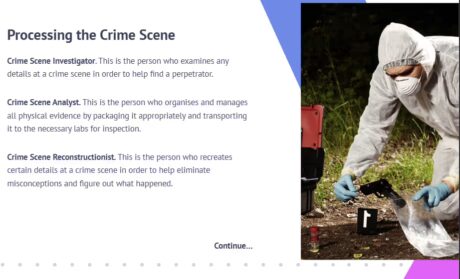
- Recognise crime scene processes and evidence handling principles.
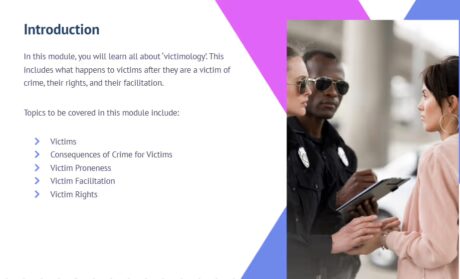
- Recognise victimology principles and their role within justice processes.
- Understand forensic science principles supporting criminal investigations.
- Identify classifications of crime within recognised criminological frameworks.
- Understand characteristics and impacts of violent crime categories responsibly.
- Explore psychological factors influencing criminal decision-making and actions.
- Understand approaches used when responding to and managing criminal behaviour.
- Understand logical and metacognitive approaches used in offender profiling analysis.
Why People Love and Enrol in this Training?
- CPD Accredited Course
- Unlimited access for 12 months – learn at your own pace ️
- Earn instant certificate upon course completion
- Get a free student ID card to showcase
- Flexible study – no deadlines
- Transparent pricing – no hidden fees
- Dedicated tutor support on weekdays
- Fast assessments & instant results
Who is this Course For?
- Psychology students
- Legal studies candidates
- Criminal justice learners
- Law enforcement aspirants
- Social science researchers
- Public sector professionals
Certificate of Achievement

CPD Certification
After completing the MCQ assessment, you will qualify for the CPD Certificate from HF Online as proof of your continued professional development. You can order your certificate at a cost of £10 for PDF and £29 for hard copy certificate or both for £39.
Endorsed Certification from ABC Awards
After successfully completing the course, learners will be able to order an endorsed certificate as proof of their new qualification. Endorsed certificates can be ordered and get delivered to your home by post for only £109. There is an additional £10 postage charge for international students.
Assessment
For assessing your learning, you have to complete an automated MCQ exam. It is required for the students to score at least 60% to pass the exam. Learners can apply for the certificate after they clear the exam.
There are assignment questions provided at the end of the course. You are suggested to complete the questions to enrich your understanding of the course. You can complete this according to your preferred time. The expert tutor will provide feedback on your performance after assessing your assignment.
Prerequisites
There are no prerequisites and you may use any internet-enabled device to study at your own speed, it is adaptable and available to students of all skill levels.
Job Opportunities
Completing the Criminology and Forensic Profiling – Level 4 course strengthens analytical understanding of crime, behaviour, and justice systems. These roles value structured thinking, ethical awareness, and evidence-based interpretation across UK public and private sectors.
- Criminology Research Assistant
Criminology Research Assistants support crime-related studies through data review and behavioural analysis. They assist academic or policy teams in interpreting crime trends responsibly. Average salary £23,000–£32,000. - Crime Analysis Assistant
Crime Analysis Assistants help interpret crime data and emerging patterns for reporting purposes. Their role supports informed decision-making within policing or local authority settings. Average salary £25,000–£35,000. - Forensic Support Officer
Forensic Support Officers assist with evidence documentation and procedural accuracy during investigations. They support forensic teams while maintaining compliance with legal standards. Average salary £24,000–£34,000. - Victim Support Caseworker
Victim Support Caseworkers assist individuals navigating the criminal justice process. They apply victimology awareness to support communication and case understanding. Average salary £22,000–£30,000. - Probation Service Support Officer
Probation Service Support Officers assist with offender assessment documentation and case coordination. Their work supports rehabilitation processes within justice frameworks. Average salary £24,000–£32,000. - Youth Justice Support Worker
Youth Justice Support Workers assist young individuals involved in justice services. They apply behavioural awareness to support structured intervention programmes. Average salary £23,000–£31,000. - Criminal Justice Administrator
Criminal Justice Administrators manage records, case files, and procedural documentation. They support efficient operation of courts and justice-related services. Average salary £22,000–£29,000. - Legal Case Assistant
Legal Case Assistants support solicitors and legal teams with case preparation and documentation. They benefit from understanding crime classification and justice procedures. Average salary £23,000–£31,000. - Security Intelligence Assistant
Security Intelligence Assistants support risk assessment through behavioural and pattern analysis. Their role contributes to safety planning within regulated environments. Average salary £26,000–£36,000. - Policy and Research Assistant
Policy and Research Assistants contribute to crime-related policy development and evaluation. They analyse data and research findings to inform public-sector decisions. Average salary £25,000–£35,000.
Course Curriculum
| Module 01: Introduction to Criminology and Profiling | |||
| Module 01: Introduction to Criminology and Profiling | 00:23:00 | ||
| Module 02: Classification of Crime | |||
| Module 02: Classification of Crime | 00:18:00 | ||
| Module 03: Violent Crimes | |||
| Module 03: Violent Crimes | 00:29:00 | ||
| Module 04: The Crime Scene | |||
| Module 04: The Crime Scene | 00:30:00 | ||
| Module 05: Dealing with Crime | |||
| Module 05: Dealing with Crime | 00:41:00 | ||
| Module 06: Understanding Criminal Psychology | |||
| Module 06: Understanding Criminal Psychology | 00:31:00 | ||
| Module 07: Forensic Science | |||
| Module 07: Forensic Science | 00:35:00 | ||
| Module 08: Phases of Profiling | |||
| Module 08: Phases of Profiling | 00:33:00 | ||
| Module 09: Criminal Profiling: Science, Logic and Metacognition | |||
| Module 09: Criminal Profiling: Science, Logic and Metacognition | 00:28:00 | ||
| Module 10: Offender Profiling: Pragmatic Solution and Behavioural Investigative Advice | |||
| Module 10: Offender Profiling: Pragmatic Solution and Behavioural Investigative Advice | 00:22:00 | ||
| Module 11: Victimology | |||
| Module 11: Victimology | 00:25:00 | ||
| Module 12: The Criminal Justice System in England and Wales | |||
| Module 12: The Criminal Justice System in England and Wales | 00:19:00 | ||
| Mock Exam | |||
| Mock Exam – Criminology and Profiling Course | 00:20:00 | ||
| Final Exam | |||
| Final Exam – Criminology and Profiling Course | 00:20:00 | ||