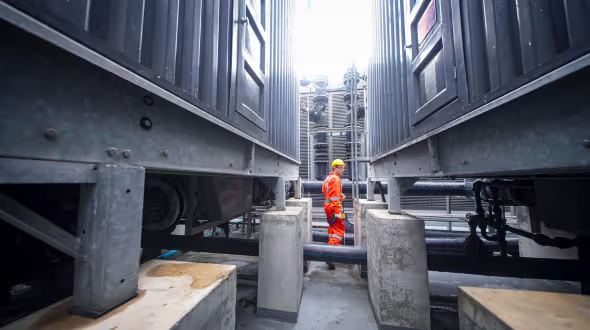
Confined space rescues demand split-second decisions under extreme risk, where misjudgement can endanger both victims and responders. Enrol now to strengthen tactical coordination and rescue readiness before operational gaps escalate into avoidable tragedy.
Exclusive Deal! 94% Off, Today Only!
Sale Ends In
Workplace incidents remain a significant concern across the United Kingdom, with hundreds of thousands of work-related injuries reported annually. Under the Reporting of Injuries, Diseases and Dangerous Occurrences Regulations (RIDDOR), organisations are legally required to report specific workplace incidents to the Health and Safety Executive (HSE). Failure to provide adequate first aid arrangements or to report incidents correctly can result in enforcement action, financial penalties, and reputational damage. Effective understanding of first aid requirements and RIDDOR obligations is therefore essential for maintaining compliance and protecting employee wellbeing.
This First Aid Requirements and RIDDOR Training course provides a clear understanding of workplace first aid principles, legal duties, and emergency response arrangements. Learners will explore appropriate first aid equipment, reporting thresholds under RIDDOR, and best practices for incident management and documentation. The programme supports responsible decision-making aligned with UK health and safety legislation.
By completing this course, participants strengthen their ability to manage incidents effectively, ensure legal compliance, and support a safer, well-prepared workplace environment.
After successfully completing the course, you will qualify for a CPD Certificate as proof of your continued professional development and achievement. This certificate can enhance your professional profile and showcase your commitment to building relevant skills and knowledge. You can receive your digital certificate for only £10, or request a printed hard copy sent by post for just £29 or both for £39.
For assessing your learning, you have to complete an automated MCQ exam. It is required for the students to score at least 60% to pass the exam. Learners can apply for the certificate after they clear the exam.
There are assignment questions provided at the end of the course. You are suggested to complete the questions to enrich your understanding of the course. You can complete this according to your preferred time. The expert tutor will provide feedback on your performance after assessing your assignment.
There are no prerequisites, and you may use any internet-enabled device to study at your own speed, it is adaptable and available to students of all skill levels.
Advanced confined space rescue competence is highly valued across UK emergency services, industrial rescue teams, and specialist response units. This training strengthens operational credibility and supports progression into supervisory and tactical leadership roles.
Firefighter (Confined Space Response)
Responds to complex confined space emergencies involving hazardous atmospheres. Implements structured rescue plans and monitoring procedures during operations. Average salary £29,000–£40,000.
Rescue Team Leader
Coordinates confined space rescue operations and supervises entry teams. Ensures compliance with operational protocols and safety standards. Average salary £35,000–£50,000.
Industrial Emergency Response Technician
Provides specialist rescue services within high-risk industrial environments. Uses advanced monitoring and breathing apparatus during interventions. Average salary £32,000–£48,000.
Health and Safety Emergency Coordinator
Develops rescue plans and oversees confined space emergency preparedness. Conducts drills, audits, and operational risk assessments. Average salary £38,000–£55,000.
Ambulance Hazardous Area Responder
Supports medical response in restricted or hazardous environments. Applies structured entry coordination and situational awareness protocols.
Average salary £30,000–£42,000.
Police Operational Support Officer
Assists in coordinated emergency incidents involving confined environments. Maintains communication and perimeter safety during complex rescues. Average salary £28,000–£38,000.
Rescue Operations Supervisor
Leads multi-agency coordination during high-risk confined space incidents. Oversees compliance with rescue planning and documentation standards. Average salary £40,000–£60,000.
Incident Investigation Officer
Reviews confined space emergencies and identifies procedural improvements. Supports organisational learning and operational performance enhancement. Average salary £35,000–£52,000.
Technical Rescue Specialist
Provides expertise in rope access, breathing apparatus, and extraction methods. Operates within hazardous confined operational environments. Average salary £34,000–£50,000.
Emergency Preparedness Manager
Designs response frameworks for confined space and high-risk incidents. Ensures readiness, compliance, and continuous improvement strategies. Average salary £45,000–£65,000.
This course develops advanced awareness and rescue coordination skills required for responding to confined space emergencies. It focuses on tactical planning, monitoring and controlled intervention procedures.
Rescuers are often exposed to the same hazardous atmospheres and structural risks as casualties. Without proper planning and monitoring, secondary casualties can occur rapidly.
Operations must align with the Confined Spaces Regulations 1997 and relevant emergency service operational guidance. Structured planning and competent supervision are legal and professional expectations.
Planning includes risk assessment, atmospheric testing, communication strategies and emergency contingency preparation. Pre-entry checks ensure safe and authorised intervention.
Gas detection equipment measures oxygen levels and identifies toxic or flammable gases. Continuous monitoring prevents unsafe entry and protects rescue teams.
Clear communication between entry teams, supervisors and external support ensures coordinated action. Miscommunication can significantly increase operational risk.
Structured debriefing and documentation identify lessons learned and procedural improvements. This supports accountability and operational refinement.
Firefighters, rescue leaders, tactical response personnel and industrial response teams benefit most. It strengthens structured response capability in high-risk environments.
No, it enhances awareness and planning competence but does not replace formal operational certifications. Specialist accreditation may still be required for specific rescue roles.
Advanced confined space rescue awareness strengthens leadership readiness and operational credibility. It supports progression into supervisory and tactical coordination positions.
| Introduction | |||
| Introduction | 00:00:44 | ||
| Module 1: Confined Space Awareness for Emergency Responders | |||
| 1.1 – What Makes a Space “Confined” in Emergencies | 00:00:51 | ||
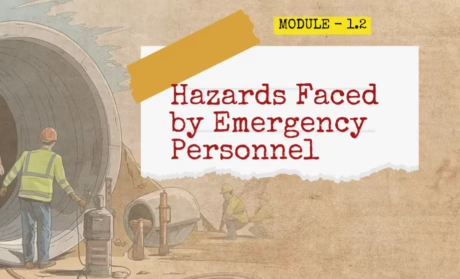
| 1.2 – Hazards Faced by Emergency Personnel | 00:00:46 | ||
| 1.3 – Understanding the Rescue Chain of Command | 00:00:46 | ||
| 1.4 – Legal Duties and Safety Standards in Emergency Scenarios | 00:00:49 | ||
| Module 2: Rescue Planning, Assessment and Pre-Entry Coordination | |||
| 2.1 – Dynamic Risk Assessment Under Pressure | 00:00:48 | ||
| 2.2 – Pre-Entry Briefings and Role Assignment | 00:00:40 | ||
| 2.3 – Scene Stabilisation and Access Management | 00:00:43 | ||
| 2.4 – Coordination with Other Agencies and Duty Holders | 00:00:42 | ||
| Module 3: Entry Procedures, Monitoring and Rescue Execution | |||
| 3.1 – Entry Control: Safety Lines, Tag Systems and PPE | 00:00:50 | ||
| 3.2 – Atmospheric Testing and Monitoring in Real Time | 00:00:47 | ||
| 3.3 – Rescue Techniques and Casualty Handling | 00:00:47 | ||
| 3.4 – Communication and Contingency During Rescue | 00:00:52 | ||
| Module 4: Post-Rescue Procedures and Incident Learning | |||
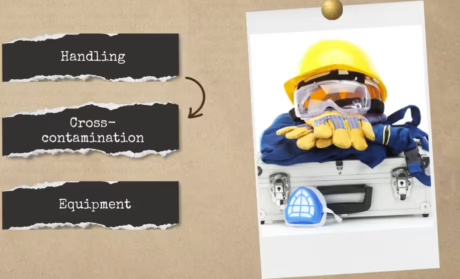
| 4.1 – Decontamination and Post-Entry Equipment Checks | 00:00:46 | ||
| 4.2 – Incident Debriefs and Emotional Impact | 00:00:40 | ||
| 4.3 – Reporting and Legal Documentation | 00:00:52 | ||
| 4.4 – Ongoing Rescue Training and Simulation Drills | 00:00:46 | ||
| Conclusion | |||
| Conclusion | 00:00:35 | ||
| Introduction | |||
| Introduction | 00:00:44 | ||
| Module 1: Confined Space Awareness for Emergency Responders | |||
| 1.1 – What Makes a Space “Confined” in Emergencies | 00:00:51 | ||
| 1.2 – Hazards Faced by Emergency Personnel | 00:00:46 | ||
| 1.3 – Understanding the Rescue Chain of Command | 00:00:46 | ||
| 1.4 – Legal Duties and Safety Standards in Emergency Scenarios | 00:00:49 | ||
| Module 2: Rescue Planning, Assessment and Pre-Entry Coordination | |||
| 2.1 – Dynamic Risk Assessment Under Pressure | 00:00:48 | ||
| 2.2 – Pre-Entry Briefings and Role Assignment | 00:00:40 | ||
| 2.3 – Scene Stabilisation and Access Management | 00:00:43 | ||
| 2.4 – Coordination with Other Agencies and Duty Holders | 00:00:42 | ||
| Module 3: Entry Procedures, Monitoring and Rescue Execution | |||
| 3.1 – Entry Control: Safety Lines, Tag Systems and PPE | 00:00:50 | ||
| 3.2 – Atmospheric Testing and Monitoring in Real Time | 00:00:47 | ||
| 3.3 – Rescue Techniques and Casualty Handling | 00:00:47 | ||
| 3.4 – Communication and Contingency During Rescue | 00:00:52 | ||
| Module 4: Post-Rescue Procedures and Incident Learning | |||
| 4.1 – Decontamination and Post-Entry Equipment Checks | 00:00:46 | ||
| 4.2 – Incident Debriefs and Emotional Impact | 00:00:40 | ||
| 4.3 – Reporting and Legal Documentation | 00:00:52 | ||
| 4.4 – Ongoing Rescue Training and Simulation Drills | 00:00:46 | ||
| Conclusion | |||
| Conclusion | 00:00:35 | ||