Child Psychology – Diploma is a CPD-accredited course for aspiring child psychology professionals, childcare workers, teachers, and support staff seeking career-relevant knowledge and certification.
Learn about attachment, cognitive, social, emotional, language and moral development, creativity, and key psychological challenges affecting children from infancy through adolescence.
4.5
(5 Reviews)
8 Students
Exclusive Deal! 99% Off, Today Only!
Sale Ends In
CPD Point
Understanding how children think, feel, communicate and develop can make a meaningful difference when working with young people. NHS England reported that around 1 in 5 children aged 8–16 had a probable mental disorder in 2023, highlighting the importance of recognising children’s emotional, behavioural and developmental needs.
The Child Psychology – Diploma gives you essential, career-relevant knowledge of child development. You will explore attachment and relationships, cognitive development, social and emotional growth, personality, language and moral development, play and creativity, as well as common challenges during infancy, childhood and adolescence.
This knowledge can help you better understand children’s behaviour, recognise developmental needs and communicate more effectively with young people. Whether you work in childcare, education or support services, this CPD-accredited course can strengthen your professional knowledge, enhance your CV and help you approach child-focused responsibilities with greater confidence.
This Child Psychology – Diploma is designed to provide a comprehensive understanding of child development, behaviour, emotions, relationships, and learning, making it an ideal course for anyone working with or supporting children and young people.
Throughout this child psychology course, you will explore key areas such as attachment, cognitive development, social and emotional growth, personality, language development, moral development, play, imagination, and creativity. You will also examine the effects of separation and loss, along with the different factors that can influence a child’s development.
In addition, the course introduces common psychological and developmental challenges that may arise during infancy, childhood, and adolescence. This knowledge can help you better understand children’s needs, recognise behavioural patterns, and communicate with greater confidence in professional settings.
By completing this CPD-accredited course, you can strengthen your knowledge for roles in childcare, education, youth support, family services, and other child-focused environments.
By completing this Child Psychology – Diploma online course, you will:
Whether you are starting a career in childcare, education, or youth support, or want to strengthen your existing knowledge, this Child Psychology – Diploma provides a valuable foundation in understanding children’s behaviour, emotions, relationships, and development.
The course explores key areas such as attachment, cognitive development, social and emotional growth, language development, personality, moral development, play, creativity, and common challenges across infancy, childhood, and adolescence.
This knowledge can help you communicate more effectively with children, recognise developmental needs, understand behavioural patterns, and provide more informed support in professional settings.
The course is particularly useful for those interested in childcare, teaching support, family services, youth work, and other child-focused roles, helping you build relevant knowledge while strengthening your CV with CPD-accredited learning.
This course is ideal for anyone interested in understanding child development, behaviour, emotions, and psychological growth.
It is suitable for:
There are no specific prerequisites to enrol in this Child Psychology – Diploma. The course is suitable for beginners, childcare professionals, teachers, parents, carers, and anyone interested in understanding child development and behaviour.
The course is fully accessible online from any internet-enabled smart device. You can study from home, at work, or anywhere that suits your schedule, making it a flexible option for busy learners.
All you need is a genuine interest in child psychology, basic literacy skills, access to the internet, and to be at least 16 years old.
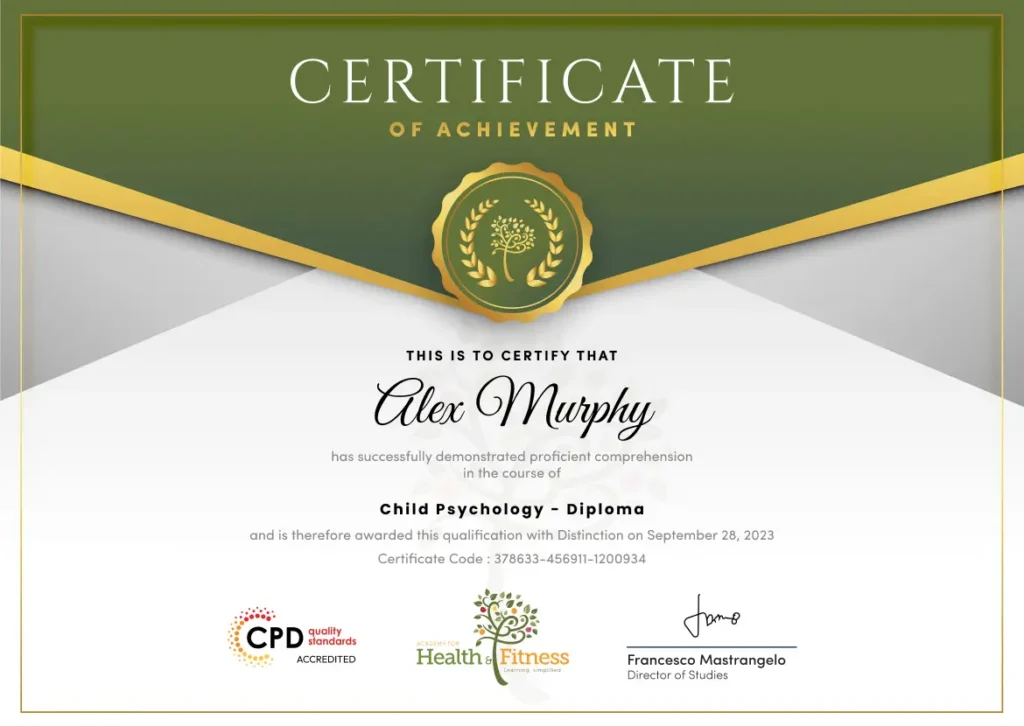
After successfully completing the Child Psychology – Diploma course, you will qualify for a CPD Certificate as proof of your continued professional development and achievement. This certificate can enhance your professional profile and showcase your commitment to building relevant skills and knowledge. You can receive your digital certificate for only £10, or request a printed hard copy sent by post for just £29 or both for £39.
For assessing your learning, you have to complete an automated MCQ exam. It is required for the students to score at least 60% to pass the exam and fulfil the Quality Licence Scheme-endorsed certificate criteria. Learners can apply for the certificate after they clear the exam.
There are assignment questions provided at the end of the course. You are suggested to complete the questions to enrich your understanding of the course. You can complete this according to your preferred time. The expert tutor will provide feedback on your performance after assessing your assignment.
The Child Psychology – Diploma is an online, knowledge-based course that develops your understanding of child development, behaviour, emotions, relationships, and learning. While this course does not qualify you as a registered child psychologist, it can strengthen your knowledge for entry-level and support roles across childcare, education, youth services, and family support settings. Some roles may require additional qualifications, experience, or background checks.
This course covers child development, attachment, cognitive growth, social and emotional development, personality, language, moral development, play, creativity, and common challenges across infancy, childhood, and adolescence. It provides a broad introduction to understanding children’s behaviour and psychological development.
Yes. The course is suitable for beginners, parents, carers, childcare workers, teaching assistants, and anyone interested in child psychology. No previous psychology qualification or professional experience is required to enrol.
Yes. The Child Psychology – Diploma is delivered online, allowing you to study from home and progress at your own pace. You can access the learning materials using an internet-enabled smartphone, tablet, laptop, or computer.
Yes. Successful learners can receive a CPD-accredited certificate after completing the course. The certificate can demonstrate your continuing professional development and help strengthen your CV for relevant child-focused roles.
No. This course does not qualify you to practise as a registered or professional psychologist in the UK. Becoming a psychologist normally requires recognised university-level qualifications, postgraduate training, and the appropriate professional registration.
The course can support your knowledge for roles such as teaching assistant, nursery worker, family support worker, youth worker, residential support worker, and other child-focused support positions. Some roles may require additional qualifications or experience.
You will explore cognitive, social, emotional, language, personality, and moral development. You will also learn how attachment, relationships, separation, loss, play, imagination, and environmental factors can influence children throughout different developmental stages.
This course is ideal for aspiring childcare professionals, teachers, teaching assistants, nursery workers, youth workers, family support staff, parents, and carers who want to better understand children’s behaviour, emotions, and development.
Yes. An understanding of child development and behaviour can be valuable across childcare, education, family support, youth services, and social care settings. It can help professionals communicate more effectively and respond appropriately to children’s developmental and emotional needs.
Understanding how children develop can help you recognise behavioural patterns, developmental needs, and emotional challenges more effectively. This course provides flexible, CPD-accredited learning that can strengthen your professional knowledge, support career development, and improve your confidence when working with children.
| Module 01: Introduction to Child Psychology | |||
| Module 01: Introduction to Child Psychology | 00:28:00 | ||
| Module 02: Attachment and Relationship Building in Childhood | |||
| Module 02: Attachment and Relationship Building in Childhood | 00:31:00 | ||
| Module 03: Impacts of Separation and Loss on Attachment | |||
| Module 03: Impacts of Separation and Loss on Attachment | 00:27:00 | ||
| Module 04: Factors That Influence Development | |||
| Module 04: Factors That Influence Development | 00:36:00 | ||
| Module 05: Cognitive Development | |||
| Module 05: Cognitive Development | 00:25:00 | ||
| Module 06: Social and Emotional Development | |||
| Module 06: Social and Emotional Development | 00:43:00 | ||
| Module 07: Personality and Intellectual Development of Children | |||
| Module 07: Personality and Intellectual Development of Children | 00:36:00 | ||
| Module 08: Stages of Language Development | |||
| Module 08: Stages of Language Development | 00:27:00 | ||
| Module 09: Understanding Moral Development | |||
| Module 09: Understanding Moral Development | 00:18:00 | ||
| Module 10: Play, Imagination, and Creativity | |||
| Module 10: Play, Imagination, and Creativity | 00:26:00 | ||
| Module 11: Problems of Infancy | |||
| Module 11: Problems of Infancy | 00:20:00 | ||
| Module 12: Problems of Childhood | |||
| Module 12: Problems of Childhood | 00:23:00 | ||
| Module 13: Problems of Adolescence | |||
| Module 13: Problems of Adolescence | 00:28:00 | ||
| Mock Exam | |||
| Final Exam | |||
| Mock Exam – Child Psychology Diploma | 00:20:00 | ||
| Final Exam – Child Psychology Diploma | 00:20:00 | ||
| Module 01: Introduction to Child Psychology | |||
| Module 01: Introduction to Child Psychology | 00:28:00 | ||
| Module 02: Attachment and Relationship Building in Childhood | |||
| Module 02: Attachment and Relationship Building in Childhood | 00:31:00 | ||
| Module 03: Impacts of Separation and Loss on Attachment | |||
| Module 03: Impacts of Separation and Loss on Attachment | 00:27:00 | ||
| Module 04: Factors That Influence Development | |||
| Module 04: Factors That Influence Development | 00:36:00 | ||
| Module 05: Cognitive Development | |||
| Module 05: Cognitive Development | 00:25:00 | ||
| Module 06: Social and Emotional Development | |||
| Module 06: Social and Emotional Development | 00:43:00 | ||
| Module 07: Personality and Intellectual Development of Children | |||
| Module 07: Personality and Intellectual Development of Children | 00:36:00 | ||
| Module 08: Stages of Language Development | |||
| Module 08: Stages of Language Development | 00:27:00 | ||
| Module 09: Understanding Moral Development | |||
| Module 09: Understanding Moral Development | 00:18:00 | ||
| Module 10: Play, Imagination, and Creativity | |||
| Module 10: Play, Imagination, and Creativity | 00:26:00 | ||
| Module 11: Problems of Infancy | |||
| Module 11: Problems of Infancy | 00:20:00 | ||
| Module 12: Problems of Childhood | |||
| Module 12: Problems of Childhood | 00:23:00 | ||
| Module 13: Problems of Adolescence | |||
| Module 13: Problems of Adolescence | 00:28:00 | ||
| Mock Exam | |||
| Final Exam | |||
| Mock Exam – Child Psychology Diploma | 00:20:00 | ||
| Final Exam – Child Psychology Diploma | 00:20:00 | ||