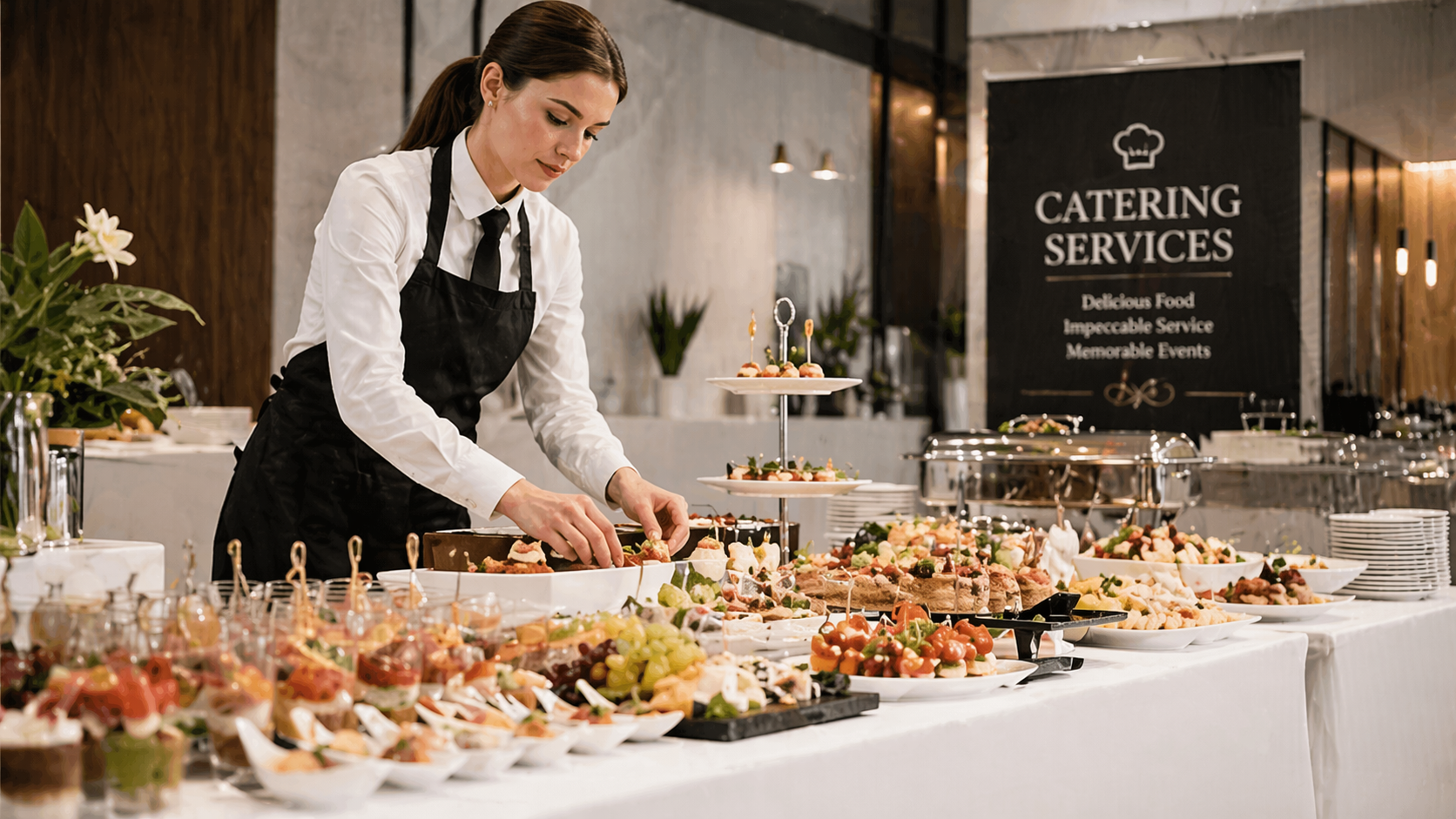
Launch your future with the Catering Business course, a CPD-accredited programme supporting aspiring caterers, catering managers, event food professionals, and food business owners. Aimed at those who want to become confident catering entrepreneurs, it turns kitchen skill into commercial success—helping you plan, promote, manage, and grow a profitable catering brand.
4.7
(1 Reviews)
10 Students
Exclusive Deal! 94% Off, Today Only!
Sale Ends In
CPD Point
Do you want to turn cooking skill into a real income stream instead of keeping it as a hobby? If so, this Catering Business Course is relevant to you because catering success depends on more than food alone. You need business planning, food safety knowledge, operational control, service consistency, and marketing that wins repeat bookings.
Demand is real. The UK had 79,000 vacancies in accommodation and food service activities in 2025, while the sector supported 2.629 million workforce jobs in 2025. UKHospitality also reported near-double-digit sales growth for leading contract caterers at the end of 2025, and the Food Standards Agency says food businesses must register at least 28 days before trading, making legal and food safety knowledge essential for new starters.
You will learn catering business fundamentals, food safety and hygiene law, operational standards, menu planning for catering, food and beverage management, marketing, and human resource basics. You will understand how to start a catering business, how to serve clients professionally, and how to build systems that support growth. It also suits beginners, home caterers, and event workers who want clearer structure, stronger compliance, and smarter commercial decisions from day one.
Enrol now to gain flexible training, recognised certification, and practical knowledge for launching or strengthening a catering business.
Build essential confidence in launching and managing a catering operation from planning to promotion. Understand food safety, legal duties, menu design, service delivery, staff coordination, and business growth so you can move from idea to structured, professional catering business practice.
This catering business course online UK is designed to help you build essential, career-focused knowledge for catering operations, food safety, menu planning, event service, marketing, and business development roles, giving you the confidence and subject understanding employers, clients, and hospitality-focused organisations increasingly value.
This programme suits aspiring caterers, beginners, career changers, small business owners, kitchen staff, and event-focused learners who want flexible online study. It helps build business awareness, operational confidence, and food safety understanding before launching or progressing in catering work professionally.
There are no specific prerequisites to enrol in this Catering Business – CPD Accredited Course. Anyone and everyone can take this course.
The Catering Business – CPD Accredited Course is fully accessible from any internet-enabled smart device, so you can study from the comfort of your home.
All you need is a passion for learning, basic literacy skills, and to be over the age of 16.
After successfully completing the Catering Business course, you will qualify for a CPD Certificate as proof of your continued professional development and achievement. This certificate can enhance your professional profile and showcase your commitment to building relevant skills and knowledge. You can receive your digital certificate for only ÂŁ10, or request a printed hard copy sent by post for just ÂŁ29 or both for ÂŁ39.
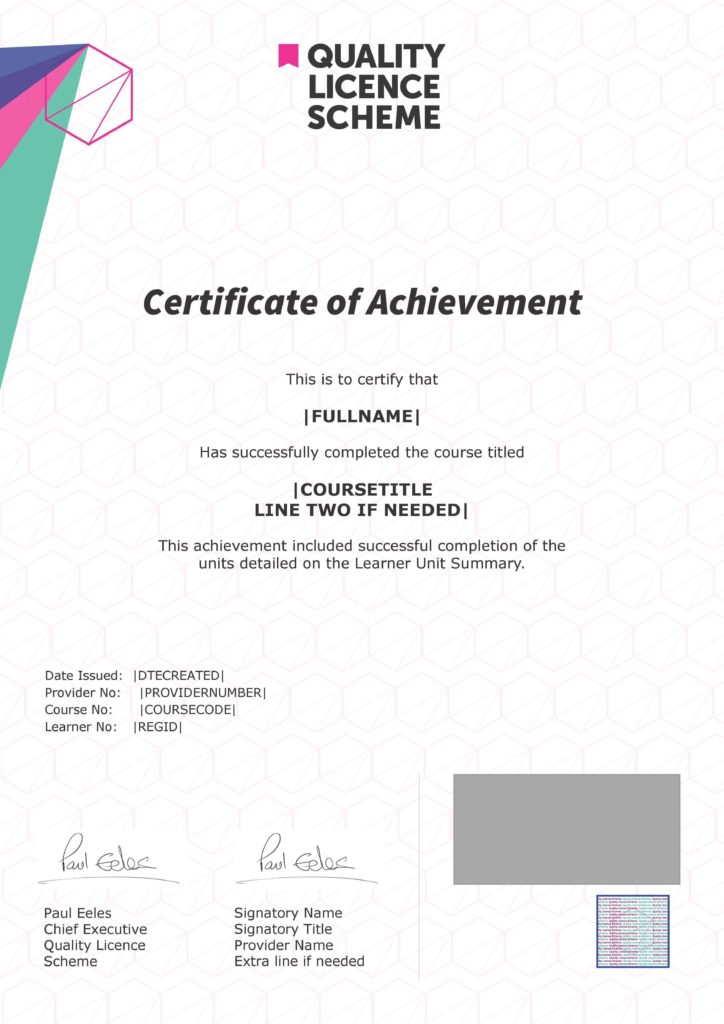
After successfully completing the Catering Business course, learners will be able to order a QLS Endorsed Certificate as proof of their new achievement. The Level QLS Endorsed certificate can be ordered and get delivered to your home by post for £119 only. There is an additional £10 postage charge for international students.
For assessing your learning, you have to complete an automated MCQ exam. It is required for the students to score at least 60% to pass the exam and fulfil the Quality Licence Scheme-endorsed certificate criteria. Learners can apply for the certificate after they clear the exam.
There are assignment questions provided at the end of the course. You are suggested to complete the questions to enrich your understanding of the course. You can complete this according to your preferred time. The expert tutor will provide feedback on your performance after assessing your assignment.
Catering business knowledge can support work in events, hospitality, food service, operations, and self-employment. Employers value people who understand food safety, service standards, planning, staffing, and promotion. These roles show practical directions for beginners and developing professionals, with typical UK salary ranges varying by responsibility, location, and experience today widely.
Catering managers oversee daily food service operations, organise menus, control budgets, supervise staff, maintain hygiene standards, and make sure customers receive reliable service. In a catering business, they help coordinate events, suppliers, timing, and quality. This role suits learners who want operational leadership with strong customer-facing responsibility and progression opportunities.
Salary range: ÂŁ20,000 – ÂŁ34,000.Â
Chefs prepare, cook, and present food while protecting consistency, taste, timing, and hygiene. Within catering businesses, they adapt menus for events, manage kitchen workflow, estimate ingredients, and maintain quality under pressure. This role suits learners who enjoy production, creativity, and disciplined service delivery in fast-moving commercial food environments every day.
Salary range: ÂŁ22,000 – ÂŁ40,000.Â
Events managers plan and run functions, coordinate schedules, communicate with clients, manage suppliers, and keep everything moving on time. In catering, they connect menus, staffing, venues, and service delivery so events feel organised and professional. This role fits learners who like planning, logistics, and client-facing responsibility under pressure daily situations.
Salary range: ÂŁ23,000 – ÂŁ40,000.Â
Restaurant managers organise day-to-day service, lead teams, monitor standards, solve customer issues, and keep operations profitable. Catering businesses often need the same discipline when running venues, pop-ups, or long-service contracts. This role suits learners who want leadership, service control, and experience managing people, quality, and customer satisfaction directly each day.
Salary range: £26,000 – £40,000.
Marketing managers plan promotions, build brand visibility, attract customers, and support revenue growth. For catering businesses, strong marketing helps fill calendars, win repeat bookings, and stand out in crowded local markets. This role fits learners who want to combine business development, content strategy, offers, and measurable customer acquisition work effectively.
Salary range: £30,000 – £65,000.
Customer services managers coordinate enquiries, oversee service quality, handle complaints, and improve client experience. In catering, this matters because bookings, changes, dietary requests, and event expectations can collapse fast without organised communication. This role suits learners who want to manage relationships, protect reputation, and strengthen repeat business long term growth.
Salary range: £27,000 – £50,000.
Hotel managers run wider operations that often include restaurants, conferencing, and event catering. They oversee staff, standards, guest experience, and commercial performance. This role suits learners who want broader hospitality leadership and may use catering business knowledge to manage banqueting, functions, or food-led venue operations more confidently and profitably daily.
Salary range: ÂŁ30,000 – ÂŁ60,000.Â
Bakers produce breads, pastries, cakes, and specialist items that can become profitable catering lines. In event and celebration catering, baking knowledge expands menus and improves margins. This role suits learners who want product-focused work, creative output, and a practical route into food business income through quality, consistency, and presentation skills.
Salary range: ÂŁ19,000 – ÂŁ26,000.Â
Kitchen assistants help prepare ingredients, organise workspaces, clean equipment, and support chefs during service. In catering environments, reliable prep work keeps timing tight and hygiene standards strong. This role suits learners who want an accessible starting point, hands-on kitchen exposure, and a route into catering or hospitality progression over time.
Salary range: ÂŁ17,000 – ÂŁ25,000.Â
Wedding planners coordinate celebrations, manage suppliers, control timelines, and make sure events run smoothly. Catering is central to weddings, so food service knowledge makes planning stronger and client conversations sharper. This role suits learners who want event-led work and need confidence aligning menus, logistics, presentation, and expectations professionally for clients.
Salary range: ÂŁ21,000 – ÂŁ34,000.Â
A catering business prepares and serves food for events, workplaces, private clients, or contracted venues. It usually involves menu planning, budgeting, food preparation, transport, staffing, setup, service, and hygiene control. Strong catering businesses do not rely on good cooking alone. They run on systems, timing, compliance, and customer trust.
Starting from home usually begins with choosing a niche, planning menus, pricing correctly, understanding food hygiene rules, organising equipment, and building a simple marketing system. You also need a realistic catering business plan. Home setups fail when people ignore compliance, undercharge, or assume friends and family feedback equals market demand.
Formal degrees are not always necessary, but food safety knowledge, operational understanding, and business planning matter a lot. Clients care about trust, quality, reliability, and professionalism. A solid catering business online course helps build that foundation. Without proper knowledge, mistakes in hygiene, pricing, staffing, or service delivery get expensive fast.
Yes, online catering business training works well for learners who need flexibility. It helps you build knowledge in food safety, operations, planning, and marketing without locking you into a rigid schedule. That said, theory alone is not enough. Real progress comes when you apply what you learn to menus, costs, systems, and service.
It can be profitable, but only if pricing, waste control, staffing, supplier management, and marketing are handled properly. Too many beginners focus on cooking and ignore margins. Profit comes from disciplined operations, repeat bookings, and smart offers. A catering management course helps you understand where money is made, and where it leaks.
Good catering business training covers business models, food hygiene, food safety in catering, menu planning, food and beverage operations, marketing, human resource basics, and customer service. The point is not theory for theory’s sake. It is learning how to run a catering service that is safe, structured, sellable, and sustainable.
Yes. No debate. Food safety is not optional in catering because one mistake can damage customers, reputation, and the business itself. Anyone serious about catering needs to understand hygiene, contamination control, storage, preparation, and service standards. A catering and food safety course helps replace guesswork with disciplined, defensible working practice.
Start with your target market, services, sample menus, pricing model, startup costs, supplier plan, equipment list, staffing needs, marketing strategy, and revenue goals. Keep it practical. A catering business plan course helps you structure decisions properly. Without a plan, most people drift, overspend, undercharge, and react instead of operating deliberately.
Catering business knowledge can support roles in catering management, food service supervision, event coordination, kitchen operations, hospitality management, customer service, marketing, and self-employment. It is useful for both employees and future business owners. The strongest advantage is versatility: you can apply the same commercial thinking across multiple food-service environments.
It suits aspiring caterers, home cooks, kitchen staff, event workers, career changers, and small business owners who want stronger business structure around food service. It is especially useful for people asking how to start a catering business from home. Anyone wanting only recipes is in the wrong lane. This is business-focused learning.
| Module 01: An Overview of Catering Business | |||
| An Overview of Catering Business | 00:17:00 | ||
| Module 02: Laws and Legislations Regarding food Safety and Hygiene | |||
| Laws and Legislations Regarding food Safety and Hygiene | 00:18:00 | ||
| Module 03: Food Safety and Hygiene | |||
| Food Safety and Hygiene | 00:18:00 | ||
| Module 04: Food Safety in Catering | |||
| Food Safety in Catering | 00:24:00 | ||
| Module 05: Management of Food and Beverage Operations | |||
| Management of Food and Beverage Operations | 00:22:00 | ||
| Module 06: Marketing and Human Resource | |||
| Marketing and Human Resource | 00:18:00 | ||
| Assignment | |||
| Assignment – Catering Management | 2 weeks, 4 days | ||
| Order Your Certificate | |||
| Claim Your Certificates | 00:00:00 | ||
| Module 01: An Overview of Catering Business | |||
| An Overview of Catering Business | 00:17:00 | ||
| Module 02: Laws and Legislations Regarding food Safety and Hygiene | |||
| Laws and Legislations Regarding food Safety and Hygiene | 00:18:00 | ||
| Module 03: Food Safety and Hygiene | |||
| Food Safety and Hygiene | 00:18:00 | ||
| Module 04: Food Safety in Catering | |||
| Food Safety in Catering | 00:24:00 | ||
| Module 05: Management of Food and Beverage Operations | |||
| Management of Food and Beverage Operations | 00:22:00 | ||
| Module 06: Marketing and Human Resource | |||
| Marketing and Human Resource | 00:18:00 | ||
| Assignment | |||
| Assignment – Catering Management | 2 weeks, 4 days | ||
| Order Your Certificate | |||
| Claim Your Certificates | 00:00:00 | ||