Exclusive Deal! 94% Off, Today Only!
Sale Ends In
Workplace transport incidents account for a significant proportion of serious injuries in UK manufacturing, particularly during reversing and load transfer operations. Forklift trucks and delivery vehicles operating within confined factory spaces create elevated risks when communication breaks down. Health and Safety Executive reports continue to highlight vehicle-related accidents as a persistent cause of workplace harm across industrial environments, often linked to poor coordination or blind spot misjudgement.
This Banksman Training for Manufacturing Industry course provides structured knowledge of the banksman’s role, vehicle and load movement safety, and clear signalling procedures tailored to manufacturing sites. You will examine blind spot awareness, safe positioning, hazard recognition, and communication methods that support controlled manoeuvring. The programme also explores practical skill development and continuous improvement principles aligned with UK workplace transport safety expectations.
By completing this course, you strengthen operational awareness, reduce collision risks, and support safer internal transport systems within manufacturing environments.
After successfully completing the course, you will qualify for a CPD Certificate as proof of your continued professional development and achievement. This certificate can enhance your professional profile and showcase your commitment to building relevant skills and knowledge. You can receive your digital certificate for only £10, or request a printed hard copy sent by post for just £29 or both for £39.
For assessing your learning, you have to complete an automated MCQ exam. It is required for the students to score at least 60% to pass the exam. Learners can apply for the certificate after they clear the exam.
There are assignment questions provided at the end of the course. You are suggested to complete the questions to enrich your understanding of the course. You can complete this according to your preferred time. The expert tutor will provide feedback on your performance after assessing your assignment.
There are no prerequisites, and you may use any internet-enabled device to study at your own speed, it is adaptable and available to students of all skill levels.
Vehicle coordination awareness is essential within UK manufacturing facilities where forklifts, pallet trucks, and delivery vehicles operate daily. Employers value trained banksmen who understand communication protocols and transport safety compliance.
Industrial Banksman / Yard Marshal
Directs forklift and delivery vehicle movements within manufacturing facilities. Ensures safe load positioning and reversing coordination onsite. Average salary £24,000 to £32,000.
Warehouse Operative (Manufacturing)
Supports internal stock transfers and vehicle movement processes. Applies hazard awareness during loading and unloading tasks. Average salary £23,000 to £30,000.
Forklift Operations Assistant
Works alongside lift truck operators managing movement safety. Monitors blind spots and pedestrian interaction risks. Average salary £24,000 to £31,000.
Production Supervisor
Oversees safe vehicle coordination within factory environments. Implements structured transport safety procedures across teams. Average salary £32,000 to £45,000.
Logistics Coordinator (Industrial)
Plans internal routing and delivery scheduling safely. Reduces operational disruption through organised movement systems. Average salary £28,000 to £40,000.
Health and Safety Officer
Monitors workplace transport compliance and investigates incidents. Promotes continuous improvement in vehicle safety systems. Average salary £35,000 to £55,000.
Operations Manager
Leads manufacturing transport risk management strategies. Ensures adherence to workplace safety regulations. Average salary £45,000 to £65,000.
Distribution Yard Supervisor
Coordinates heavy vehicle entry and dispatch procedures. Maintains pedestrian and vehicle segregation standards. Average salary £30,000 to £42,000.
Plant Operations Assistant
Supports heavy load transfers within industrial settings. Communicates effectively during reversing and manoeuvring tasks. Average salary £25,000 to £34,000.
Compliance and Safety Coordinator
Ensures internal transport documentation meets regulatory expectations. Supports audits and performance improvement initiatives. Average salary £30,000 to £45,000.
A banksman coordinates vehicle and load movements within industrial environments to reduce collision risks. They use recognised signalling systems and maintain safe positioning to guide drivers safely.
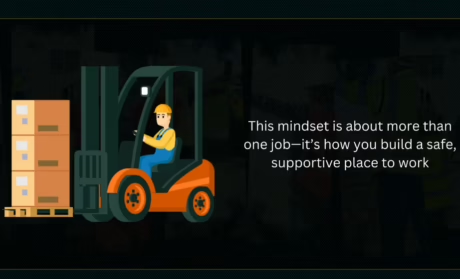
Manufacturing sites often involve forklifts and delivery vehicles operating in restricted spaces. Structured training reduces blind spot incidents and improves communication.
Blind spots, restricted visibility, pedestrian interaction, and heavy load transfers increase risk. Clear coordination helps prevent avoidable accidents.
Yes, UK health and safety legislation requires employers to assess and control workplace transport hazards. Banksmen are often appointed where additional coordination is necessary.
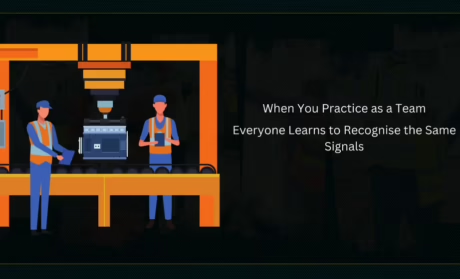
Recognised hand signals and agreed communication systems are used across industrial sites. Standardised signals prevent confusion between drivers and operatives.
They must remain visible to drivers while staying outside vehicle movement paths. Safe positioning maintains control without personal risk.
Yes, it explores structured coordination during heavy load transfers. Proper control reduces operational disruption and injury risks.
Yes, transport safety awareness strengthens supervisory and operational opportunities. Employers value structured risk management skills.
Regular review of procedures and incident data enhances safety standards. Continuous evaluation reduces recurring risks.
Refresher training is recommended based on site risk levels. Employers determine renewal frequency aligned with operational needs.
| Introduction | |||
| Introduction | 00:00:29 | ||
| Module 1: Understanding the Role of a Banksman | |||
| 1.1 What is a Banksman? | 00:00:30 | ||
| 1.2 Key Responsibilities and Legal Duties | 00:01:00 | ||
| 1.3 Common Hazards in the Manufacturing Environment | 00:00:33 | ||
| 1.4 Communication Techniques | 00:00:55 | ||
| Module 2: Vehicle and Load Movement Safety | |||
| 2.1 Safe Site Layout and Traffic Management | 00:01:00 | ||
| 2.2 Guiding Vehicle Movements | 00:01:00 | ||
| 2.3 Load Handling and Risk Management | 00:01:00 | ||
| 2.4 Emergency Procedures and Incident Response | 00:01:00 | ||
| Module 3: Continuous Improvement and Practical Skills | |||
| 3.1 Daily Checks and Pre-Shift Briefings | 00:01:00 | ||
| 3.2 Practising Hand Signals and Clear Communication | 00:01:00 | ||
| 3.3 Learning from Incidents and Near Misses | 00:01:00 | ||
| 3.4 Practical Simulated Exercises | 00:01:00 | ||
| Conclusion | |||
| Conclusion | 00:00:21 | ||
| Introduction | |||
| Introduction | 00:00:29 | ||
| Module 1: Understanding the Role of a Banksman | |||
| 1.1 What is a Banksman? | 00:00:30 | ||
| 1.2 Key Responsibilities and Legal Duties | 00:01:00 | ||
| 1.3 Common Hazards in the Manufacturing Environment | 00:00:33 | ||
| 1.4 Communication Techniques | 00:00:55 | ||
| Module 2: Vehicle and Load Movement Safety | |||
| 2.1 Safe Site Layout and Traffic Management | 00:01:00 | ||
| 2.2 Guiding Vehicle Movements | 00:01:00 | ||
| 2.3 Load Handling and Risk Management | 00:01:00 | ||
| 2.4 Emergency Procedures and Incident Response | 00:01:00 | ||
| Module 3: Continuous Improvement and Practical Skills | |||
| 3.1 Daily Checks and Pre-Shift Briefings | 00:01:00 | ||
| 3.2 Practising Hand Signals and Clear Communication | 00:01:00 | ||
| 3.3 Learning from Incidents and Near Misses | 00:01:00 | ||
| 3.4 Practical Simulated Exercises | 00:01:00 | ||
| Conclusion | |||
| Conclusion | 00:00:21 | ||