Step into the Level 3 Diploma Caregiving, a CPD-accredited programme supporting aspiring caregivers, care assistants, healthcare assistants, and domiciliary care workers. Aimed at those who want to become trusted frontline care professionals, this powerful training builds practical knowledge, compassion, safety awareness, and confidence for meaningful, career-ready caregiving roles across settings.
4.8
(1 Reviews)
2750 Students
Exclusive Deal! 94% Off, Today Only!
Sale Ends In
CPD Point
Do you want a career where your skills directly protect dignity, independence, and everyday wellbeing? If yes, the Level 3 Diploma Caregiving is relevant because employers need people who can deliver safe, compassionate, person-centred support across home care, domiciliary care, residential care, and healthcare settings.
The demand is real. Skills for Care reported 1.71 million adult social care posts in England in 2024/25, including 1.60 million filled posts and 111,000 vacant posts. Domiciliary care alone accounted for 740,000 filled posts, and care worker and support worker roles made up 925,000 posts. The sector contributed £77.8 billion to England’s economy, and Skills for Care says around 470,000 additional posts may be needed by 2040. That is not a small market. It is a major workforce need.
You will learn adult care across life stages, working with adults, domiciliary care practice, infection prevention and control, basic life support, medication management, mental health care, safeguarding, communication, reporting concerns, health and safety, hygiene, nutrition, mobility support, pain management, end of life care, person-centred care, consent, dementia caregiving, and dignity in care environments for entry-level and progressing care roles across settings.
Enrol now to gain flexible online training, CPD-accredited certification, and practical caregiving knowledge employers actually value.
Develop strong caregiving confidence through essential adult social care knowledge, safety awareness, safeguarding understanding, communication skills, and person-centred values. You will build the core competence needed to support adults respectfully, respond appropriately, and work more effectively in care environments daily.
This Level 3 Diploma Caregiving course online UK is designed to help you build essential, career-focused knowledge for adult care, domiciliary care, home support, elderly care, safeguarding, and healthcare assistance roles, giving you the confidence and subject understanding employers, care providers, and support-focused organisations increasingly value.
Whether you want a first caregiving role, stronger domiciliary care knowledge, or a route into adult social care, this programme suits beginners and developing workers alike. It is especially useful for flexible learners seeking confidence, employability, and progression support online.
There are no specific prerequisites to enrol in this Level 3 Diploma Caregiving – CPD Accredited Course. Anyone and everyone can take this course.
The Level 3 Diploma Caregiving – CPD Accredited Course is fully accessible from any internet-enabled smart device, so you can study from the comfort of your home.
All you need is a passion for learning, basic literacy skills, and to be over the age of 16.
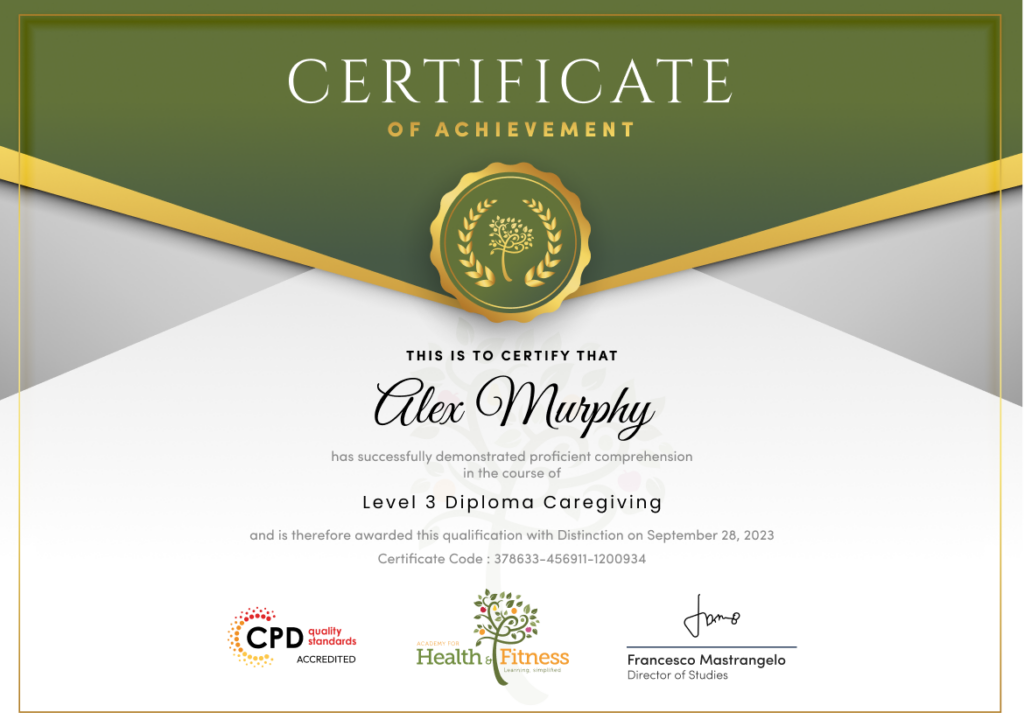
After successfully completing the Level 3 Diploma Caregiving course, you will qualify for a CPD Certificate as proof of your continued professional development and achievement. This certificate can enhance your professional profile and showcase your commitment to building relevant skills and knowledge. You can receive your digital certificate for only £10, or request a printed hard copy sent by post for just £29 or both for £39.
For assessing your learning, you have to complete an automated MCQ exam. It is required for the students to score at least 60% to pass the exam and fulfil the Quality Licence Scheme-endorsed certificate criteria. Learners can apply for the certificate after they clear the exam.
There are assignment questions provided at the end of the course. You are suggested to complete the questions to enrich your understanding of the course. You can complete this according to your preferred time. The expert tutor will provide feedback on your performance after assessing your assignment.
Caregiving knowledge supports work across home care, residential care, community support, and healthcare assistance. Employers value people who can protect dignity, follow safety procedures, communicate well, and respond responsibly. These roles show practical progression paths this learning can support, from entry-level care work to senior support positions over time professionally.
A Level 3 Diploma Caregiving is a structured caregiving diploma that builds knowledge in adult care, safeguarding, communication, infection control, medication support, dementia care, and person-centred practice. It is designed for learners who want stronger caregiving training for support roles in adult social care and related settings.
Yes. A caregiving course online gives you flexible access to learning, making it easier to build knowledge around work, family, or other responsibilities. That is exactly why an online caregiving diploma is attractive to busy learners and career changers.
A Level 3 Caregiving Course can cover adult care at different life stages, domiciliary care training, mental health care, safeguarding vulnerable adults, communication in care, health and safety, nutrition, mobility support, pain management, end of life care, dementia caregiving, consent, and dignity.
National Careers Service says people can get into care work through college courses, apprenticeships, volunteering, or by applying directly. Many employers also provide on-the-job training after hiring the right candidate.
Requirements vary. The National Careers Service says some employers may want GCSEs in English and maths, but many will train applicants who show the right personal qualities, attitude, and willingness to learn. That makes a caregiving certificate or Health and Social Care Level 3 study route a strong advantage.
Yes, if the goal is employability. A strong online caregiving diploma helps prove commitment, builds job-relevant knowledge, and gives you language employers expect around safeguarding, dignity, infection prevention, and adult care support.
Yes. That is one of the most practical reasons to study. Skills for Care reported domiciliary care accounted for 740,000 filled posts in England in 2024/25, so home-based care remains a major area of demand.
It should, and this curriculum does. Dementia caregiving is included because older adult support often involves memory loss, communication changes, dignity needs, safeguarding awareness, and person-centred care planning.
It can strengthen an application, especially for entry or support roles. The National Careers Service describes healthcare assistants as workers who look after patients in hospitals and sometimes at a patient’s home, so caregiving knowledge is directly relevant.
The guided video content here totals around 10 hours and 36 minutes, but actual study time depends on your pace, revision habits, and how seriously you engage with the material.
Yes. Caregiving training is often a first serious step for beginners. The key is not pretending experience you do not have. Start with foundations, build confidence, understand safeguarding and dignity properly, and then apply for suitable support roles.
A strong option covers adult social care properly, teaches person-centred care, safeguarding, infection control, communication, medication awareness, mental health, dementia, and end of life support. If it is flexible, career-focused, and CPD-accredited, it is already ahead of most weak, generic training pages.
| Level 3 Diploma in Adult Social Care | |||
| Module 1: Adult Care in Different Life Stages | 00:17:00 | ||
| Module 2: Working with Adults | 00:07:00 | ||
| Module 3: Introduction to Domiciliary Care | 00:15:00 | ||
| Module 4: Health and Safety for Domiciliary Carers | 00:33:00 | ||
| Module 5: CSTF Infection Prevention and Control | 00:37:00 | ||
| Module 6: CSTF Resuscitation – Basic Life Support | 00:24:00 | ||
| Module 7: Medication Management and Administration | 00:18:00 | ||
| Module 8: Mental Health Care | 00:23:00 | ||
| Module 01: Safeguarding of Vulnerable Adults | 00:15:00 | ||
| Module 02: Safeguarding Legislations | 00:25:00 | ||
| Module 04: Safeguarding Vulnerable Adults Policy, Roles and Responsibilities | 00:23:00 | ||
| Module 05: Importance of Communication in Care | 00:20:00 | ||
| Module 06: Sharing Information and Responding to a Disclosure | 00:20:00 | ||
| Module 07: Reporting Your Concern | 00:17:00 | ||
| Introduction to Nursing | 00:17:00 | ||
| Module 16: Health and Safety | 00:47:00 | ||
| Module 17: Hygiene | 00:30:00 | ||
| Module 18: Rest and Sleep Management | 00:19:00 | ||
| Module 19: Mobility and Immobility Issues of Patients | 00:17:00 | ||
| Module 20: Pain Management | 00:24:00 | ||
| Module 21: Nutrition | 00:25:00 | ||
| Module 22: Assisting with Elimination | 00:30:00 | ||
| Module 23: Oxygenation | 00:30:00 | ||
| Module 24: Introduction to End of Life Care | 00:45:00 | ||
| Module 25: Health and Social Care | 00:19:00 | ||
| Module 26: Principles, Theories, and Values of Person-Centred Care | 00:14:00 | ||
| Module 27: Complexities of Consent | 00:15:00 | ||
| Module 28: Caregiving for Dementia | 00:10:00 | ||
| Module 29: How Care Environments can Promote and Undermine People’s Dignity and Rights | 00:14:00 | ||
| Order Your Certificate | |||
| Order your Certificate | 00:00:00 | ||