Politics is a CPD-accredited course for learners, aspiring political analysts, public service professionals, campaign workers, and anyone seeking a recognized certificate to build strong knowledge of governance, democracy, elections, political ideologies, UK and US government, devolution, and comparative politics through a structured online curriculum.
4.7
(3 Reviews)
10 Students
Exclusive Deal! 94% Off, Today Only!
Sale Ends In
CPD Point
In a time when political decisions shape public services, rights, careers, communities, and global relations, understanding politics is a powerful professional advantage. The 2024 UK general election recorded a turnout of 59.7%, showing how important political awareness and participation remain across society.
This CPD-accredited Politics course helps you explore democracy, elections, referendums, political parties, pressure groups, the EU, the British Constitution, Parliament, the Prime Minister and Cabinet, judiciary, devolution, and major ideologies such as liberalism, conservatism, socialism, feminism, nationalism, multiculturalism, anarchism, and ecologism.
You will also study the US government, Congress, the President, the judiciary, direct democracy, and comparative politics. This course can strengthen your critical thinking, communication, research, debate, policy awareness, and decision-making skills, supporting career growth in public service, administration, education, journalism, campaigning, law, policy, charity work, and leadership roles.
This CPD-accredited Politics course is designed to provide a comprehensive understanding of political systems, democratic participation, government structures, and major political ideologies. It is ideal for learners who want to build strong political knowledge for personal development, academic progression, or professional growth in public service, administration, education, journalism, campaigning, law, policy, charity work, and leadership roles.
Throughout this Politics course, you will explore key topics such as democracy, elections, referendums, political parties, pressure groups, the European Union, the British Constitution, Parliament, the Prime Minister and Cabinet, the judiciary, and devolution. You will also study important ideologies including liberalism, conservatism, socialism, nationalism, feminism, multiculturalism, anarchism, and ecologism.
In addition to UK politics, this course introduces the constitutional framework of the US government, including Congress, the President, the judiciary, electoral processes, direct democracy, and comparative political approaches. By completing this course, you will strengthen your critical thinking, research, debate, communication, and policy awareness skills, helping you understand political decisions more clearly and apply this knowledge in professional and civic contexts.
By completing this Politics online course, you will:
Whether you are starting your academic journey, exploring public service, or looking to strengthen your understanding of political systems, this CPD-accredited Politics course provides essential knowledge to help you understand how governments, elections, institutions, and ideologies shape society.
As a comprehensive Politics online course, it is designed to introduce key areas of UK and US politics, including democracy, political participation, Parliament, the Prime Minister and Cabinet, the judiciary, devolution, Congress, the President, electoral systems, direct democracy, and comparative political approaches.
This course supports your progression towards roles in public service, administration, education, journalism, campaigning, policy, charity work, research, law-related fields, and leadership. It also helps you build transferable skills in critical thinking, communication, debate, research, decision-making, and civic awareness.
This Politics course is ideal for individuals who want to understand political systems, democratic processes, government institutions, and political ideologies for academic, professional, or personal development.
It is suitable for:
There are no specific prerequisites to enrol in this Politics course. Anyone interested in politics, government, democracy, and society can take this course.
The Politics course is fully accessible from any internet-enabled smart device, allowing you to study from the comfort of your home.
All you need is a passion for learning, basic literacy skills, and to be over the age of 16.
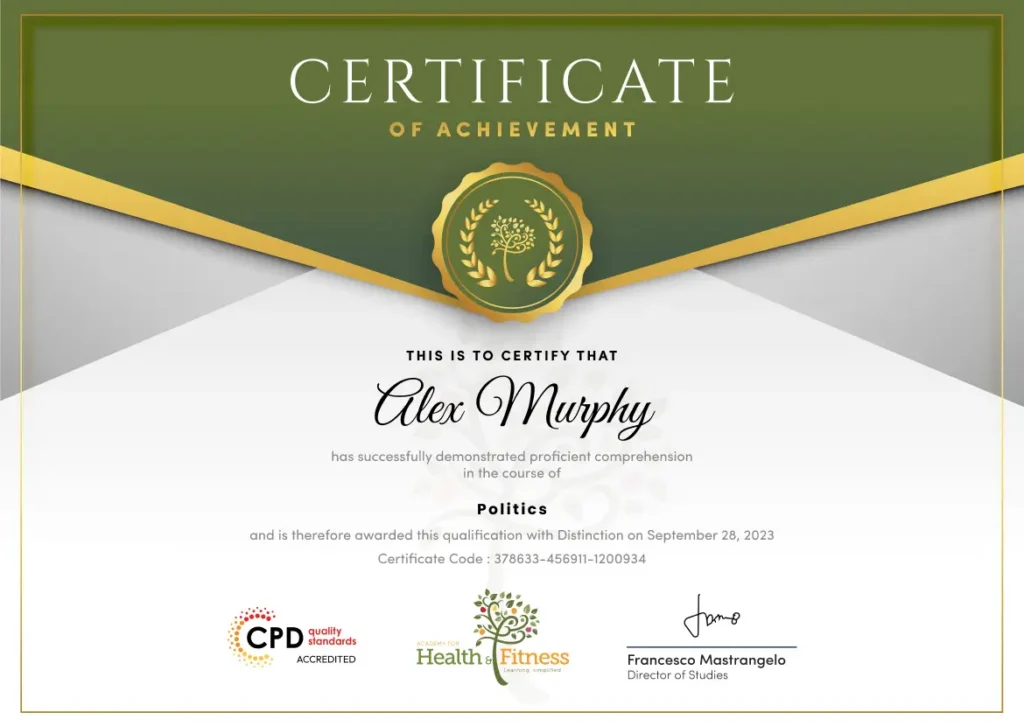
After successfully completing the Politics course, you will qualify for a CPD Certificate as proof of your continued professional development and achievement. This certificate can enhance your professional profile and showcase your commitment to building relevant skills and knowledge. You can receive your digital certificate for only £10, or request a printed hard copy sent by post for just £29 or both for £39.
For assessing your learning, you have to complete an automated MCQ exam. It is required for the students to score at least 60% to pass the exam and fulfil the Quality Licence Scheme-endorsed certificate criteria. Learners can apply for the certificate after they clear the exam.
There are assignment questions provided at the end of the course. You are suggested to complete the questions to enrich your understanding of the course. You can complete this according to your preferred time. The expert tutor will provide feedback on your performance after assessing your assignment.
The Politics course is an online knowledge-based training designed to build a strong foundation in democracy, government, political systems, ideologies, elections, and policy awareness. While it does not provide a professional licence, it supports progression into entry-level and supportive roles across public service, education, media, campaigning, charities, administration, and policy-focused organisations.
This Politics course covers democracy, elections, referendums, political parties, pressure groups, the European Union, the British Constitution, Parliament, the Prime Minister and Cabinet, the judiciary, devolution, political ideologies, and UK and US government systems.
Yes. This course is suitable for beginners who want to understand politics step by step. It explains key political ideas, institutions, and systems in a clear and accessible way, making it ideal for learners with no previous political knowledge.
Yes. This Politics course is delivered online, allowing you to study from home at your own pace. You can access the course materials using any internet-enabled device, making it flexible for students, professionals, and lifelong learners.
Yes. After successfully completing this Politics course, learners can receive a CPD-accredited certificate. This certificate can help demonstrate your knowledge of politics, governance, democracy, and public affairs to employers or educational institutions.
No. This course does not directly qualify you to become a politician or guarantee a political role. However, it provides valuable knowledge of political systems, public institutions, ideologies, elections, and governance, which can support future study or career development.
This course can support knowledge for roles such as policy assistant, public affairs assistant, civil service administrator, political research assistant, campaign assistant, local government assistant, communications officer, charity advocacy assistant, and journalism assistant.
This Politics course may include assessments such as quizzes, assignments, or knowledge-based tasks to check your understanding of the topics covered. Assessment methods help learners reflect on democracy, government, political ideologies, and comparative political systems.
This course is ideal for beginners, students, aspiring public service professionals, campaign workers, charity staff, journalists, teachers, policy enthusiasts, and anyone who wants to improve their understanding of UK politics, US politics, democracy, and political ideologies.
Yes. Politics is a valuable subject for understanding public decisions, rights, laws, elections, and society. It can support career pathways in public service, administration, journalism, education, policy, campaigning, research, charity work, and leadership roles.
Studying politics helps you understand how power, government, democracy, rights, and public decisions affect everyday life. This course can improve your critical thinking, communication, research, debate, decision-making, and civic awareness, supporting both personal growth and professional development.
| Module 01: Introduction to Politics | |||
| Introduction to Politics | 00:28:00 | ||
| Module 02: Democracy and Participation | |||
| Democracy and Participation | 00:20:00 | ||
| Module 03: Elections and Referendums | |||
| Elections and Referendums | 00:32:00 | ||
| Module 04: Political Parties | |||
| Political Parties | 00:27:00 | ||
| Module 05: Pressure Groups | |||
| Pressure Groups | 00:22:00 | ||
| Module 06: The European Union | |||
| The European Union (EU) | 00:26:00 | ||
| Module 07: The Nature and Sources of The British Constitution | |||
| The Nature and Sources of The British Constitution | 00:24:00 | ||
| Module 08: Parliament | |||
| Parliament | 00:24:00 | ||
| Module 09: The Prime Minister and Cabinet | |||
| The Prime Minister and Cabinet | 00:30:00 | ||
| Module 10: The Judiciary | |||
| The Judiciary | 00:30:00 | ||
| Module 11: Devolution | |||
| Devolution | 00:20:00 | ||
| Module 12: Liberalism | |||
| Liberalism | 00:23:00 | ||
| Module 13: Conservatism | |||
| Conservatism | 00:23:00 | ||
| Module 14: Socialism | |||
| Socialism | 00:30:00 | ||
| Module 15: Nationalism | |||
| Nationalism | 00:21:00 | ||
| Module 16: Feminism | |||
| Feminism | 00:23:00 | ||
| Module 17: Multiculturalism | |||
| Multiculturalism | 00:25:00 | ||
| Module 18: Anarchism | |||
| Anarchism | 00:19:00 | ||
| Module 19: Ecologism | |||
| Ecologism | 00:22:00 | ||
| Module 20: The Constitutional Framework of US Government | |||
| The Constitutional Framework of US Government | 00:26:00 | ||
| Module 21: The Legislative Branch of Government: Congress | |||
| The Legislative Branch of Government: Congress | 00:22:00 | ||
| Module 22: The Executive Branch of Government: President | |||
| The Executive Branch of Government: President | 00:31:00 | ||
| Module 23: The Judicial Branch of Government | |||
| The Judicial Branch of Government | 00:23:00 | ||
| Module 24: The Electoral Process and Direct Democracy | |||
| The Electoral Process and Direct Democracy | 00:31:00 | ||
| Module 25: Comparative Approaches | |||
| Comparative Approaches | 00:29:00 | ||
| Assignment | |||
| Assignment – Politics | 00:00:00 | ||
| Module 01: Introduction to Politics | |||
| Introduction to Politics | 00:28:00 | ||
| Module 02: Democracy and Participation | |||
| Democracy and Participation | 00:20:00 | ||
| Module 03: Elections and Referendums | |||
| Elections and Referendums | 00:32:00 | ||
| Module 04: Political Parties | |||
| Political Parties | 00:27:00 | ||
| Module 05: Pressure Groups | |||
| Pressure Groups | 00:22:00 | ||
| Module 06: The European Union | |||
| The European Union (EU) | 00:26:00 | ||
| Module 07: The Nature and Sources of The British Constitution | |||
| The Nature and Sources of The British Constitution | 00:24:00 | ||
| Module 08: Parliament | |||
| Parliament | 00:24:00 | ||
| Module 09: The Prime Minister and Cabinet | |||
| The Prime Minister and Cabinet | 00:30:00 | ||
| Module 10: The Judiciary | |||
| The Judiciary | 00:30:00 | ||
| Module 11: Devolution | |||
| Devolution | 00:20:00 | ||
| Module 12: Liberalism | |||
| Liberalism | 00:23:00 | ||
| Module 13: Conservatism | |||
| Conservatism | 00:23:00 | ||
| Module 14: Socialism | |||
| Socialism | 00:30:00 | ||
| Module 15: Nationalism | |||
| Nationalism | 00:21:00 | ||
| Module 16: Feminism | |||
| Feminism | 00:23:00 | ||
| Module 17: Multiculturalism | |||
| Multiculturalism | 00:25:00 | ||
| Module 18: Anarchism | |||
| Anarchism | 00:19:00 | ||
| Module 19: Ecologism | |||
| Ecologism | 00:22:00 | ||
| Module 20: The Constitutional Framework of US Government | |||
| The Constitutional Framework of US Government | 00:26:00 | ||
| Module 21: The Legislative Branch of Government: Congress | |||
| The Legislative Branch of Government: Congress | 00:22:00 | ||
| Module 22: The Executive Branch of Government: President | |||
| The Executive Branch of Government: President | 00:31:00 | ||
| Module 23: The Judicial Branch of Government | |||
| The Judicial Branch of Government | 00:23:00 | ||
| Module 24: The Electoral Process and Direct Democracy | |||
| The Electoral Process and Direct Democracy | 00:31:00 | ||
| Module 25: Comparative Approaches | |||
| Comparative Approaches | 00:29:00 | ||
| Assignment | |||
| Assignment – Politics | 00:00:00 | ||