Diploma in Piping & Instrumentation Diagram (P&ID) Training at QLS Level 5 – A CPD Accredited course for aspiring P&ID designers, process technicians, engineers, and maintenance professionals.
Learn P&ID symbols, control systems, safety systems, and diagram reading while earning a recognised certificate.
4.9
(3 Reviews)
27 Students
Exclusive Deal! 94% Off, Today Only!
Sale Ends In
CPD Point
Build the essential knowledge needed to understand the diagrams that keep complex industrial processes operating safely and efficiently. Engineering and technology roles represented around 19% of all UK jobs in 2025, highlighting the continued value of relevant technical skills.
The Diploma in Piping & Instrumentation Diagram (P&ID) Training at QLS Level 5 teaches you how to read P&IDs, recognise essential symbols, interpret designation codes and understand process control systems. You will explore control theory, Basic Process Control Systems, advanced process control, Safety Instrumented Systems, alarms and interlocks. Practical examples, exercises, a workbook and an assignment help reinforce your learning.
This CPD Accredited course can strengthen your technical confidence, improve workplace communication and support career development in process engineering, plant operations, maintenance, instrumentation and related industrial roles.
The Diploma in Piping & Instrumentation Diagram (P&ID) Training at QLS Level 5 is designed to provide a clear and comprehensive understanding of P&ID reading, process control, instrumentation symbols and industrial safety systems. It is ideal for learners who want to build technical knowledge for engineering, maintenance, plant operations or process-related roles.
Throughout this course, you will learn how to identify basic P&ID symbols, understand designation codes and interpret piping and instrumentation diagrams used in industrial environments. You will also explore control theory, Basic Process Control Systems, advanced process control and the importance of process monitoring.
In addition, the course introduces Safety Instrumented Systems, alarms and interlocks, helping you understand how industrial facilities manage risks and maintain safe operations. essential examples, exercises, a workbook and an assignment will help strengthen your ability to read and analyse P&IDs with greater accuracy, confidence and professional awareness.
By completing this Diploma in Piping & Instrumentation Diagram (P&ID) Training at QLS Level 5 online course, you will:
Understand the purpose, structure and importance of Piping & Instrumentation Diagrams (P&IDs) in industrial processes.
Identify and interpret common P&ID symbols, equipment and piping components accurately.
Read and apply P&ID designation codes used in engineering documentation.
Explain the principles of process control and the role of instrumentation in industrial operations.
Understand the fundamentals of Basic Process Control Systems (BPCS) and advanced process control.
Recognise the purpose and operation of Safety Instrumented Systems (SIS), interlocks and alarms.
Analyse P&ID drawings with greater confidence using practical examples and exercises.
Strengthen your technical knowledge to support roles in process engineering, plant operations, maintenance and instrumentation.
Apply industry-relevant P&ID knowledge to improve workplace communication, troubleshooting and operational efficiency.
Gain a QLS Endorsed and CPD Accredited certification to strengthen your professional profile.
Study online with 12 months of unlimited access and learn anytime, anywhere.
Develop essential knowledge of P&ID symbols, designation codes, process control and instrumentation systems.
Understand Basic Process Control Systems, advanced control methods, alarms, interlocks and Safety Instrumented Systems.
Improve your CV with industry-relevant knowledge applicable to engineering and industrial workplaces.
Receive an instant digital certificate upon completion, with the option to order a hard copy.
Get a free student ID card to support your learner profile.
Learn at your own pace with no fixed deadlines.
Benefit from transparent pricing with no hidden charges.
Access dedicated tutor support on weekdays.
Complete assessments quickly and receive results without unnecessary delays.
Whether you are beginning an engineering career or looking to strengthen your existing technical skills, this Diploma in Piping & Instrumentation Diagram (P&ID) Training at QLS Level 5 provides essential knowledge for understanding industrial piping, instrumentation and process control systems.
The course is designed around essential P&ID concepts used in engineering environments, helping you build confidence in reading symbols, interpreting designation codes and understanding control systems, alarms, interlocks and Safety Instrumented Systems.
This training can support your progression into roles related to process engineering, plant operations, maintenance, instrumentation and technical design. It also provides a strong foundation for professionals who need to communicate more effectively with engineers, operators and maintenance teams.
This course is ideal for individuals who want to begin or progress in engineering, process operations, maintenance, or instrumentation-related careers.
It is suitable for:
Beginners learning P&ID drawings from scratch
Aspiring piping and instrumentation engineering professionals
Process engineers developing diagram interpretation skills
Plant operators improving technical process knowledge
Maintenance technicians working with industrial systems
Engineering students seeking essential P&ID understanding
Professionals handling alarms, interlocks, and controls
Anyone interested in industrial process diagrams
There are no specific prerequisites to enrol in this Diploma in Piping & Instrumentation Diagram (P&ID) Training at QLS Level 5. Anyone and everyone can take this course.
The Diploma in Piping & Instrumentation Diagram (P&ID) Training at QLS Level 5 is fully accessible from any internet-enabled smart device. Therefore, you can study from the comfort of your home.
All you need is a passion for learning, basic literacy skills, and to be over the age of 16.
After successfully completing the Diploma in Piping & Instrumentation Diagram (P&ID) Training at QLS Level 5 course, you will qualify for a CPD Certificate as proof of your continued professional development and achievement. This certificate can enhance your professional profile and showcase your commitment to building relevant skills and knowledge. You can receive your digital certificate for only £10, or request a printed hard copy sent by post for just £29 or both for £39.
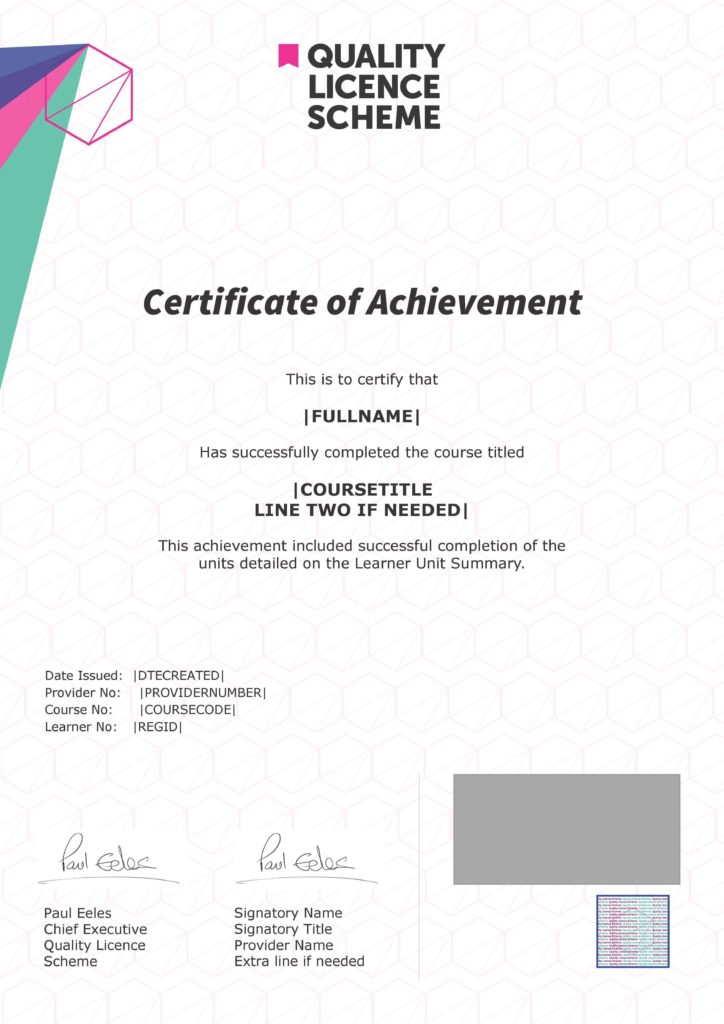
After successfully completing the course, learners will be able to order a QLS Endorsed Certificate as proof of their new achievement. The Level QLS Endorsed certificate can be ordered and get delivered to your home by post for £119 only. There is an additional £10 postage charge for international students.
For assessing your learning, you have to complete an automated MCQ exam. It is required for the students to score at least 60% to pass the exam and fulfil the Quality Licence Scheme-endorsed certificate criteria. Learners can apply for the certificate after they clear the exam.
There are assignment questions provided at the end of the course. You are suggested to complete the questions to enrich your understanding of the course. You can complete this according to your preferred time. The expert tutor will provide feedback on your performance after assessing your assignment.
The Diploma in Piping & Instrumentation Diagram (P&ID) Training at QLS Level 5 is an online, knowledge-based course covering P&ID symbols, process control, instrumentation and industrial safety systems. Although it does not provide an engineering licence, it can strengthen your CV and support progression towards entry-level or assistant roles in engineering, manufacturing, energy, chemical processing and plant maintenance.
P&ID Technician
Supports engineers by reviewing diagrams, checking symbols and maintaining accurate piping and instrumentation documentation.
Average UK salary: £25,000–£40,000 per year
CAD Technician
Creates and updates technical drawings using computer-aided design software while following engineering specifications and standards.
Average UK salary: £20,000–£35,000 per year
Instrumentation Technician
Installs, tests and maintains industrial instruments used to measure pressure, temperature, flow and process conditions.
Average UK salary: £28,000–£45,000 per year
Engineering Maintenance Technician
Inspects, services and repairs industrial equipment to reduce breakdowns and maintain safe, efficient production operations.
Average UK salary: £27,000–£48,000 per year
Chemical Engineering Technician
Supports process development, equipment monitoring and technical operations within chemical, pharmaceutical, food and energy industries.
Average UK salary: £25,000–£42,000 per year
Junior Process Technician
Monitors production processes, records operational data and assists engineers with troubleshooting equipment and control systems.
Average UK salary: £24,000–£38,000 per year
Plant Operations Assistant
Supports daily plant activities, monitors equipment performance and reports faults, hazards or unusual process conditions.
Average UK salary: £23,000–£35,000 per year
Piping Design Assistant
Assists with piping layouts, equipment connections and technical drawings under the supervision of experienced designers.
Average UK salary: £24,000–£38,000 per year
Process Engineering Assistant
Helps process engineers review diagrams, collect technical information and support operational improvement and safety projects.
Average UK salary: £26,000–£42,000 per year
Engineering Document Controller
Organises, tracks and updates engineering drawings, specifications and project documents throughout the document lifecycle.
Average UK salary: £24,000–£38,000 per year
This course covers P&ID symbols, designation codes, process control principles, Basic Process Control Systems, advanced process control, Safety Instrumented Systems, alarms, interlocks and practical diagram-reading examples.
Yes. The course is suitable for beginners, engineering students, technicians, plant operators and professionals who want to build P&ID knowledge step by step.
Yes. The course is delivered entirely online, allowing you to study from home and learn at your own pace around existing commitments.
Yes. Successful learners can receive an HF Online CPD Certificate, with a QLS Endorsed Certificate of Achievement option also available.
No. This is a knowledge-based training course and does not provide an engineering licence, regulated qualification or professional registration.
The course may support progression towards roles such as P&ID technician, CAD technician, piping design assistant, process technician, plant operations assistant and engineering document controller.
The course includes an automated multiple-choice assessment and assignment-based learning activities designed to test your understanding of the subject.
It is ideal for aspiring engineers, maintenance technicians, plant operators, engineering students and professionals working with process control or industrial documentation.
Yes. P&IDs are widely used across manufacturing, energy, oil and gas, chemical processing, utilities, pharmaceuticals and industrial maintenance environments.
The course can improve your technical confidence, diagram-reading ability, workplace communication and understanding of industrial control and safety systems.
| INTRODUCTION | |||
| Introduction (Piping & Instrumentation Diagram (P&ID) Training) | 00:04:00 | ||
| ABOUT P&ID's | |||
| What’s a P&ID ? | 00:03:00 | ||
| Why is a P&ID so important ? | 00:02:00 | ||
| Who uses P&ID’s ? | 00:06:00 | ||
| How do P&ID’s look like ? | 00:08:00 | ||
| INTRODUCTION TO P&ID READING | |||
| Introduction- PID READING | 00:02:00 | ||
| Anatomy of a P&ID | 00:01:00 | ||
| The title block | 00:03:00 | ||
| The drawing scale | 00:03:00 | ||
| The grid system | 00:02:00 | ||
| The revision block | 00:03:00 | ||
| Changes | 00:02:00 | ||
| Notes and legends | 00:03:00 | ||
| BASIC P&ID SYMBOLS | |||
| Valve symbols | 00:14:00 | ||
| Valve actuator symbols | 00:09:00 | ||
| Control valve designations | 00:02:00 | ||
| Standards and conventions for valve status | 00:07:00 | ||
| Process equipment symbols | 00:12:00 | ||
| Piping symbols | 00:03:00 | ||
| Pipe fitting symbols | 00:03:00 | ||
| Isolating, venting & draining symbols for ease of maintenance | 00:05:00 | ||
| Instrumentation | 00:03:00 | ||
| Sensing devices and detectors | 00:04:00 | ||
| Location symbols | 00:04:00 | ||
| Modifiers and transmitters | 00:05:00 | ||
| Indicators and recorders | 00:03:00 | ||
| Controllers | 00:03:00 | ||
| LET'S GET SOME PRACTICE : BASIC P&ID SYMBOLS | |||
| Example #1 : Identifying process equipment and flow paths | 00:05:00 | ||
| Example #2 : Identifying valve position and failure mode | 00:03:00 | ||
| Example #3 : Identifying the symbols | 00:02:00 | ||
| P&ID DESIGNATION CODES | |||
| Piping designation code | 00:06:00 | ||
| Equipment designation code | 00:03:00 | ||
| Instrument designation code | 00:02:00 | ||
| Miscellaneous designation codes | 00:02:00 | ||
| THE IMPORTANCE OF PROCESS CONTROL | |||
| The process | 00:01:00 | ||
| Process control | 00:06:00 | ||
| CONTROL THEORY BASICS | |||
| The control loop | 00:02:00 | ||
| Process control terms | 00:10:00 | ||
| BASIC PROCESS CONTROL SYSTEMS (BPCS) | |||
| Control loops : Feedback control | 00:02:00 | ||
| Pressure control loops | 00:01:00 | ||
| Flow control loops | 00:01:00 | ||
| Level control loops | 00:01:00 | ||
| Temperature control loops | 00:01:00 | ||
| Multi-variable loops | 00:02:00 | ||
| Feedforward control | 00:02:00 | ||
| Feedforward + Feedback | 00:01:00 | ||
| Cascade control | 00:08:00 | ||
| Split range control | 00:03:00 | ||
| Operations on control signals | 00:02:00 | ||
| Ratio control | 00:02:00 | ||
| Batch control | 00:01:00 | ||
| Selective control | 00:01:00 | ||
| ADVANCED PROCESS CONTROL | |||
| Do we need to control at all ? | 00:01:00 | ||
| Principles of equipment-wise control | 00:10:00 | ||
| Pipe control system | 00:02:00 | ||
| Control of a single pipe | 00:02:00 | ||
| Control of pressure in a pipe | 00:03:00 | ||
| Control of flow in a pipe | 00:04:00 | ||
| Flow merging | 00:08:00 | ||
| Flow splitting | 00:05:00 | ||
| Centrifugal pump control | 00:04:00 | ||
| Control valve vs Variable Frequency Drive (VFD) for centrifugal pumps | 00:03:00 | ||
| Minimum flow control for centrifugal pumps | 00:09:00 | ||
| Positive displacement pump control | 00:02:00 | ||
| Control by a recirculation pipe for PD pumps | 00:03:00 | ||
| Variable Speed Drive (VSD) control for PD pumps | 00:01:00 | ||
| Control by stroke adjustment for PD pumps | 00:01:00 | ||
| Compressor control system | 00:02:00 | ||
| Compressor capacity control | 00:12:00 | ||
| Compressor anti-surge control | 00:03:00 | ||
| Heat transfer equipment control | 00:02:00 | ||
| Heat exchanger direct control system | 00:04:00 | ||
| Heat exchanger bypass control system | 00:04:00 | ||
| Reactor temperature control | 00:06:00 | ||
| Reactor temperature control | 00:06:00 | ||
| Air cooler control | 00:02:00 | ||
| Heat exchanger for heat recovery | 00:01:00 | ||
| Heat exchanger back pressure control | 00:02:00 | ||
| Basic fired heater control | 00:08:00 | ||
| Complex fired heater control | 00:05:00 | ||
| Container and vessel control | 00:07:00 | ||
| Container blanket gas control | 00:02:00 | ||
| SAFETY INSTRUMENTED SYSTEMS (SIS), INTERLOCKS AND ALARMS | |||
| Safety strategies | 00:01:00 | ||
| Concept of Safety Instrumented Systems (SIS) | 00:01:00 | ||
| SIS actions and types | 00:14:00 | ||
| SIS extent | 00:02:00 | ||
| SIS requirement | 00:03:00 | ||
| Anatomy of a SIS | 00:02:00 | ||
| SIS element symbols | 00:01:00 | ||
| SIS primary elements : Sensors | 00:03:00 | ||
| SIS final elements | 00:04:00 | ||
| Switching valve actuator arrangements | 00:02:00 | ||
| Valve position validation | 00:02:00 | ||
| Merging a switching valve and a control valve | 00:03:00 | ||
| SIS logics | 00:01:00 | ||
| Showing safety instrumented functions on P&ID’s | 00:07:00 | ||
| Discrete control | 00:05:00 | ||
| Alarm system | 00:02:00 | ||
| Anatomy of alarm systems | 00:02:00 | ||
| Alarm requirements | 00:06:00 | ||
| Alarm system symbology in P&ID’s | 00:06:00 | ||
| Concept of common alarms | 00:01:00 | ||
| Fire and Gas Detection Systems (FGS) | 00:03:00 | ||
| Electric motor control | 00:07:00 | ||
| P&ID representation of commands and responses | 00:05:00 | ||
| P&ID representation of inspection and repair | 00:05:00 | ||
| P&ID example of electro-motor control | 00:04:00 | ||
| P&ID EXAMPLES : LET’S GET SOME PRACTICE | |||
| P&ID example #1 : Legend and specifications | 00:05:00 | ||
| P&ID example #2 : Hydrogen delivery station | 00:16:00 | ||
| P&ID example #3 : Acid system | 00:13:00 | ||
| P&ID example #4 : Centrifugal pump | 00:09:00 | ||
| P&ID example #6 : Waste water filter | 00:08:00 | ||
| P&ID example #7 : Steam separator | 00:15:00 | ||
| P&ID example #8 : Flare knock-out drum | 00:14:00 | ||
| P&ID example #9 : Centrifugal compressor | 00:05:00 | ||
| P&ID example #10 : Hydrogen production from shale gas | 00:11:00 | ||
| P&ID example #11 : Fired heater | 00:07:00 | ||
| Workbook | |||
| Workbook -Diploma in Piping & Instrumentation Diagram (P&ID) Training at QLS Level 5 | 1 week, 2 days | ||
| Assignment | |||
| Assignment – Diploma in Piping & Instrumentation Diagram (P&ID) Training at QLS Level 5 | 6 days, 1 hour | ||
| Order Your Certificate | |||
| Claim Your Certificates | 00:00:00 | ||
| INTRODUCTION | |||
| Introduction (Piping & Instrumentation Diagram (P&ID) Training) | 00:04:00 | ||
| ABOUT P&ID's | |||
| What’s a P&ID ? | 00:03:00 | ||
| Why is a P&ID so important ? | 00:02:00 | ||
| Who uses P&ID’s ? | 00:06:00 | ||
| How do P&ID’s look like ? | 00:08:00 | ||
| INTRODUCTION TO P&ID READING | |||
| Introduction- PID READING | 00:02:00 | ||
| Anatomy of a P&ID | 00:01:00 | ||
| The title block | 00:03:00 | ||
| The drawing scale | 00:03:00 | ||
| The grid system | 00:02:00 | ||
| The revision block | 00:03:00 | ||
| Changes | 00:02:00 | ||
| Notes and legends | 00:03:00 | ||
| BASIC P&ID SYMBOLS | |||
| Valve symbols | 00:14:00 | ||
| Valve actuator symbols | 00:09:00 | ||
| Control valve designations | 00:02:00 | ||
| Standards and conventions for valve status | 00:07:00 | ||
| Process equipment symbols | 00:12:00 | ||
| Piping symbols | 00:03:00 | ||
| Pipe fitting symbols | 00:03:00 | ||
| Isolating, venting & draining symbols for ease of maintenance | 00:05:00 | ||
| Instrumentation | 00:03:00 | ||
| Sensing devices and detectors | 00:04:00 | ||
| Location symbols | 00:04:00 | ||
| Modifiers and transmitters | 00:05:00 | ||
| Indicators and recorders | 00:03:00 | ||
| Controllers | 00:03:00 | ||
| LET'S GET SOME PRACTICE : BASIC P&ID SYMBOLS | |||
| Example #1 : Identifying process equipment and flow paths | 00:05:00 | ||
| Example #2 : Identifying valve position and failure mode | 00:03:00 | ||
| Example #3 : Identifying the symbols | 00:02:00 | ||
| P&ID DESIGNATION CODES | |||
| Piping designation code | 00:06:00 | ||
| Equipment designation code | 00:03:00 | ||
| Instrument designation code | 00:02:00 | ||
| Miscellaneous designation codes | 00:02:00 | ||
| THE IMPORTANCE OF PROCESS CONTROL | |||
| The process | 00:01:00 | ||
| Process control | 00:06:00 | ||
| CONTROL THEORY BASICS | |||
| The control loop | 00:02:00 | ||
| Process control terms | 00:10:00 | ||
| BASIC PROCESS CONTROL SYSTEMS (BPCS) | |||
| Control loops : Feedback control | 00:02:00 | ||
| Pressure control loops | 00:01:00 | ||
| Flow control loops | 00:01:00 | ||
| Level control loops | 00:01:00 | ||
| Temperature control loops | 00:01:00 | ||
| Multi-variable loops | 00:02:00 | ||
| Feedforward control | 00:02:00 | ||
| Feedforward + Feedback | 00:01:00 | ||
| Cascade control | 00:08:00 | ||
| Split range control | 00:03:00 | ||
| Operations on control signals | 00:02:00 | ||
| Ratio control | 00:02:00 | ||
| Batch control | 00:01:00 | ||
| Selective control | 00:01:00 | ||
| ADVANCED PROCESS CONTROL | |||
| Do we need to control at all ? | 00:01:00 | ||
| Principles of equipment-wise control | 00:10:00 | ||
| Pipe control system | 00:02:00 | ||
| Control of a single pipe | 00:02:00 | ||
| Control of pressure in a pipe | 00:03:00 | ||
| Control of flow in a pipe | 00:04:00 | ||
| Flow merging | 00:08:00 | ||
| Flow splitting | 00:05:00 | ||
| Centrifugal pump control | 00:04:00 | ||
| Control valve vs Variable Frequency Drive (VFD) for centrifugal pumps | 00:03:00 | ||
| Minimum flow control for centrifugal pumps | 00:09:00 | ||
| Positive displacement pump control | 00:02:00 | ||
| Control by a recirculation pipe for PD pumps | 00:03:00 | ||
| Variable Speed Drive (VSD) control for PD pumps | 00:01:00 | ||
| Control by stroke adjustment for PD pumps | 00:01:00 | ||
| Compressor control system | 00:02:00 | ||
| Compressor capacity control | 00:12:00 | ||
| Compressor anti-surge control | 00:03:00 | ||
| Heat transfer equipment control | 00:02:00 | ||
| Heat exchanger direct control system | 00:04:00 | ||
| Heat exchanger bypass control system | 00:04:00 | ||
| Reactor temperature control | 00:06:00 | ||
| Reactor temperature control | 00:06:00 | ||
| Air cooler control | 00:02:00 | ||
| Heat exchanger for heat recovery | 00:01:00 | ||
| Heat exchanger back pressure control | 00:02:00 | ||
| Basic fired heater control | 00:08:00 | ||
| Complex fired heater control | 00:05:00 | ||
| Container and vessel control | 00:07:00 | ||
| Container blanket gas control | 00:02:00 | ||
| SAFETY INSTRUMENTED SYSTEMS (SIS), INTERLOCKS AND ALARMS | |||
| Safety strategies | 00:01:00 | ||
| Concept of Safety Instrumented Systems (SIS) | 00:01:00 | ||
| SIS actions and types | 00:14:00 | ||
| SIS extent | 00:02:00 | ||
| SIS requirement | 00:03:00 | ||
| Anatomy of a SIS | 00:02:00 | ||
| SIS element symbols | 00:01:00 | ||
| SIS primary elements : Sensors | 00:03:00 | ||
| SIS final elements | 00:04:00 | ||
| Switching valve actuator arrangements | 00:02:00 | ||
| Valve position validation | 00:02:00 | ||
| Merging a switching valve and a control valve | 00:03:00 | ||
| SIS logics | 00:01:00 | ||
| Showing safety instrumented functions on P&ID’s | 00:07:00 | ||
| Discrete control | 00:05:00 | ||
| Alarm system | 00:02:00 | ||
| Anatomy of alarm systems | 00:02:00 | ||
| Alarm requirements | 00:06:00 | ||
| Alarm system symbology in P&ID’s | 00:06:00 | ||
| Concept of common alarms | 00:01:00 | ||
| Fire and Gas Detection Systems (FGS) | 00:03:00 | ||
| Electric motor control | 00:07:00 | ||
| P&ID representation of commands and responses | 00:05:00 | ||
| P&ID representation of inspection and repair | 00:05:00 | ||
| P&ID example of electro-motor control | 00:04:00 | ||
| P&ID EXAMPLES : LET’S GET SOME PRACTICE | |||
| P&ID example #1 : Legend and specifications | 00:05:00 | ||
| P&ID example #2 : Hydrogen delivery station | 00:16:00 | ||
| P&ID example #3 : Acid system | 00:13:00 | ||
| P&ID example #4 : Centrifugal pump | 00:09:00 | ||
| P&ID example #6 : Waste water filter | 00:08:00 | ||
| P&ID example #7 : Steam separator | 00:15:00 | ||
| P&ID example #8 : Flare knock-out drum | 00:14:00 | ||
| P&ID example #9 : Centrifugal compressor | 00:05:00 | ||
| P&ID example #10 : Hydrogen production from shale gas | 00:11:00 | ||
| P&ID example #11 : Fired heater | 00:07:00 | ||
| Workbook | |||
| Workbook -Diploma in Piping & Instrumentation Diagram (P&ID) Training at QLS Level 5 | 1 week, 2 days | ||
| Assignment | |||
| Assignment – Diploma in Piping & Instrumentation Diagram (P&ID) Training at QLS Level 5 | 6 days, 1 hour | ||
| Order Your Certificate | |||
| Claim Your Certificates | 00:00:00 | ||